
Japan
Asia · Tokyo · JP
Japan is an archipelago of over six thousand islands stretching along the eastern edge of the Asian continent, a nation defined by its volcanic geology, dramatic seasonal shifts, and an artistic culture that has elevated everyday objects into expressions of profound beauty. The country's mountainous interior — over seventy percent of the land is forested and mountainous — has created isolated communities with distinct dialects, crafts, and food traditions, while the coastal lowlands host some of the world's most densely populated and technologically advanced urban areas. Shinto shrines stand in quiet forests minutes from bullet train stations, and centuries-old craft workshops operate in alleys beside convenience stores open twenty-four hours. Japan's relationship with nature is embedded in its cultural vocabulary, from the seasonal ritual of cherry blossom viewing to the foraging of wild mountain vegetables, and this sensitivity extends into architecture, cuisine, and the design of public spaces with an attention to detail that borders on obsessive.
Overview
Japan is a country in Asia. Its capital is Tokyo and the international dialling code is +81. Languages commonly used in everyday life here include Japanese. Local currency is the Japanese Yen (JPY). Our guide covers 3 airports, including Kansai International Airport, Narita International Airport, Tokyo Haneda Airport. We also list 3 cities in Japan: Tokyo, Narita and Osaka.
Kyoto's Temple Districts and Geisha Quarter
Kyoto served as Japan's imperial capital for over a millennium, and its cultural legacy is preserved in over two thousand temples, seventeen of which are UNESCO World Heritage sites. The eastern hills of Higashiyama contain a succession of Zen gardens, wooden temples, and stone-paved lanes that form the most iconic walking route in the city, passing through Kiyomizu-dera's massive wooden terrace and the atmospheric Gion district. Gion remains the center of the geiko and maiko culture, where apprentice geisha practice traditional arts including tea ceremony, flower arrangement, and classical dance. The Philosopher's Path, a canal-side walk lined with cherry trees, connects the silver pavilion of Ginkaku-ji to a cluster of temples where raked gravel gardens embody Zen principles of emptiness and contemplation. In the Arashiyama bamboo grove on the western edge, towering stalks create an enclosed green corridor that muffles sound and filters light into an ethereal dimness.
Hokkaido's Wilderness and Lavender Fields
Hokkaido, Japan's northernmost main island, offers a landscape and climate dramatically different from the rest of the country, with harsh snowy winters, mild summers, and vast tracts of volcanic wilderness. The Daisetsuzan National Park covers much of the island's mountainous interior, where alpine meadows bloom with wildflowers in July and brown bears forage in dense forests of birch and fir. The Furano and Biei regions in central Hokkaido are famous for their summer lavender fields, which blanket hillsides in vivid purple from late June through early August and attract visitors from across Asia. Shiretoko Peninsula, a UNESCO site on the island's northeastern tip, is one of the most remote and ecologically intact areas in Japan, where sea eagles nest on cliffs, brown bears fish in rivers, and drift ice from the Sea of Okhotsk arrives each winter to encase the coastline in white. Hokkaido's food culture is distinct as well, centered on dairy, seafood, and lamb barbecue.
Osaka's Street Food Culture and Urban Energy
Osaka has long been considered Japan's kitchen, a reputation earned through centuries as the country's principal commercial hub and a culinary culture that prioritizes flavor and generosity over refinement. The Dotonbori canal district is the epicenter of Osaka's food scene, where illuminated signs advertising takoyaki — battered octopus balls — and okonomiyaki — savory pancakes layered with pork, cabbage, and sauce — compete for attention alongside restaurants serving kushikatsu deep-fried skewers. The Shinsekai neighborhood, built for a 1903 exposition and never fully modernized, retains a working-class atmosphere of retro arcades, cheap izakaya pubs, and the Tsutenkaku Tower looming overhead. Unlike Tokyo's precision, Osaka's culinary scene is characterized by hearty, informal dishes served in no-frills establishments where the conversation is as lively as the food. The city's residents are famously outgoing, and their open humor and directness create a social atmosphere distinct from the reserved demeanor associated with other Japanese cities.
Nara's Ancient Park and Sacred Deer
Nara, Japan's first permanent capital, is a compact city where ancient history and living tradition coexist in a setting of unusual tranquility. Nara Park, covering over 500 hectares, is home to over a thousand freely roaming sika deer that have been considered divine messengers since the eighth century and are designated as national treasures. The Tōdai-ji temple complex contains the Daibutsuden, a wooden hall that houses one of the largest bronze Buddha statues in the world, measuring nearly fifteen meters tall and cast in 752 CE. Nearby, the Kasuga-taisha shrine is renowned for its thousands of stone and bronze lanterns, many of which are lit during the festival held twice yearly. The surrounding primeval forest of Nara Park, where trees grow to enormous ages undisturbed, creates an atmosphere of deep stillness that reinforces the sense of sacredness pervading the entire site. Unlike Kyoto's crowds, Nara offers a more contemplative pace with fewer visitors on weekdays.
Hiroshima's Peace Legacy and Island Shrines
Hiroshima occupies a unique place in global consciousness as the first city to suffer a nuclear attack, and the Peace Memorial Park and Museum serve as one of the most powerful anti-war statements anywhere. The skeletal A-bomb Dome, preserved exactly as it stood after the blast in August 1945, stands across a pond whose surface reflects its ruined frame in a composition that has become an international symbol of peace. Beyond the park, Hiroshima has rebuilt itself into a prosperous, vibrant city with a signature style of okonomiyaki — layered pancakes cooked on a flat griddle — that reflects the city's postwar communal dining culture. A short ferry ride from the mainland brings visitors to Miyajima Island, where the floating torii gate of Itsukushima Shrine stands in the tidal flats, appearing to hover above the water at high tide. The island's wild deer, ancient cedar forests, and the steep trail to Mount Misen complete a destination that combines spiritual gravity with natural beauty.
Compare hotels, cover your trip and stay connected.
- Capital
- Tokyo
- Currency
- Japanese Yen (JPY)
- Languages
- Japanese
- Calling code
- +81
- Internet TLD
- jp
Entry requirements
Check who can enter →See which passports travel visa-free or need a visa to enter Japan.
Which nationalities can enter Japan?
Current visa status for tourism for the origins we cover, with links to the detailed requirements.



Airports (3)
All airports →Cities (3)
All cities →Travel guides for Japan
All guides →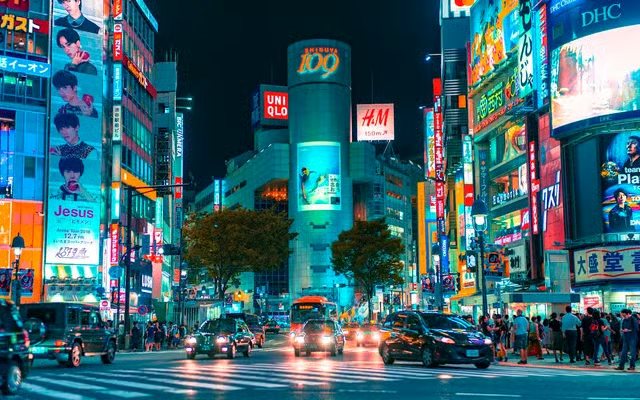 First Time in Japan: 12 Mistakes Travellers Make and How to Avoid ThemPlanning your first trip to Japan? Many travellers make the same mistakes, from underestimating transport costs to misunderstanding local etiquette. This guide explains what first-time visitors should know before arriving, helping you avoid common problems and enjoy a smoother trip across Japan.Read the guide →
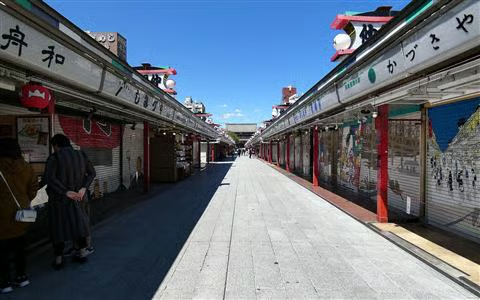 Japan for first-time travellersEntry, money, trains and manners: a first-timer’s step-by-step plan for Japan, re-checked against official sources in August 2026.Read the guide →
Frequently asked questions
Do I need a visa to visit Japan?
For the origins we track, travellers from United Kingdom and United States currently enter Japan visa-free for tourism. Entry rules depend on your passport and the purpose of your trip, so check the current requirements for your own nationality with our entry requirements tool.
What is the capital of Japan?
Tokyo is the capital of Japan, and the country sits in Asia.
What currency is used in Japan?
You pay with Japanese Yen (JPY) in Japan. Exchange rates move day to day, so check the current rate before you change money or use your card abroad.
Which languages do people speak in Japan?
The languages we list for Japan are Japanese. A couple of greetings in the local language go a long way when you travel, even in cities where another language is widely used.
What is the international dialling code for Japan?
The dialling code for Japan is +81 — keep the plus sign when you save the number.
Which airports serve Japan?
We cover 3 airports for Japan, including Kansai International Airport (KIX), Narita International Airport (NRT), Tokyo Haneda Airport (HND).
Which cities in Japan do you cover?
Our guide lists 3 cities for Japan: Tokyo (capital), Narita and Osaka.