 →
→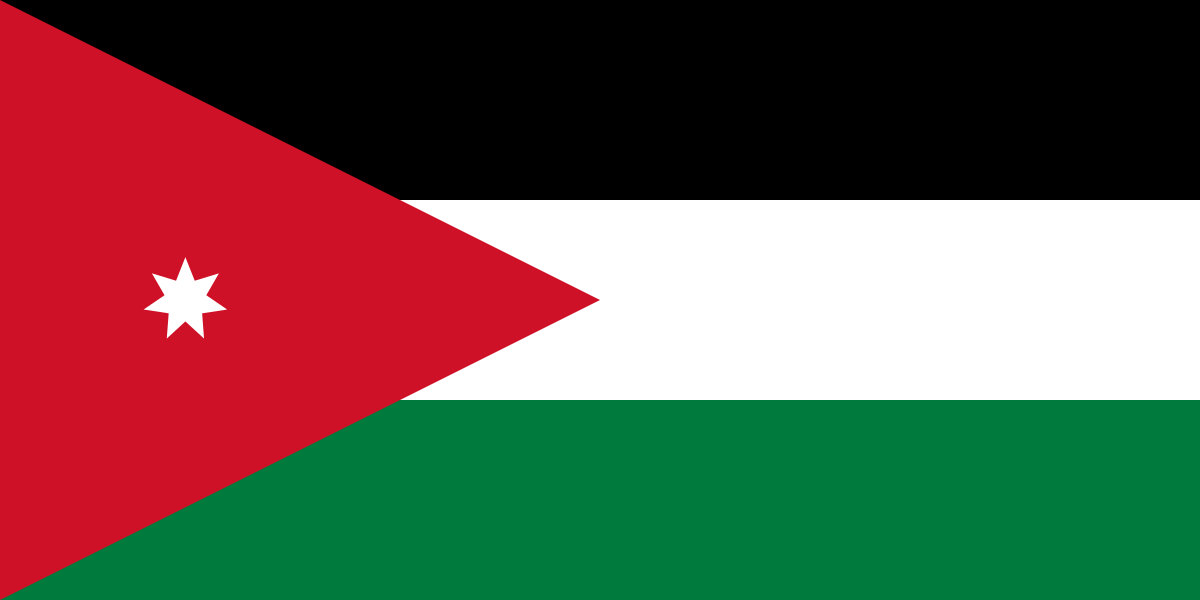
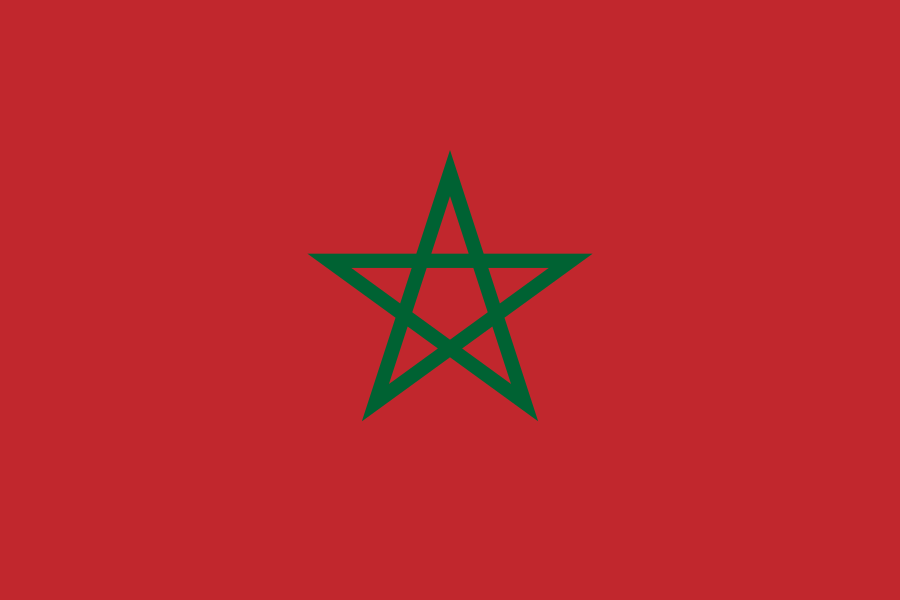
Do Morocco citizens need a visa for Jordan? For tourism travel, the current rule is visa on arrival, with a permitted stay of up to 30 days per visit. This tourism rule was last checked against an official government source — Official government (moi.gov.jo), on 2026-08-31. It applies to Morocco passport holders, but the exact conditions granted on the day can still differ, so keep the requirements below — and the official source in the sidebar — handy when you plan your trip.
A visa on arrival means the visa is issued when you reach the destination, usually at the arrival counter. Carry the required documents and fees, expect a short queue, and remember that entry is still granted at the officer’s discretion.
Before you travel — tourism checklist
- Apply for (and receive) your visaYou need a visa for this route — book travel only after you receive the decision.
- Passport valid and checkedPassport valid for at least 6 months from the date of entry At least 2 blank pages
- Return or onward ticket bookedBorder control can ask to see proof of your return or onward travel.
- Accommodation confirmedHave your booking confirmation (or invitation) ready — it can be requested at the border.
- Supporting documents preparedFunds, itinerary and ties-to-home evidence are listed under the evidence sections on this page.
Every item is derived from the verified requirements on this page — tick them off before you go.
Entry requirements · Tourism travel
Passport requirements
- Passport valid for at least 6 months from the date of entry
- At least 2 blank pages
How to apply
- Visa on arrival obtained at Queen Alia International Airport (Amman), King Hussein International Airport (Aqaba), Sheikh Hussein Bridge, or Wadi Araba border crossing
- Complete arrival form and pay the visa fee at the immigration counter
- Not available at the Allenby/King Hussein Bridge crossing
- E-Visa also available online at eservices.moi.gov.jo (alternative to VOA)
Required documents
- Valid passport (6+ months validity, 2 blank pages)
- Return or onward flight ticket
- Proof of accommodation (hotel booking or host address)
- Visa fee in cash: 40 JOD (~$56 USD) for single-entry 30-day visa
- Recent passport-sized photograph (may be requested)
Financial evidence
- Evidence of sufficient funds for the stay (may be requested)
Accommodation or invitation evidence
If applicable- Hotel booking or address where you will stay (may be requested)
Conditions & restrictions
- Visa on arrival granted for up to 30 days, extendable up to 60 days
- Single-entry fee: 40 JOD (~$56 USD)
- Extension fee applies; Jordan Pass may be cost-effective if visiting Petra
- Exit fee of 10 JOD applies if departing via land border crossing
Moroccan citizens travelling to Jordan for tourism: visa on arrival, stay up to 30 days. VOA fee 40 JOD at air/land ports (except Allenby Bridge); e-visa also available online.
Planning your trip to Jordan
Practical notes about Jordan — checked as part of this page for tourism travellers.
The Rose City of the Petra and the Treasury of the Canyons
The city of Petra, in the mountains of the south of the country, is the greatest of the Nabataean cities, an entire royal city carved and built into the cliffs of the rose-red sandstone of the region more than two thousand years ago. The entrance to the city, through the winding gorge of the siq, leads to the famous treasury, the magnificent carved facade that is among the most photographed monuments of the world, and the city beyond spreads the tombs, the temples, the theatre and the street of the facades across the whole valley of the ancient metropolis. The climb to the monastery and the trails of the high necropolis give the full scale of the site, and the cave dwellings and the caravan traditions of the region hold the memory of the city's role on the trade routes of the ancient world.
The Desert of the Wadi Rum and the Camps of the Bedouin
The desert of the Wadi Rum, the vast, silent wilderness of the south of the country, is the most cinematic landscape of the Middle East, the enormous valley of the red sand and the sheer granite and sandstone mountains that rise above it, a landscape that the film-makers have chosen for the Mars of the future and the desert of the classic epics. The jeep tours and the camel treks of the valley carry the visitors between the cliffs, the springs and the ruins of the older sites, and the camps of the bedouin, the permanent and the desert camps with their tents, their fires and their food, hold the nights beneath the enormous starfields of the desert sky. The sunsets from the great dunes and the dawns over the ridgelines are the moments the visitors remember for the rest of their lives.
The Dead Sea and the Float of the Lowest Salt
The Dead Sea, at the dramatic lowest point on the surface of the earth, fills the deep rift between the country and its western neighbour, and its famously salty water, nearly ten times saltier than the open ocean, supports nothing but the bathers who float in it with a completely effortless ease. The resorts and the beaches of the eastern shore of the sea, the spa hotels and the public beaches of the coast, run the famous floating and the mud treatments that the visitors take for the novelty, and the amenities and the reserves of the coast make the stop a full day of relaxation. The drive to the sea from the capital drops more than a vertical kilometre of the scenery in the space of an hour. It is a natural oddity of the world and an easy, comfortable stop on the circuit of the country.
The Roman City of the Jerash and the Columns of the North
The ruins of Jerash, a short drive north of the capital, are among the best preserved of the Roman provincial cities in the world, an entire colonnaded metropolis of the second century with its oval plaza, its theatres, its temples and its long streets of the columns standing in the green valley of the north. The hippodrome and the two great theatres of the city host the shows of the chariot races and the legionary displays in the season, and the temples of the site, the grand temples with their towering columns, rise above the whole ancient city. The site is enormous, walkable and wonderfully intact, and it compares with the great Roman ruins of the Mediterranean world. Jerash is the essential complement to the Nabataean wonder of the south and an easy half-day from the capital.
Common questions
Do Morocco citizens need a visa for Jordan?+
Visa on arrival. Permitted stay: up to 30 days.
What documents do I need to enter Jordan?+
Valid passport (6+ months validity, 2 blank pages). Return or onward flight ticket. Proof of accommodation (hotel booking or host address). Visa fee in cash: 40 JOD (~$56 USD) for single-entry 30-day visa. Recent passport-sized photograph (may be requested).
What passport validity is required to enter Jordan?+
Passport valid for at least 6 months from the date of entry; At least 2 blank pages.
Are there any restrictions for entering Jordan?+
Visa on arrival granted for up to 30 days, extendable up to 60 days
Any additional conditions for entering Jordan?+
Single-entry fee: 40 JOD (~$56 USD)
Any additional conditions for entering Jordan?+
Extension fee applies; Jordan Pass may be cost-effective if visiting Petra
Any additional conditions for entering Jordan?+
Exit fee of 10 JOD applies if departing via land border crossing
How long can Morocco citizens stay in Jordan?+
The permitted stay for tourism travel is up to 30 days. The exact period granted depends on the entry decision at the border.
Where can I check the official Jordan visa and entry rules?+
This information was last verified on 2026-08-31 against an official government source: Official government (moi.gov.jo) (https://moi.gov.jo/EN/Pages/Restricted_and_Non_Restricted_Countries_Nationalities).
Related resources
- Jordan travel guide →Cities, airports and practical travel info.
- Airports in Jordan →Codes, terminals and ground transport.
- Morocco guide →Everything we cover for Morocco.
- How we verify rules →Sources, review dates and our quality checks.
- All Morocco routes →Entry requirements from Morocco to every destination.