
Morocco
Africa · Rabat · MA
Morocco occupies the northwestern corner of Africa, where the Sahara Desert meets the Atlantic Ocean and the Mediterranean Sea, backed by the snow-dusted peaks of the Atlas Mountains. This convergence of landscapes gives the country an extraordinary range of environments within a compact territory, from the wind-scoured dunes of Erg Chebbi to the fertile coastal plains of Essaouira and the cedar forests of the Middle Atlas. Culturally, Morocco is shaped by Berber, Arab, Andalusian, and French influences, all of which are visible in its architecture, cuisine, and daily rhythms. The medinas of Fez and Marrakech are labyrinthine centers of craft and commerce that have operated continuously for centuries, while the blue-painted streets of Chefchaouen offer a quieter, more intimate atmosphere. Moroccan hospitality is legendary, built around the ritual of mint tea and the warmth of riad courtyards open to the sky.
Overview
Morocco is a country in Africa. Its capital is Rabat and the international dialling code is +212. Languages commonly used in everyday life here include Arabic and Amazigh. Local currency is the Moroccan Dirham (MAD). Our guide covers 1 airport, including Mohammed V International Airport. We also list 2 cities in Morocco: Rabat and Casablanca.
The Imperial Cities and Their Medinas
Morocco's four imperial cities — Fez, Marrakech, Meknes, and Rabat — each served as the seat of power at different dynasties, and their medinas remain the cultural hearts of the nation. Fez el-Bali is the largest car-free urban area in the world, a tangle of over nine thousand alleys lined with tanneries, copper workshops, and tile-making ateliers that have operated using essentially the same methods since the medieval period. Marrakech's Djemaa el-Fna square pulses with storytellers, snake charmers, and food vendors from morning until well past midnight. Meknes preserves the monumental gate of Bab el-Mansour and the massive granaries built by Sultan Moulay Ismail. Rabat, the current capital, blends its Atlantic-facing kasbah with a modern administrative center in a way that few other Moroccan cities manage.
Saharan Dunes and Desert Oasis Towns
The Sahara covers a significant portion of Morocco's southeastern territory, and the experience of crossing into this vast emptiness is one of the country's most transformative encounters. From the gateway town of Erfoud, expeditions travel by camel or 4x4 to the towering dunes of Erg Chebbi near Merzouga, where sand ridges rise to heights of over 150 meters and glow in shifting shades of amber and crimson. Along the way, palm-filled oases like Todra and Dades provide striking green contrasts to the surrounding aridity, and kasbahs built from rammed earth cling to canyon walls that have been carved by seasonal floods over millennia. Nights in the desert bring absolute stillness and a canopy of stars unobscured by light pollution, a silence that feels ancient and undisturbed.
Atlantic Coastal Towns and Surf Culture
Morocco's Atlantic coastline stretches from the northern tip near Tangier down to the Saharan edge near Dakhla, offering a range of surf, windsurfing, and kitesurfing conditions that have attracted a growing international community. Taghazout, a fishing village turned surf hub south of Agadir, breaks consistently over rock reefs and sand bottom waves suitable for intermediate and advanced surfers. Essaouira, farther north, benefits from powerful trade winds that make it one of the premier kitesurfing locations in the world, while its walled medina overlooks a wide bay framed by a fortified island. Further south, the remote peninsula of Dakhla sits inside a lagoon protected from open-ocean swell, creating flat-water conditions ideal for speed runs and freestyle kitesurfing in desert surroundings that feel distinctly otherworldly.
Atlas Mountain Villages and Berber Traditions
The Atlas Mountains form a spine across Morocco, dividing the temperate north from the Saharan south and sheltering a chain of valleys where Berber communities have maintained distinct cultural practices for millennia. In the High Atlas, the village of Imlil serves as a staging point for treks to Jebel Toubkal, North Africa's highest peak, while lower valleys hold terraced walnut orchards and mud-brick settlements that cling to steep hillsides. The Ourika Valley, accessible from Marrakech, offers a gentler introduction to mountain life with waterfalls, local markets, and family-run guesthouses. Further east, the Dadès Valley is lined with rose gardens that bloom spectacularly each spring, feeding a local rosewater production industry that has sustained families for generations. These mountain communities preserve Amazigh language, music, and weaving traditions that differ markedly from lowland Arab-influenced culture.
The Blue City of Chefchaouen and the Rif Mountains
Perched in the Rif Mountains of northern Morocco, Chefchaouen is instantly recognizable for the vivid blue wash that covers nearly every wall, staircase, and doorway in its compact medina. The tradition of painting buildings blue is attributed to Jewish refugees who settled here in the 1930s, associating the color with spirituality and the sky, though the practice has since become the town's defining visual identity. The surrounding Rif region is rugged and green, dotted with cannabis plantations that supply much of the region's economy despite official prohibition. Hiking trails lead from the town into nearby gorges and toward the Akchour waterfalls, which cascade through a narrow canyon. Unlike the frenetic energy of Fez or Marrakech, Chefchaouen moves at a slower, more contemplative pace, with cats dozing on blue steps and the mountain air carrying the scent of jasmine and fresh bread.
Compare hotels, cover your trip and stay connected.
- Capital
- Rabat
- Currency
- Moroccan Dirham (MAD)
- Languages
- Arabic, Amazigh
- Calling code
- +212
- Internet TLD
- ma
Entry requirements
Check who can enter →See which passports travel visa-free or need a visa to enter Morocco.
Which nationalities can enter Morocco?
Current visa status for tourism for the origins we cover, with links to the detailed requirements.










Airports (1)
All airports →Cities (2)
All cities →Travel guides for Morocco
All guides →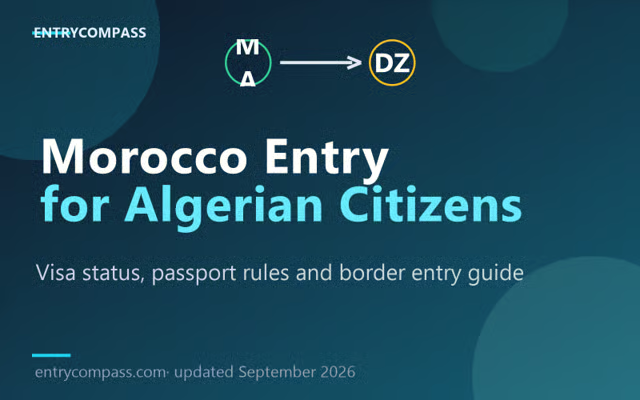 Morocco Entry Requirements for Algerian Citizens: September 2026 UpdateTraveling from Algeria to Morocco? Here is the latest September 2026 update on reported entry restrictions for Algerian citizens, Moroccan residence card requirements, airline boarding checks, and what travelers should verify before departureRead the guide →
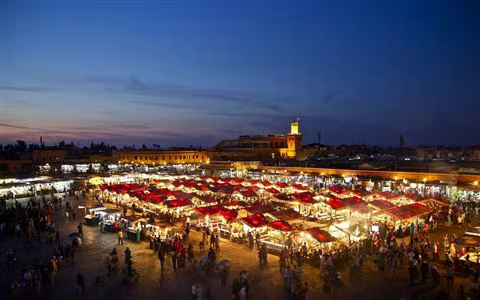 Morocco with kids: a practical planA parent’s working plan for Morocco: the right riad, the right transfers, the food that keeps kids happy — and the pacing that saves the trip.Read the guide →
Frequently asked questions
Do I need a visa to visit Morocco?
For the origins we track, travellers from Australia, Canada, France, Germany and Italy currently enter Morocco visa-free for tourism, and 4 more origins are visa-free too. Entry rules depend on your passport and the purpose of your trip, so check the current requirements for your own nationality with our entry requirements tool.
What is the capital of Morocco?
Rabat is the capital of Morocco, and the country sits in Africa.
What currency is used in Morocco?
You pay with Moroccan Dirham (MAD) in Morocco. Exchange rates move day to day, so check the current rate before you change money or use your card abroad.
Which languages do people speak in Morocco?
The languages we list for Morocco are Arabic and Amazigh. A couple of greetings in the local language go a long way when you travel, even in cities where another language is widely used.
What is the international dialling code for Morocco?
The dialling code for Morocco is +212 — keep the plus sign when you save the number.
Which airports serve Morocco?
Mohammed V International Airport (CMN) in Casablanca is the airport we cover for Morocco.
Which cities in Morocco do you cover?
Our guide lists 2 cities for Morocco: Rabat (capital) and Casablanca.