
United Kingdom
Europe · London · GB
The United Kingdom comprises England, Scotland, Wales, and Northern Ireland, four nations with distinct identities, languages, and landscapes sharing a single political framework that has survived centuries of tension and transformation. From Cornwall's surfer-washed Atlantic coast to the brooding moors of Northumberland, from Edinburgh's castle-crowned volcanic rock to the gentle limestone valleys of the Cotswolds, the country's geography packs surprising variety into a compact territory. British culture exports widely through literature, music, and television, yet experiencing it domestically reveals layers of regional character that the exported version rarely captures. Pubs remain central to social life, serving not just as drinking establishments but as community living rooms where conversation, darts, and real ale coexist within wood-paneled interiors that sometimes predate the American Revolution. The UK's railway network connects remarkably diverse landscapes with reasonable efficiency, making it possible to travel from fishing villages to highland peaks within a single day of purposeful travel.
Overview
United Kingdom is a country in Europe. Its capital is London and the international dialling code is +44. Languages commonly used in everyday life here include English. Local currency is the British Pound (GBP). Our guide covers 4 airports, including Edinburgh Airport, Gatwick Airport, Heathrow Airport. We also list 3 cities in United Kingdom: London, Edinburgh and Manchester.
The Scottish Highlands and Loch Ness
The Scottish Highlands occupy the northern third of Britain, a landscape of layered mountains, deep peat-cut moors, and sea lochs that penetrate inland like fingers reaching for the country's heart. Glencoe's U-shaped valley, carved by glaciers and stained by the memory of a seventeenth-century massacre, funnels the road between walls of dark rock and cascading waterfalls. Further north, Loch Ness stretches for thirty-seven kilometers beneath forested hillsides, its peat-stained waters hiding more legend than biology yet retaining an atmosphere of genuine mystery. The NC500 driving route circuits the northern coast through single-track roads where Highland cattle block traffic and white-sand beaches could pass for tropical destinations if the water temperature did not correct that assumption. Inverness serves as the region's gateway, its castle marking the historic boundary between Highland and Lowland Scotland. The whisky distilleries of Speyside offer tours through copper stills and barrel warehouses where the interaction of spirit and oak plays out over years of patient maturation.
The Cotswolds' Honey-Stone Villages
The Cotswolds spread across south-central England in a designated Area of Outstanding Natural Beauty where honey-colored limestone villages seem to have emerged directly from the landscape rather than being built upon it. Bibury's Arlington Row, a line of fourteenth-century weavers' cottages reflected in the River Coln, attracts photographers who find the scene almost too perfectly English to seem real. Castle Combe, buried in a wooded valley, preserves a medieval street pattern where the absence of modern signage maintains an atmosphere that film crews exploit for period drama settings. Bourton-on-the-Water earned its reputation as the Venice of the Cotswolds through the River Windrush that crosses the village via shallow stone bridges, though the comparison somewhat overstates the aquatic drama. Walking the Cotswold Way national trail reveals a landscape of beech hedgerows, sheep-grazed pasture, and woodland copses that change character with each season. Traditional pubs serve locally brewed ales alongside dishes featuring Gloucestershire Old Spot pork and cheese from nearby farms.
London's Royal Parks and Historic Neighborhoods
London sprawls across the Thames valley in a mosaic of villages absorbed over centuries into a single sprawling metropolis, yet its green spaces preserve a sense of openness unusual for a capital city of this scale. Hyde Park's Serpentine offers boating and swimming while Kensington Gardens houses Kensington Palace behind its formal gardens where William III first installed a public greenhouse. The Tower of London stands on the riverbank where William the Conqueror began it as a statement of Norman dominance in 1066, its nine centuries of service as palace, prison, and treasury visible in architectural layers that span nearly the entire history of post-Roman England. Shoreditch and Hackney to the east contain converted warehouse spaces, street art, and independent restaurants that represent London's creative fringe, a counterpoint to the institutional weight of Westminster. Borough Market beneath the railway arches near London Bridge operates as the city's premier food market, where vendors sell everything from Scottish smoked salmon to Ethiopian injera within a single covered hall.
The Literary Landscapes of Bath and Stratford
Bath occupies a valley in Somerset where natural hot springs discovered in pre-Roman times eventually inspired the most complete Georgian city in England, its crescents and terraces constructed from the same pale oolitic limestone that gives the architecture a luminous quality in soft light. Jane Austen lived here and set two of her novels within its social world, a connection celebrated in a dedicated museum housed in the grand pump room where eighteenth-century visitors once took the waters. The Royal Crescent curves above a sweeping lawn in a single architectural statement that defined urban planning for generations. Further north, Stratford-upon-Avon preserves the birthplace and homes of William Shakespeare alongside the Royal Shakespeare Company's theaters where his plays continue to receive innovative new productions. The Cotswold stone town center retains its Tudor half-timbered character while the River Avon provides a calm backdrop for punting. Both towns demonstrate how literary heritage, when anchored to genuine historical places, creates experiences that transcend simple tourism.
Wales' Castles and Coastal Path
Wales packs an astonishing density of medieval castles into a landscape where mountains, coast, and rivers create natural defensive positions that Edward I exploited with architectural ambition. Conwy Castle, rising directly from the rock above its estuary, retains eight massive towers connected by intact wall-walks that provide views across the strait toward Snowdonia's highest peaks. Caernarfon Castle nearby features polygonal towers rather than round ones, deliberately echoing the walls of Constantinople to legitimize English royal authority through architectural association. The Pembrokeshire Coast Path covers 186 miles of clifftop walking through a National Park where seabird colonies occupy sheer rock faces and hidden beaches appear only at low tide. Inland, the Brecon Beacons offer mountain terrain that feels genuinely remote despite its proximity to Cardiff, with waterfalls and Roman roads threading through open moorland. Welsh culture asserts itself through language, Eisteddfod poetry festivals, and a brewing tradition producing craft ales that rival anything from England's more commercially dominant breweries.
Compare hotels, cover your trip and stay connected.
- Capital
- London
- Currency
- British Pound (GBP)
- Languages
- English
- Calling code
- +44
- Internet TLD
- gb
Entry requirements
Check who can enter →See which passports travel visa-free or need a visa to enter United Kingdom.
Which nationalities can enter United Kingdom?
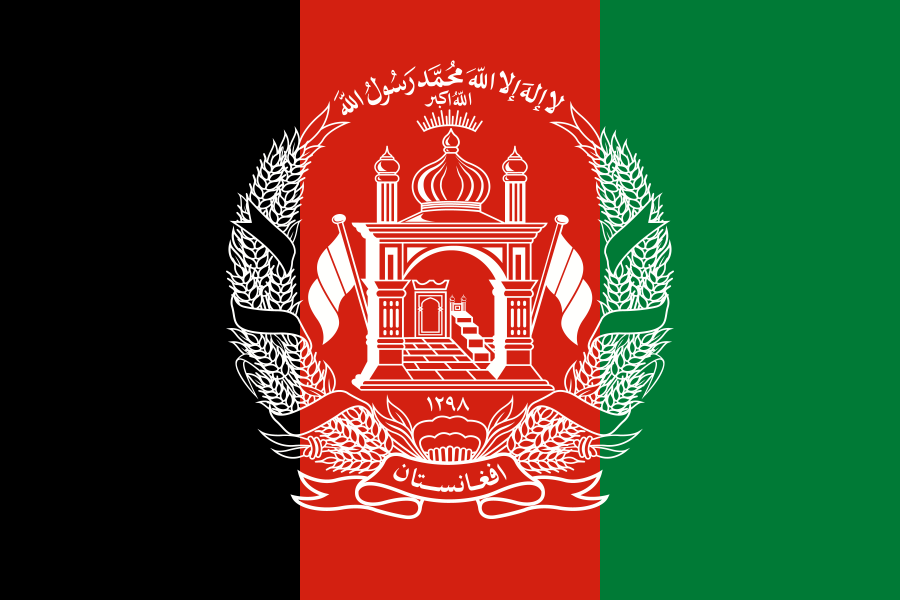
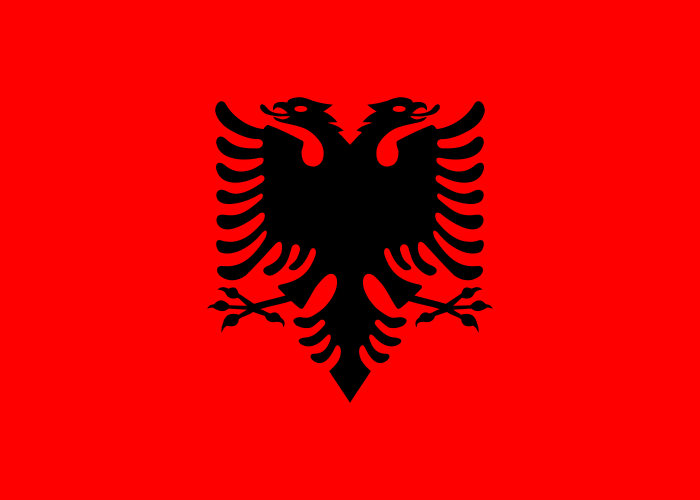
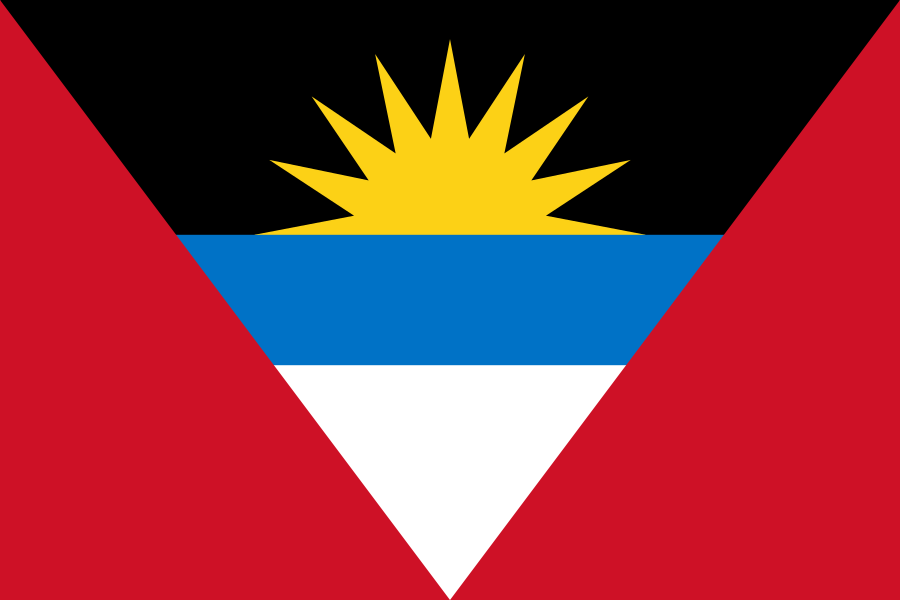
Current visa status for tourism for the origins we cover, with links to the detailed requirements.







Airports (4)
All airports →Cities (3)
All cities →Travel guides for United Kingdom
All guides →
Frequently asked questions
Do I need a visa to visit United Kingdom?
For the origins we track, United Kingdom requires a visa for tourism (Afghanistan: visa required, Albania: visa required, Algeria: visa required, Andorra: eta required and Angola: visa required). Entry rules depend on your passport, so confirm the current requirements for your own nationality with our entry requirements tool.
What is the capital of United Kingdom?
London is the capital of United Kingdom, and the country sits in Europe.
What currency is used in United Kingdom?
You pay with British Pound (GBP) in United Kingdom. Exchange rates move day to day, so check the current rate before you change money or use your card abroad.
Which languages do people speak in United Kingdom?
The languages we list for United Kingdom are English. A couple of greetings in the local language go a long way when you travel, even in cities where another language is widely used.
What is the international dialling code for United Kingdom?
The dialling code for United Kingdom is +44 — keep the plus sign when you save the number.
Which airports serve United Kingdom?
We cover 4 airports for United Kingdom, including Edinburgh Airport (EDI), Gatwick Airport (LGW), Heathrow Airport (LHR) — and 1 more.
Which cities in United Kingdom do you cover?
Our guide lists 3 cities for United Kingdom: London (capital), Edinburgh and Manchester.