
Portugal
Europe · Lisbon · PT
Portugal clings to the western edge of the Iberian Peninsula, a narrow country whose long Atlantic coastline and centuries of maritime exploration have given it a cultural reach far exceeding its modest size. Lisbon's hills carry the rattling sound of vintage trams and the melancholic strains of fado music drifting from tiled tavernas in the Alfama district. Porto pours its famous fortified wine from cellars lining the Douro River while the northern countryside remains defined by terraced vineyards climbing steep granite valleys. The Algarve's golden limestone cliffs and sea-carved grottoes draw visitors to southern shores where the water runs warmer and the pace slackens noticeably. Portugal's azulejo tile tradition covers facades and metro stations alike in geometric and narrative patterns that transform ordinary surfaces into public art. The country retains an affordable, unhurried quality that makes it distinct from its more expensive neighbors, offering depth without pretension.
Overview
Portugal is a country in Europe. Its capital is Lisbon and the international dialling code is +351. Languages commonly used in everyday life here include Portuguese. Local currency is the Euro (EUR). Our guide covers 2 airports, including Francisco Sá Carneiro Airport, Humberto Delgado Airport. We also list 2 cities in Portugal: Lisbon and Porto.
Getting around Portugal
Portugal is compact and well connected. The metro and tram systems in Lisbon and Porto are efficient and cheap; in Lisbon, the historic Tram 28 is as much a sightseeing ride as a way to cross the Alfama district, and the ferry across the Tagus to Cacilhas is the quickest way to the south bank.
For intercity travel, the Alfa Pendular fast train links Lisbon, Porto and the north, and comfortable coaches reach practically every town. The Algarve is easiest to explore by car. Driving is on the right, and motorways are tolled — either with an electronic toll pass, a prepaid card, or via a registered plate, depending on the highway.
When to visit Portugal
Spring (March–June) and autumn (September–October) offer pleasant temperatures and thinner crowds across Lisbon, Porto and the Algarve. Summer is hot and busy, especially in the Algarve, but the sea stays warm into October. On the islands of Madeira and the Azores, the climate is mild all year with changeable weather; winter is a quieter season to visit.
Major public holidays such as Carnival, Easter and the midsummer June festivals (Santo António in Lisbon, São João in Porto) fill hotels quickly, so book ahead if you travel over those periods.
Eating and drinking
Portuguese food is generous and seafood-led: bacalhau (salted cod) is prepared in countless ways, grilled sardines are a summer staple, and French toast-like francesinha is the signature snack of Porto. Pastéis de nata — small custard tarts — are an institution, best enjoyed with espresso.
Portuguese wines are the star of the table: Vinho Verde in the north, the Douro's port and table wines, and a growing list of regional reds and whites across the country. A service charge is usually included, and rounding the bill up by 5–10% is common in restaurants.
Money and local customs
Portugal uses the euro. Card payment is very common, even in small cafés and on ferries, but keep some cash for village markets and small businesses. ATMs (Multibanco) are everywhere in cities and towns, including the Algarve resorts.
Meal times run late by northern-European standards: lunch around 1–2pm and dinner from 8pm. Portuguese people are friendly and relaxed, and a brief "bom dia"/"boa tarde" when entering a shop or café is appreciated. Rounding the bill up at restaurants and cafés is the normal way to leave a small tip.
Compare hotels, cover your trip and stay connected.
- Capital
- Lisbon
- Currency
- Euro (EUR)
- Languages
- Portuguese
- Calling code
- +351
- Internet TLD
- pt
Entry requirements
Check who can enter →See which passports travel visa-free or need a visa to enter Portugal.
Which nationalities can enter Portugal?
Current visa status for tourism for the origins we cover, with links to the detailed requirements.




Airports (2)
All airports →Cities (2)
All cities →Travel guides for Portugal
All guides →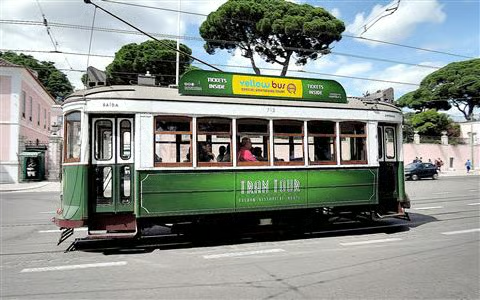
Frequently asked questions
Do I need a visa to visit Portugal?
For the origins we track, travellers from Albania, Andorra, Antigua and Barbuda, Argentina and Australia currently enter Portugal visa-free for tourism. Entry rules depend on your passport and the purpose of your trip, so check the current requirements for your own nationality with our entry requirements tool.
What is the capital of Portugal?
Lisbon is the capital of Portugal, and the country sits in Europe.
What currency is used in Portugal?
You pay with Euro (EUR) in Portugal. Exchange rates move day to day, so check the current rate before you change money or use your card abroad.
Which languages do people speak in Portugal?
The languages we list for Portugal are Portuguese. A couple of greetings in the local language go a long way when you travel, even in cities where another language is widely used.
What is the international dialling code for Portugal?
The dialling code for Portugal is +351 — keep the plus sign when you save the number.
Which airports serve Portugal?
We cover 2 airports for Portugal, including Francisco Sá Carneiro Airport (OPO), Humberto Delgado Airport (LIS).
Which cities in Portugal do you cover?
Our guide lists 2 cities for Portugal: Lisbon (capital) and Porto.