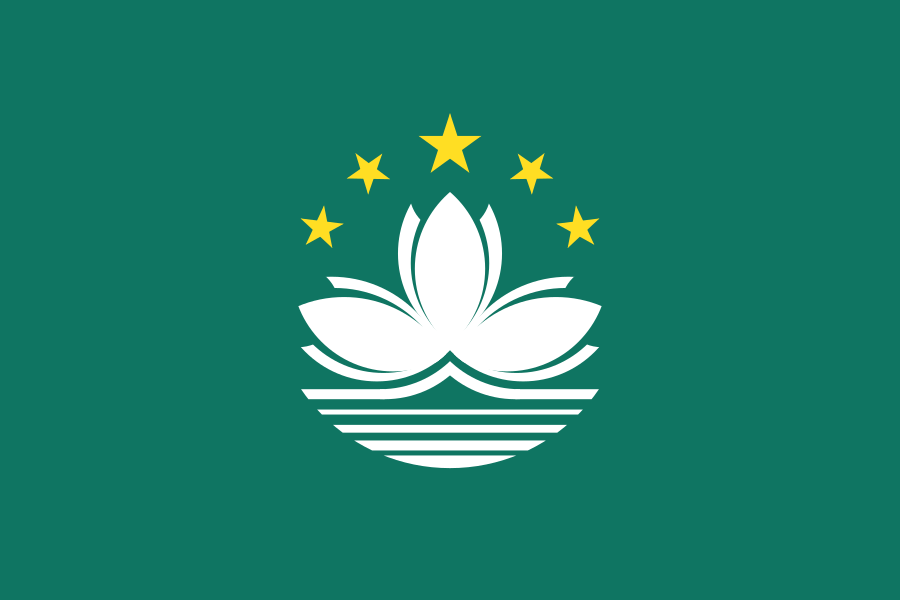
Macau
Asia · Macau · MO
Macau is the small, dazzling city on the southern coast of China that the Portuguese held for more than four centuries, a former territory that pairs the pastel plazas and the baroque churches of the old centre with the enormous casino resorts of the new economy. The historic centre of the city, a world heritage of the Portuguese influence, holds the ruins of the church of the Saint Paul, the fort of the Monte and the cobbled squares of the Senado that look more European than Asian, while the peninsula and the islands of the region spread the casinos, the hotels and the neon of the Cotai strip, the largest gambling market in the world. Beyond the tables, the city is a deeply Portuguese-Chinese mix of the temples, the churches, the bakeries and the festivals, and the egg tarts and the seafood of the Macanese cuisine are famous throughout the region. Compact, rich and endlessly atmospheric, Macau is a one-of-a-kind city of the two civilisations.
Overview
Macau is a country in Asia. Its capital is Macau and the international dialling code is +853. Languages commonly used in everyday life here include Chinese and Portuguese. Local currency is the Macanese Pataca (MOP). We also list 1 city in Macau: Macau.
The Ruins of the Saint Paul and the Historic Centre of the City
The ruins of the church of the Saint Paul, the surviving stone facade and the noble staircase of the great Jesuit church that burned in the nineteenth century, are the most famous monument of the city, rising over the square at the top of its stair as the emblem of the historic Macau. The historic centre around the ruins, a world heritage of the Portuguese legacy, holds the fort of the Monte, the museum of the city, the cathedral and the alleys of the old quarter that climb the hill behind the famous facade, and the whole area, with its tiled pavements and its pastel walls, feels more European than Asian. The museums of the centre, from the maritime history to the eccentric collection of the grand prix, complete the dense, walkable circuit of the old city.
The Cotai Strip and the Palaces of the Casinos
The Cotai strip, the reclaimed land between the two islands of the region, is the gambling capital of the world, a corridor of the enormous themed casino resorts whose hotel towers, shopping malls and entertainment palaces tower over the new city of the province. The casinos of the strip, from the Venetian with its canals and its painted sky to the Parisian with its tower and the Grand Lisboa and the MGM of the peninsula, are the engines of the territory, and their interiors, with the shows, the restaurants and the enormous gaming floors, draw the millions of the visitors of the region. The visitor to the strip, with the fountains, the light shows and the galaxy of the neon of the night, witnesses the strangest and the most over-the-top urban spectacle of the whole of Asia.
The Senado Square and the Plazas of the Portuguese
The square of the Senado, the cobbled heart of the old city with its wave-patterned mosaic, its fountain and its pastel colonial facades, is the elegant centre of the historic Macau, and the pedestrian streets of the Avenida and the alleys of the old shops and the bakeries radiate from it. The buildings of the square, the municipal chamber and the churches of the old quarter, and the fountains and the street performers of the everyday, give the place the atmosphere of a Portuguese provincial town transported to the edge of Asia. The illumination of the square in the evenings, with the light shows of the festivals and the crowds of the promenade, is the classic image of the cultural Macau.
The Temples of the A-Ma and the Festivals of the Dual Culture
The temple of the A-Ma, the oldest of the city and the shrine of the goddess of the sea that gave the territory its name, stands by the harbour at the peninsula as the anchor of the Chinese spiritual life of the city, and the taoist, the buddhist and the folk temples of the region, from the temple of the Kun Iam and the ruined facade to the small shrines of the lanes, spread the other half of the dual soul. The festivals of the city, the native festival of the Macanese quarter of the old neighbourhoods, the feast of the goddess and the Chinese new year celebrations, mix the processions and the rituals of the two traditions, and the incense in the temples and the prayers of the residents run the daily spiritual rhythm of the crowded city.
The Macanese Food and the Bakeries of the Egg Tart
The cuisine of the Macau, the Macanese cooking of the four-century mix of the Portuguese and the Chinese, is the great living art of the territory, and the famous egg tarts of the city, the pastry confections of the Portuguese pastel that the local hands perfected, are the celebrated taste of the whole region. The restaurants of the city, from the classic Macanese houses with their dishes of the prawn, the curry and the pork to the fine dining of the hotel palaces, blend the ingredients and the techniques of the two traditions into a cuisine that exists nowhere else, and the market gardens and the seafood of the islands provide the raw material of the table. The food tours and the bakery queues of the St Paul district anchor the essential food-obsessed visit.
Compare hotels, cover your trip and stay connected.
- Capital
- Macau
- Currency
- Macanese Pataca (MOP)
- Languages
- Chinese, Portuguese
- Calling code
- +853
- Internet TLD
- mo
Entry requirements
Check who can enter →See which passports travel visa-free or need a visa to enter Macau.
Cities (1)
All cities →Frequently asked questions
What is the capital of Macau?
Macau is the capital of Macau, and the country sits in Asia.
What currency is used in Macau?
You pay with Macanese Pataca (MOP) in Macau. Exchange rates move day to day, so check the current rate before you change money or use your card abroad.
Which languages do people speak in Macau?
The languages we list for Macau are Chinese and Portuguese. A couple of greetings in the local language go a long way when you travel, even in cities where another language is widely used.
What is the international dialling code for Macau?
The dialling code for Macau is +853 — keep the plus sign when you save the number.
Which cities in Macau do you cover?
Our guide lists 1 city for Macau: Macau (capital).