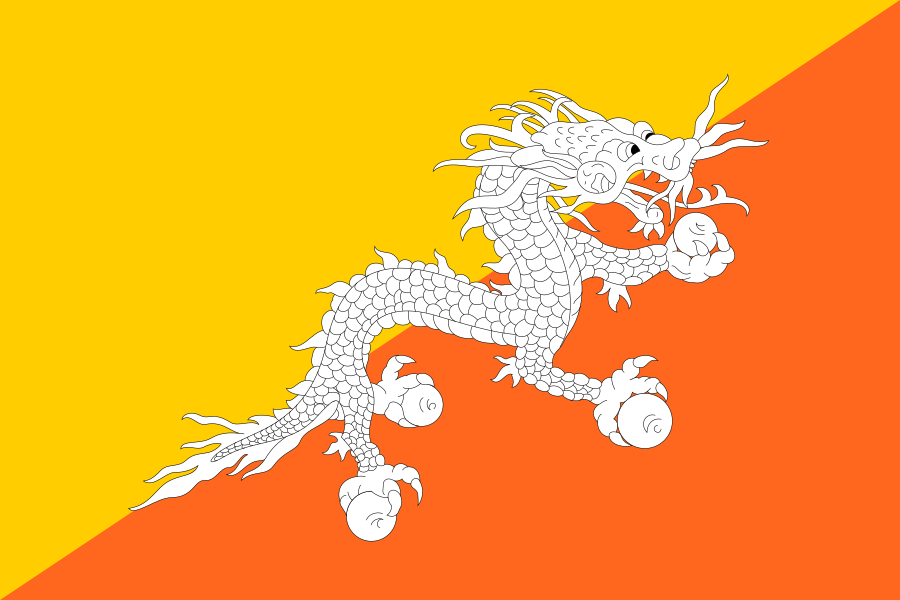
Bhutan
Asia · Thimphu · BT
Bhutan is the small Himalayan kingdom between India and the great plateau to the north, a deeply Buddhist country that measures its progress by happiness as much as by growth. The valley of Paro, the fertile gateway, holds the Tiger's Nest monastery built into the cliff face above the pines, while the capital Thimphu runs on prayer flags, dzongs and the calm charm of a capital without traffic lights. The monasteries, the fortresses and the masked festivals of the valleys spread the culture, and the high passes of the eastern mountains and the great snow peaks of the north draw the trekkers. The deep eastern valleys hold their own monasteries, dzongs and harvest festivals, reached by roads that snake over the high passes. The strict care for culture keeps the pace gentle, the visitor numbers deliberate and the traditions intact. Clean, quiet, devout and stunningly pretty, Bhutan slows the traveller down by its very nature.
Overview
Bhutan is a country in Asia. Its capital is Thimphu and the international dialling code is +975. Languages commonly used in everyday life here include Dzongkha. Local currency is the Bhutanese Ngultrum (BTN). We also list 1 city in Bhutan: Thimphu.
The Tiger's Nest and the Cliff of the Paro Valley
The Tiger's Nest, the monastery of Taktsang, clings to the face of the cliff above the Paro valley, its whitened buildings rising tier on tier from the rock with the waterfall coursing below. The climb to it is the great walking pilgrimage of the country, a long stair of pines and chortens through the forest that takes a careful morning, with the first sight of the monastery suspended against the rock arriving sudden and unforgettable. The story of the place, founded around the meditations of the great teacher who flew to the site on the back of a tigress, gives the climb its atmosphere of legend. Inside, the chapels hold the murals and the prayer wheels, and the wind of the valley carries the flapping of the flags. It is the single most iconic view in the country.
Thimphu, the Capital Without Traffic Lights
Thimphu is the capital without traffic lights, the main crossroads regulated instead by a policeman, still standing in his white gloves and directing the Sunday flow with the elegant, sweeping signals that have become a national symbol. The city, the only capital in the world without a single set of the lights, mixes the grand fortress of Tashichho Dzong with the older lanes, the weekend market and the royal monument of the great stupa. The bowling alleys and the archery grounds sit beside the monasteries, and the evening parade of the monks and the students keeps the town moving until dark. The city is set tightly in its valley, with the pine hills lifting on both sides. It is a calm, orderly, leaf-green capital, and its character is as much Bhutan as any dzong.
The Masked Festivals and the Dances of the Dzongs
The great festivals of Bhutan, the tsechus, bring the whole valley into the courtyard of the dzong for days of masked dance, sacred story and the blessing of the crowds. The dancers, robed in silk and the painted wooden masks of the deities, the protectors and the beasts, move slowly to the sound of the long horns and the drums, each step a symbol in the ancient choreography. The lay people bring the picnic mats and the best clothes, and the visitors squeeze in among the monks, the grandparents and the young up on the terraces. Each district holds its festival at its own date, so there is almost always one about to begin. Seeing the dances of the masks in the wide courtyard of a mountain fortress is to witness the heart of Bhutanese faith in its most public and joyful form.
The High Passes of the East and the Treks of the North
Beyond the tourist valleys, the eastern districts of Bhutan climb through pine, rhododendron and the high yak pastures of the northern frontier, and the trekking routes of the country are some of the most complete mountain walking in the world. The famous route over the high passes between Paro and the east crosses the snow-smeared ridges, the glacial lakes and the camping valleys that the local herders share with the takin and the blue sheep. The mountains of the far north line the boundary with the great plateau, and the peaks of the range stand white against the enormous sky. The villages along the route keep the old stone houses, the prayer walls and the barley fields of the high altitude. Trekking in Bhutan is hard going and slow, but the reward is a country that few travellers ever see.
Ema Datshi, the Chili Cheese and the Table of the Kingdom
Bhutanese food is built on the national dish of ema datshi, a simple, fearsome bowl of green chilies cooked in a soft, salty cheese, which the locals eat with the red rice of the terraces and the platefuls of the vegetables of the high valleys. The table is usually rounded out with the buckwheat pancakes of the east, the potatoes of Bumthang, the dried pork of the villages and, on festival days, the whole roast of the family if the occasion calls. The butter tea of the mountains, salty and fortified, is the drink of the high pastures, and the rice wine and the local whisky warm the cold evenings. Eating in Bhutan means spice, cheese and the slow, convivial rhythm of a mountain table.
Compare hotels, cover your trip and stay connected.
- Capital
- Thimphu
- Currency
- Bhutanese Ngultrum (BTN)
- Languages
- Dzongkha
- Calling code
- +975
- Internet TLD
- bt
Entry requirements
Check who can enter →See which passports travel visa-free or need a visa to enter Bhutan.
Which nationalities can enter Bhutan?
Current visa status for tourism for the origins we cover, with links to the detailed requirements.
Cities (1)
All cities →Frequently asked questions
Do I need a visa to visit Bhutan?
For the origins we track, Bhutan requires a visa for tourism (Morocco: e-visa). Entry rules depend on your passport, so confirm the current requirements for your own nationality with our entry requirements tool.
What is the capital of Bhutan?
Thimphu is the capital of Bhutan, and the country sits in Asia.
What currency is used in Bhutan?
You pay with Bhutanese Ngultrum (BTN) in Bhutan. Exchange rates move day to day, so check the current rate before you change money or use your card abroad.
Which languages do people speak in Bhutan?
The languages we list for Bhutan are Dzongkha. A couple of greetings in the local language go a long way when you travel, even in cities where another language is widely used.
What is the international dialling code for Bhutan?
The dialling code for Bhutan is +975 — keep the plus sign when you save the number.
Which cities in Bhutan do you cover?
Our guide lists 1 city for Bhutan: Thimphu (capital).