WindhoekCapital
Namibia · Country profile
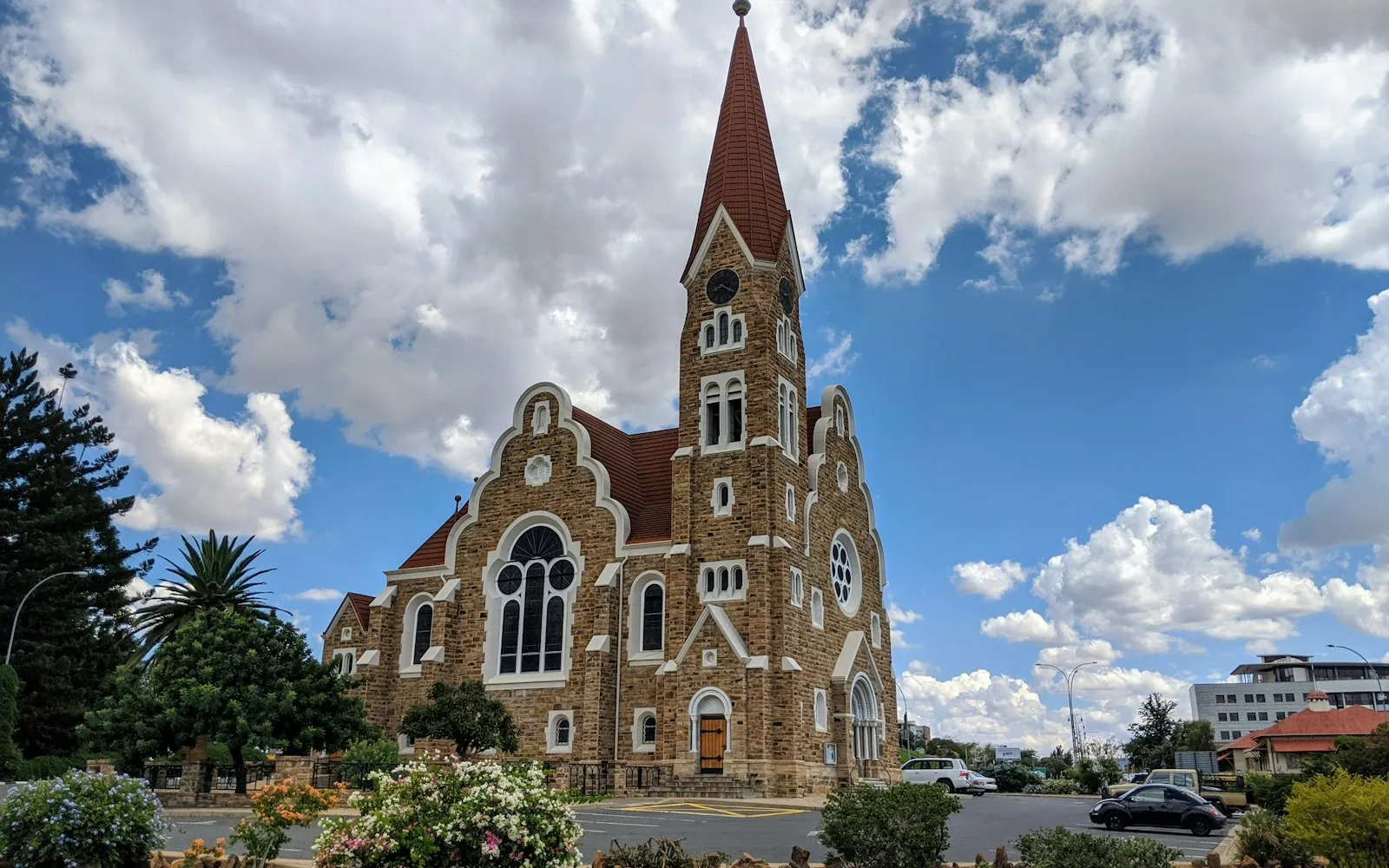
Windhoek is the high, modern capital of Namibia, the bright city of the arid highlands that spreads its colonial-era streets, its German-style churches and towers, its wide avenues and its new glass offices across the dry bowl of the great plateau, at some seventeen hundred metres of altitude and surrounded by the rugged hills of the centre of the country. Founded as a trading and a garrison town at the end of the nineteenth century, it grew through the German colonial, the South African and the independence eras into a clean, orderly and surprisingly green capital, where the cattle country and the mountains meet the edge of the great deserts. The German church and the old fort, the independence museum with its leaning glass tower and the markets and the parks of the town anchor the essential visits, while the savannas, the dunes and the wildlife of the extraordinary landscapes of the country spread beyond the capital. Clean, bright and neatly manicured, Windhoek is the tidy gateway of the wide empty land of the south-west.
About Windhoek
Windhoek is the capital of Namibia. The city's documented population is around 460,000 people. For visitors from abroad, the local currency is the Namibian Dollar (NAD) and English is spoken; the dialling code is +264. It is served by 1 airport in our guide: Hosea Kutako International Airport.
The Church of the Christ and the Fort of the Old Town
The capital is a compact, walkable city of a few main streets, where the essential days move between the historic church and the old fort, the museums and the markets, with the parks and the cafe terraces distributing the brisk highland life. The gothic church with its copper roof, the weathered fort of the oldest district and the enormous glass structure of the independence museum anchor the classic stops, while the craft markets of the town with their carvings, their jewellery and their fabrics, and the parliament gardens of the centre carry the everyday life. The wildlife, the dunes and the dramatic landscapes of the whole country, from the sand of the ocean coast to the canyons and the game parks of the north, lie beyond the capital on the great roads of the nation.
The Museum of the Independence and the Gardens of the Parliament
The climate of the city is the arid highland, with the warm, dry days and the cool nights of the year, the mild, dry winter with its rare frosts and the hot, rainy summer of the early months, when the brief downpours green the hills overnight. The dollar of the country, at par with the rand, is the currency, the English the official language, the Afrikaans and the German widely spoken and the local languages common. The centre, the museum and the crafts make the core visits, and the deserts, the coast and the game of the nation lie a day trip along the highways of the country. Layers for the cool evenings, sun protection and a light mask for the seasonal dust complete the simple preparation for the highland capital.
The Crafts of the Market and the Dunes of the Country
The church of the town, the beautiful gothic-style church with its copper roof and its stained windows that the Germans raised in the colonial era on the hill of the city, is the photographic emblem of the capital, while the old fort, the weathered stone fortress of the earliest settlement that now holds the national museum of the country, tells the story of the colonial and the pre-independence eras, and the independence museum, the enormous angled glass tower with its interior elevator and its views over the town, celebrates the freedom of the nation. The craft market of the capital with its wood carvings, its silver and its woven baskets, the parliament gardens with their monuments and the cattle and the horse culture of the surrounding highlands give the everyday layer, while the great landscapes of the country, from the enormous dune seas of the desert, the seal colonies of the cold coast and the game reserves of the north, to the rock paintings of the mountains, are the reason the traveller lands at the tidy capital and sets out on the roads. Clean, bright and endlessly practical, Windhoek opens the wide magnificent door of Namibia.
Report an error or suggest an update
- Country
- Namibia
- Population
- 460,000
- Coordinates
- -22.4799, 17.4709
- Capital
- Windhoek
- Region
- Africa
- Currency
- Namibian Dollar (NAD)
- Languages
- English
- Calling code
- +264
- Country code
- NA
Getting to Windhoek
Airports we list for Windhoek:
Frequently asked questions
Is Windhoek the capital of Namibia?
Yes — Windhoek is the capital of Namibia.
What currency do I need in Windhoek?
The local currency is the Namibian Dollar (NAD). Languages spoken in Namibia include English.
What is the dialling code for Namibia?
The international dialling code for Namibia is +264.
Which airport should I fly into for Windhoek?
Hosea Kutako International Airport (WDH) is the airport we list for Windhoek.
Flying out of Windhoek? Check the entry requirements for your destination in our entry requirements tool before you fly.