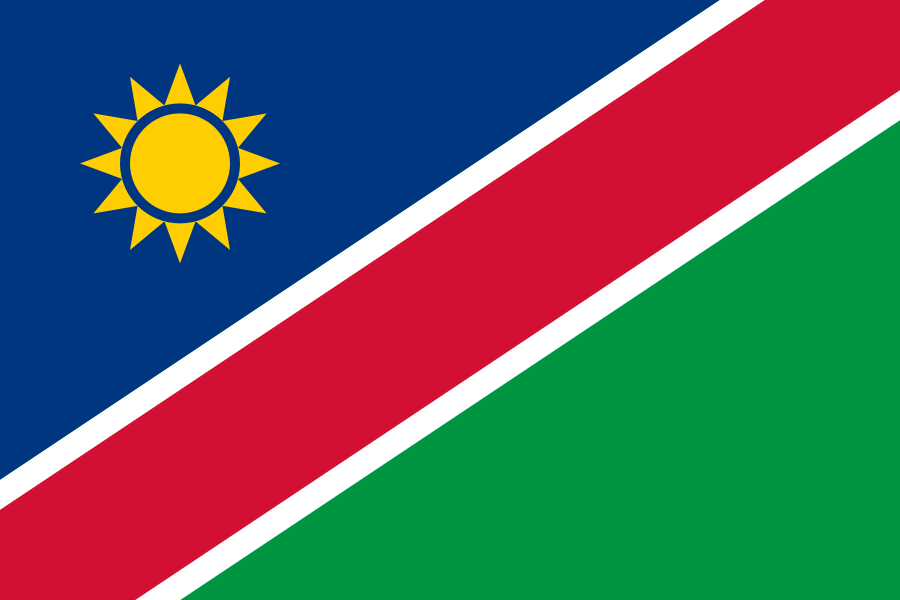
Namibia
Africa · Windhoek · NA
Namibia is the vast, arid kingdom of southern Africa, one of the most sparsely populated countries on earth and one of the most dramatic, holding the oldest desert, some of the highest dunes and a wildlife that flourishes in its fierce, beautiful land. Windhoek, the tidy capital in the highlands of the centre, mixes the German colonial architecture of a century ago with the modern city, and the country spreads north to the game of the Etosha, with its elephants, its lions and its great flooded pan, and west to the dunes of the Sossusvlei, where the mountains of red sand press against the empty plain. The Skeleton Coast, the canyons and the rock art of the south and the German-era towns of the interior complete the picture. Stark, enormous and unforgettable, Namibia rewards the traveller who loves the wide open road.
Overview
Namibia is a country in Africa. Its capital is Windhoek and the international dialling code is +264. Languages commonly used in everyday life here include English. Local currency is the Namibian Dollar (NAD). Our guide covers 1 airport, including Hosea Kutako International Airport. We also list 1 city in Namibia: Windhoek.
The Dunes of Sossusvlei and the Sea of the Sand
The dunes of the Namib, the oldest desert of the earth, rise along the edge of the great plain in the mountains of the red sand that the visitor drives toward for an hour before they even seem real. The great dune at Sossusvlei, the endlessly photographed hill of the orange sand, stands by the dead clay pan of its name, and the climb to its summit gives one of the great views of the continent, the waves of the sand folding into the distance toward the peat of the cold sea. The dead trees of the vlei, the black skeletons of the camelthorn in the white clay, are the classic picture of the desert, and the dawns and the sunsets of the region turn the whole world gold. The desert also holds its wildlife, the oryx, the springbok and the ostrich, that live in the driest of the lands.
The Etosha, the Pan and the Lions of the Salt
The great national park of the Etosha, in the north of the country, is built around the enormous salt pan of its name, a white, flat expanse the size of a province that the game crosses in the soft, dry light. The waterholes of the southern edge of the pan, the springs and the drilled boreholes that the park manages, concentrate the wildlife through the dry season, and the elephants, the lions, the black rhinos and the great herds of the springbok and the zebra come to drink within sight of the camps. The night drives of the waterholes, the floodlit hours when the rhino and the elephant arrive in the dark, are among the most magical wildlife moments in Africa. The Etosha is the greatest wildlife stage of the country, enormous, dry and endlessly watchable.
The Skeleton Coast, the Wrecks and the Seal Colonies
The Skeleton Coast of the northwest, the long, fog-blown stretch of the Atlantic shore where the desert meets the sea, is the wildest and most forbidding coastline of Africa, its dunes and its salt flats scattered with the wrecks and the bones that give the region its name. The seal colonies of the coast, the enormous, bellowing colonies of the Cape fur seals on the beaches of the Cape Cross, are the enduring spectacle, and the shipwrecks of the old sailing and steam era lie where the fog and the shoals delivered them. The flights along the coastline from the town of Swakopmund give the scale of it, and the gemstones of the desert, the garlands of the diamonds that the old mining camps sought, add the treasure-hunt romance of the region. The Skeleton Coast is the country of the extremes, beautiful, dangerous and completely unlike anything else.
The Fish River Canyon and the South of the Country
The deep gorge of the Fish River, in the far south of the country, cuts the second largest canyon of Africa, its cliffs falling hundreds of metres to the river far below, and the rim and the trails of the canyon give the hikers one of the great treks of the continent. The wider south spreads the arid, empty diamonds of the Namib's edge, the ghost towns of the old mining at Kolmanskop, where the sand has taken back the German houses of the diamond rush, and the quiet small centres of the farming lands. The region is stark, beautiful and almost silent, with the quiver trees and the rock formations of the Karas and the Neckartal basins. The south of the country is the drawer of the traveller who wants the desert, the stars and the sense of a land left alone by time.
Windhoek, the German Towns and the Roads of the Interior
The capital, Windhoek, is a tidy, pleasant city of the highlands, its streets framed by the German colonial architecture of the early century and its cafes and its breweries carrying the inheritance of the era. The towns of the interior, Swakopmund with its long stretch of the colonial seafront, and the smaller centres of the south, keep the story of the settlers and their strange, neat streets among the enormous landscapes. The roads of the country, the famous gravel and the wide tar of the long-distance highways, are the open-air galleries of the whole trip, and the driving, alone on the empty horizon, is the definitive Namibian experience. The interior complete the picture of the country, where the history, the architecture and the road itself meet.
Compare hotels, cover your trip and stay connected.
- Capital
- Windhoek
- Currency
- Namibian Dollar (NAD)
- Languages
- English
- Calling code
- +264
- Internet TLD
- na
Entry requirements
Check who can enter →See which passports travel visa-free or need a visa to enter Namibia.
Airports (1)
All airports →Cities (1)
All cities →Frequently asked questions
What is the capital of Namibia?
Windhoek is the capital of Namibia, and the country sits in Africa.
What currency is used in Namibia?
You pay with Namibian Dollar (NAD) in Namibia. Exchange rates move day to day, so check the current rate before you change money or use your card abroad.
Which languages do people speak in Namibia?
The languages we list for Namibia are English. A couple of greetings in the local language go a long way when you travel, even in cities where another language is widely used.
What is the international dialling code for Namibia?
The dialling code for Namibia is +264 — keep the plus sign when you save the number.
Which airports serve Namibia?
Hosea Kutako International Airport (WDH) in Windhoek is the airport we cover for Namibia.
Which cities in Namibia do you cover?
Our guide lists 1 city for Namibia: Windhoek (capital).