TbilisiCapital
Georgia · Country profile
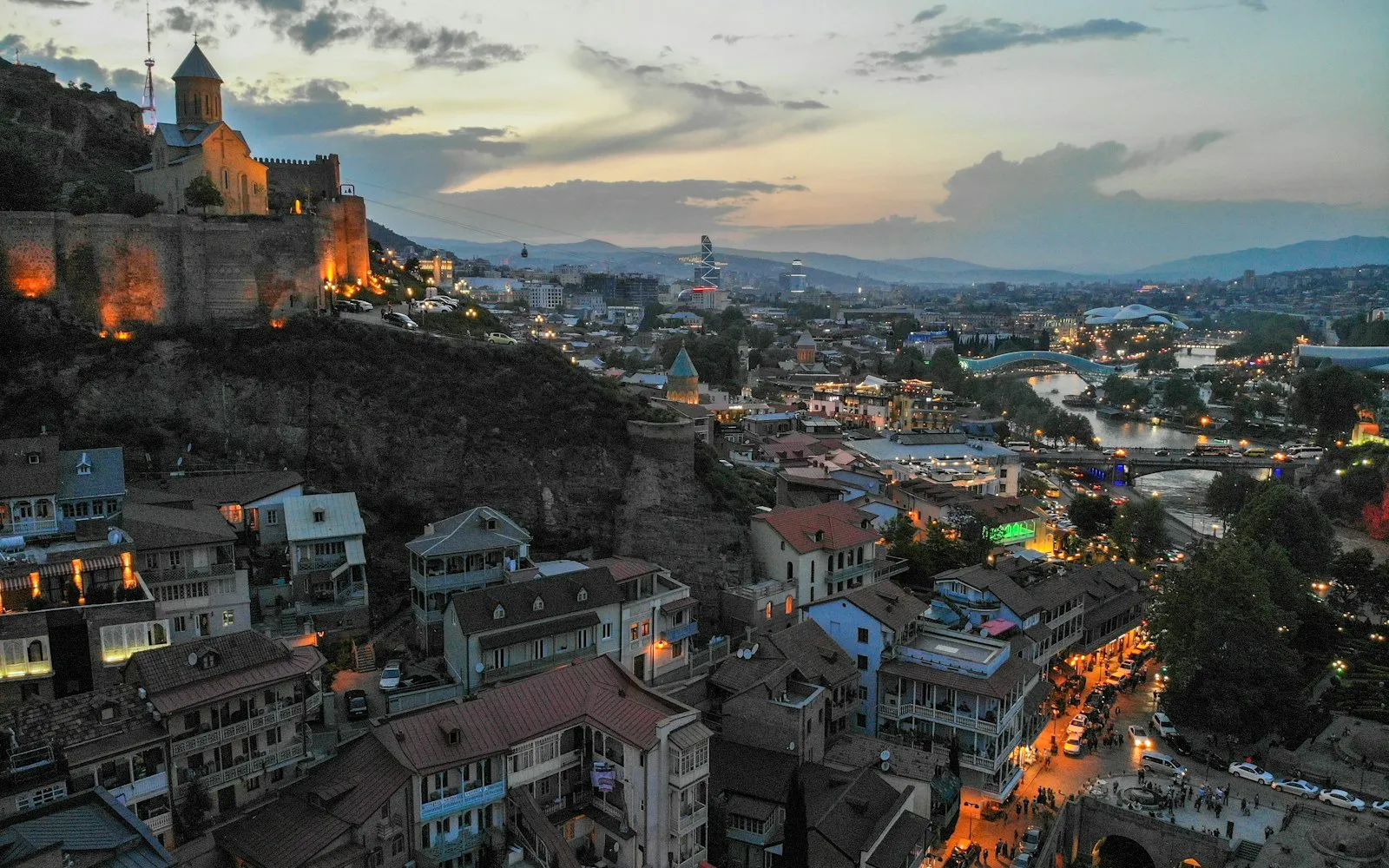
Tbilisi is the warm, terraced capital of Georgia, the storied city of the Caucasus that spreads its tiled old town, its sulphur bathhouses, its fjorded canyons and its dramatic funicular-climbed hills along the valley of the river of the Mtkvari, at the centuries-old junction of the routes between the two seas. The capital of the country for nearly sixteen centuries, since the king founded the city on the hot springs of its valley, it is a city of the layered beauty, its ancient fortress, its coppery-hued churches and caravanserais, its Prince-style balconied old houses and its modern glass towers and its adopted fairy-tile buildings staging the whole Georgian story, from the Persian, the Ottoman and the Russian centuries to the contemporary wine-country capital. The old town, the sulphur baths, the fortress, the modern botanical and arts districts and the cable-car paths of the hills anchor the essential visits, while the wine valleys, the mountain churches and the ancient cave cities of the region fill the days beyond the capital. Warm, artistic and endlessly beautiful, Tbilisi is the balconied heart of the Caucasus.
About Tbilisi
Tbilisi is the capital of Georgia. The city's documented population is around 1,120,000 people. For visitors from abroad, the local currency is the Georgian Lari (GEL) and Georgian is spoken; the dialling code is +995. It is served by 1 airport in our guide: Tbilisi International Airport.
The Balconies of the Old Town and the Domes of the Baths
Tbilisi is a valley-hugged, walkable capital where the essential circuit moves between the old town, the sulphur baths and the fortress, and the modern districts and the funicular hills, with the river, the bridges and the cable car stringing the classic days. The old town with its carved balconies, its coppery churches and its caravanserais, the ancient sulphur baths of the centre and the ruins of the great fortress on its rock anchor the essential visits, while the modern architecture of the peace bridge and the new government buildings, the museums and the flea markets of the dry bridge and the botanical gardens frame the contemporary life. The vineyards and the wine cellars of the valley, the ancient monasteries and the cave cities of the region, and the mountain roads of the Caucasus fill the day trips beyond the capital.
The Fortress of the Narikala and the Cable Car of the Hill
The climate of the city is the southeastern continental, with the hot summers, the mild winters and the rare snowfalls, the long springs and the golden autumns of the valley, and the warm, sultry evenings of the old town through the summer months. The lari is the currency, with the Georgian the language of the city, the Russian common among the older and the English growing among the younger population. The old town, the fortress and the cable hill make the core visits, and the wine country and the mountains of the region lie within the easy reach of the capital. Layered clothing for the seasons and comfortable walking shoes for the steep streets complete the preparation for the balconied capital.
The Bridge of the Peace and the Market of the Dry
The old town of the capital, the extraordinary quarter of the carved wooden balconies, the vine-draped courtyards and the coppery cylindrical churches that crowds the right bank of the river beneath the columns of the fortress, is the balconied heart of Tbilisi, its winding lanes climbing the steep ridge above the baths whose domed brick halls of the sulfur spa rise from the avenue of the old town; and the sulphur baths themselves, the celebrated public bathhouses of the old quarter where the medieval kings bathed and where the stone pools steam under the aged domes, preserve the living tradition of the founding springs. The fortress of the capital, the legendary citadel of the rocky promontory with its church and its walls, holds the cable car and the views over the whole river valley, and the modern ensemble of the centre, with the peace bridge, the opera and the galleries, joins the old to the new. The old flea market of the dry bridge, with its ceramics, its Soviet relics and its paintings, the monasteries and the cave cities of the region, and the wine cellars of the whole wine-making country of Georgia, complete the essential, warm, balconied and endlessly artistic circuit of the capital of the Caucasus.
Report an error or suggest an update
- Country
- Georgia
- Population
- 1,120,000
- Coordinates
- 41.6692, 44.9547
- Capital
- Tbilisi
- Region
- Asia
- Currency
- Georgian Lari (GEL)
- Languages
- Georgian
- Calling code
- +995
- Country code
- GE
Entry requirements for Georgia
Visa status for travellers from common origins visiting Georgia for tourism.







Getting to Tbilisi
Airports we list for Tbilisi:
Frequently asked questions
Is Tbilisi the capital of Georgia?
Yes — Tbilisi is the capital of Georgia.
What currency do I need in Tbilisi?
The local currency is the Georgian Lari (GEL). Languages spoken in Georgia include Georgian.
What is the dialling code for Georgia?
The international dialling code for Georgia is +995.
Which airport should I fly into for Tbilisi?
Tbilisi International Airport (TBS) is the airport we list for Tbilisi.
Do I need a visa to visit Georgia?
It depends on your passport. Among the origins we track, travellers from Australia, Canada, Japan, New Zealand and Singapore currently enter Georgia visa-free for tourism. Use the entry requirements tool to check your own nationality and purpose of travel.
Flying out of Tbilisi? Check the entry requirements for your destination in our entry requirements tool before you fly.