PyongyangCapital
North Korea · Country profile
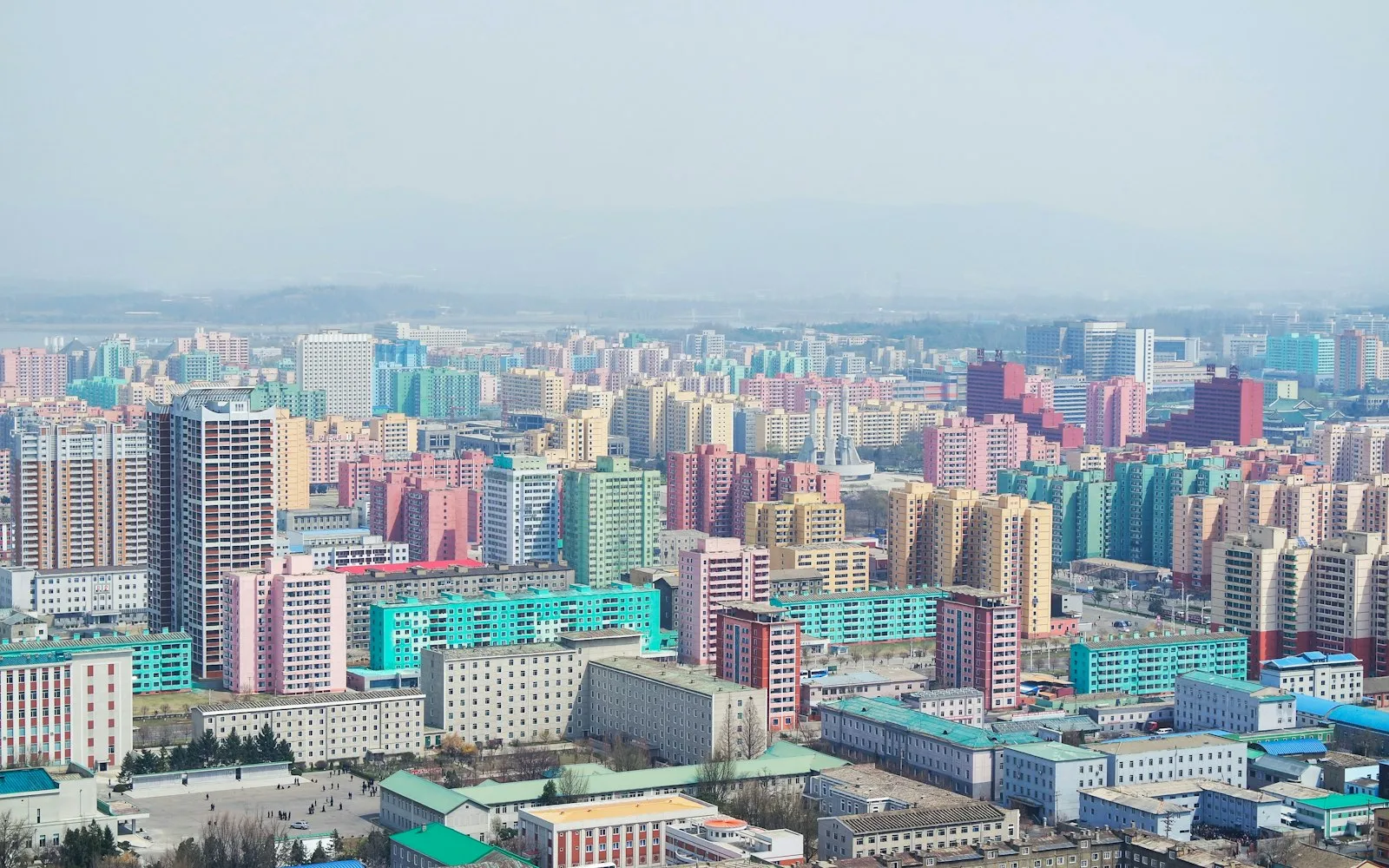
Pyongyang is the grand, isolated capital of the Democratic People Republic of Korea, the monumental city of the Taedong river that the state rebuilt after the wartime destruction of the decade into the ceremonial showcase of the regime, a vast, orderly ensemble of the wide avenues, the colossal towers, the mosaics, the statues and the cloud-touching monuments of the leadership. One of the most controlled and least visited capitals of the world, it presents to the rare visitor a carefully staged and strangely stirring city of the monumental architecture, the stands of the parades, the underground metro, the museums of the state and the riverside gardens, all set against the mountains and the terraced plain of the river valley. The monuments of the Juche and the Liberation, the great squares, the stadium with its extraordinary seated masses and the study house of the people anchor the essential guided visits, while the daily rhythm of the city, with its traffic of the bicycles and the trams and its constant public order, remains the most remade urban world on earth. Eerie, immense and absolutely controlled, Pyongyang is the capital theatre of the last great Stalinist state.
About Pyongyang
Pyongyang is the capital of North Korea. The city's documented population is around 2,950,000 people. For visitors from abroad, the local currency is the North Korean Won (KPW) and Korean is spoken; the dialling code is +850.
The Tower of the Juche and the Panorama of the River
Pyongyang is an organized, guided capital where the essential visits follow the fixed circuit of the state, the great squares, the monuments of the national foundation, the triumphal arch, the museums and the stadiums of the city, with the metro and the parks of the town filling the sanctioned moments. The tower of the Juche with its panoramic elevator, the immense square of the Kim Il Sung with its mosaics and its parades and the arch and the gates of the great victories anchor the monumental circuit, while the mausoleum, the museums and the performance hall of the masses complete the carefully guided itinerary. Every element of the daily city, from the controlled traffic to the choreographed shows, belongs to the staging of the state, and the whole visit unfolds under the permanent official escort of the regime.
The Squares of the Parades and the Arch of the Liberation
The climate of the city is the sharply continental, with the cold, dry winters and the frozen river, the brief, bright spring, the hot, stormy summer and the golden autumn, each season visible in the official parks and the boulevards of the town. The national currency has no practical role for the foreign visitor, and business runs in the permitted hard currencies, with the Korean the language of the city and interpreters in English attending the official visits. The entire trip follows the fixed, licensed itinerary of the guided tour, with photography and movement tightly controlled. Respectful behaviour, a discreet camera discipline and adherence to the strict official program are the absolute essentials of the visit.
The Metro of the City and the Murals of the State
The tower of the Juche on the river bank, the enormous granite obelisk of the stone-and-bronze monument that rises above its fountain plaza with its gold-litter grouping and its elevator to the summit, commemorates the founding philosophy of the state and gives, in the sanctioned elevator, the extraordinary overview of the whole monumental capital. The great square of the Kim Il Sung, the immense ceremonial plaza at the heart of the city with its portraits, its stone stands and its wide geography, is the stage of the massed parades and the rallies of the state, and the triumphal arch of the city, the enormous white arch that honours the liberation of the country, completes the trio of the central monuments. The metro of the city, with its enormous chandeliered stations and its murals of the state, the mausoleum of the founding leader and the museum of the liberation struggle, together with the brimming routines of the daily street, give the visitor the unforgettable, everywhere official, wholly staged world of the last great Stalinist capital.
Report an error or suggest an update
- Country
- North Korea
- Population
- 2,950,000
- Capital
- Pyongyang
- Region
- Asia
- Currency
- North Korean Won (KPW)
- Languages
- Korean
- Calling code
- +850
- Country code
- KP
Frequently asked questions
Is Pyongyang the capital of North Korea?
Yes — Pyongyang is the capital of North Korea.
What currency do I need in Pyongyang?
The local currency is the North Korean Won (KPW). Languages spoken in North Korea include Korean.
What is the dialling code for North Korea?
The international dialling code for North Korea is +850.
Flying out of Pyongyang? Check the entry requirements for your destination in our entry requirements tool before you fly.