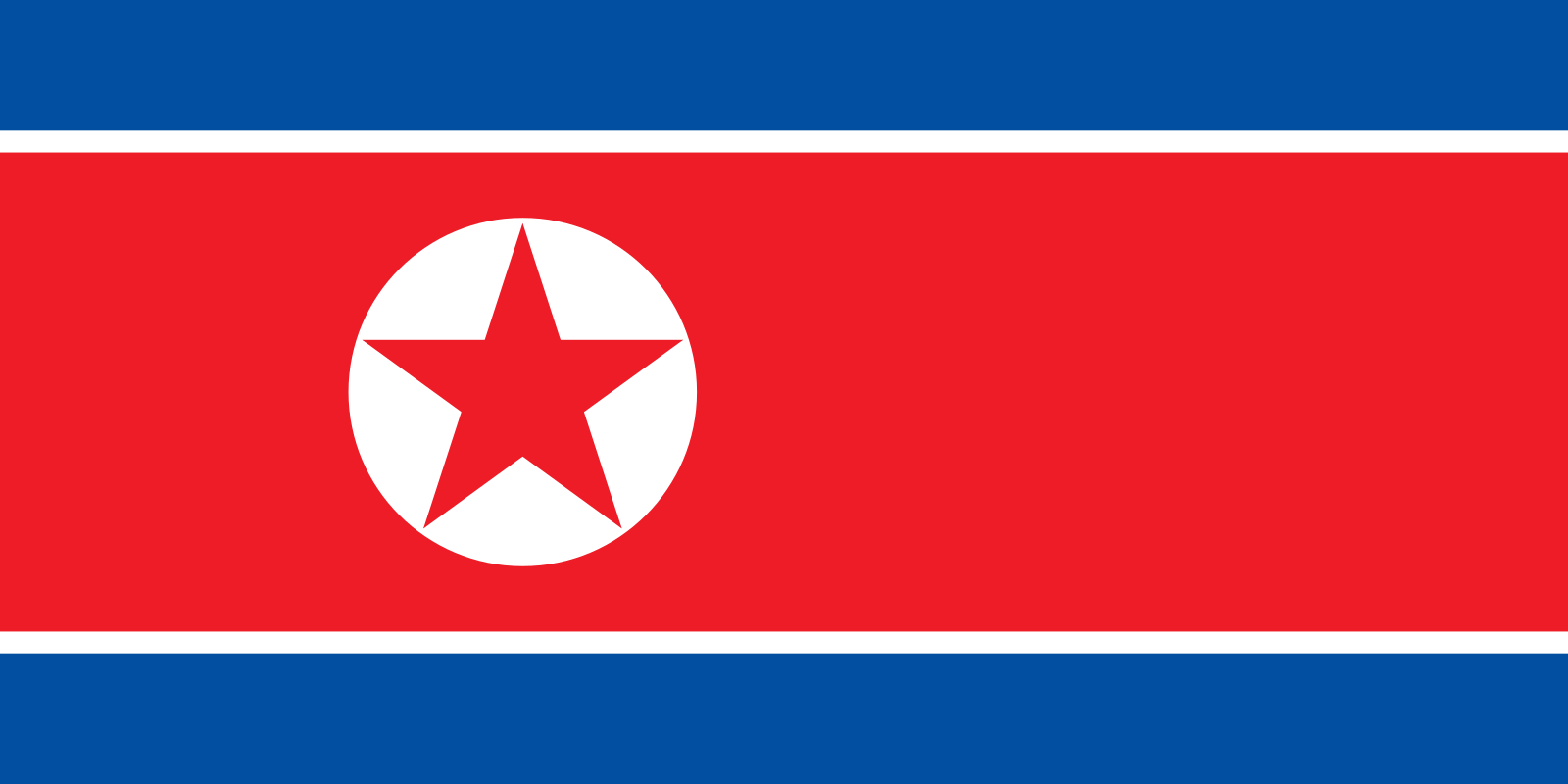
North Korea
Asia · Pyongyang · KP
North Korea is the isolated, enigmatic republic of the northern half of the Korean peninsula, one of the most closed countries on earth and the last stronghold of the totalitarian state of the communist world. It is a country of the extraordinary official monuments, the vast plazas of the capital, the revolutionary museums and the towering statues of the leaders, whose citizens the visitor sees only through the guided window of the state tourism. Beneath this official surface lies the real geography of the land, the emphatic mountains of the east, the beautiful coasts, the ruins of the ancient kingdoms and the agricultural plains of the west, seen by the few travellers through the tightly controlled itineraries of the regime. The demilitarised zone of the border, the celebrated sites of the revolution and the strange, choreographed daily life of the capital make North Korea one of the most incomprehensible and unforgettable destinations of the modern world.
Overview
North Korea is a country in Asia. Its capital is Pyongyang and the international dialling code is +850. Languages commonly used in everyday life here include Korean. Local currency is the North Korean Won (KPW). We also list 1 city in North Korea: Pyongyang.
The Streets of the Capital and the Monuments of the State
The capital of the Pyongyang, the vast, orderly city of the western plains that the state rebuilt from the ruins of the war into the showcase of its monumental architecture, is the extraordinary ceremonial heart of the country. The wide empty avenues of the capital, lined with the enormous residential towers, carry the visitor from the great plaza of the Kim Il Sung square to the towers of the Juche idea, the triumphal arches and the golden statues of the leaders that define the official cityscape of the nation. The metro of the city, with its dazzling mosaics and its revolutionary murals, the mansions and the museums of the state, and the daily choreography of the streets, where the crowds of the workers and the schoolchildren move beneath the gaze of the portraits of the leaders, give the visitor the unsettling, unforgettable heart of the capital of the closed state.
The Ruins of the Past and the Cities of the Ancient Land
The historical heritage of the country, the ancient capital cities and the tombs and the temples of the kingdoms of the peninsula that survived the destructions and the rebuildings of the ages, holds the deep past of the land of the morning calm. The ancient city of the Kaesong, the walled capital of the Koryo dynasty that the border-zone preserves with its gates, its museum of the old culture and its royal tombs of the hills, is the great historic destination of the country. The tombs of the rulers of the north, the mysterious pyramids of the steep and the royal burial mounds of the kingdoms of the region, and the temples and the fortresses of the mountains of the east, together with the national treasures of the old books and the celadons, complete the picture of the ancient Korean world of the state.
The Mountains of the East and the Peaks of the Coast
The eastern provinces of the country, the rugged mountain country that runs down the long coast of the Sea of Japan, hold the dramatic natural scenery of the nation, the celebrated peaks, the gorges and the beaches of the east of the peninsula. The mountain of the Kumgang, the cluster of the granite peaks and the waterfalls of the eastern range that the state opens to its own pilgrims and foreign tourists alike, is the most famous scenic wonder of the country, its trails, its gates and its pavilions of the mountain legend climbing through the forest of the cliffs. The beaches of the east coast, from the resort towns of the region to the coves of the southern seas, together with the great passes and the gorges of the interior, complete the picture of the beautiful, largely closed wilderness of the mountains and the eastern seas.
The Zone of the Border and the Line of the Demilitarised South
The demilitarised zone of the Korean peninsula, the extraordinary strip of the heavily-armed no man's land that cleaves the country from its neighbour and that stands as the most fortified border on earth, is the defining and the most moving destination of the whole of the region. The joint security area of the border village, where the blue huts of the truce stand on the actual line between the two states and where the soldiers of the two sides stand face to face in the silence of the zone, gives the visitor the unique, tense and unforgettable encounter with the division of the peninsula. The tunnels of the border, the bridge of the return and the observation posts of the demilitarised strip, where the villages and the soldiers of the southern side can be seen across the wire, complete the extraordinary experience of the last cold-war frontier of the planet.
The Coasts of the West and the Seas of the Nation
The western coasts of the country, the long shores of the yellow sea of the peninsula that the great estuaries and the islands of the region wash, hold the agricultural and the maritime face of the North Korean world. The reclamation walls and the fields of the coast, the enormous tidal schemes that the state built to extend the farmland of the west, and the fishing villages and the ports of the region, with their fleets and their cages of the aquaculture of the bay, carry the working life of the national shores. The islands and the harbours of the western seas, the beaches of the resorts of the coast and the views over the yellow waters of the peninsula, together with the birds and the wetlands of the estuaries, complete the picture of the large, quiet, carefully managed coasts of the western kingdom of the morning calm.
Compare hotels, cover your trip and stay connected.
- Capital
- Pyongyang
- Currency
- North Korean Won (KPW)
- Languages
- Korean
- Calling code
- +850
- Internet TLD
- kp
Entry requirements
Check who can enter →See which passports travel visa-free or need a visa to enter North Korea.
Cities (1)
All cities →Frequently asked questions
What is the capital of North Korea?
Pyongyang is the capital of North Korea, and the country sits in Asia.
What currency is used in North Korea?
You pay with North Korean Won (KPW) in North Korea. Exchange rates move day to day, so check the current rate before you change money or use your card abroad.
Which languages do people speak in North Korea?
The languages we list for North Korea are Korean. A couple of greetings in the local language go a long way when you travel, even in cities where another language is widely used.
What is the international dialling code for North Korea?
The dialling code for North Korea is +850 — keep the plus sign when you save the number.
Which cities in North Korea do you cover?
Our guide lists 1 city for North Korea: Pyongyang (capital).