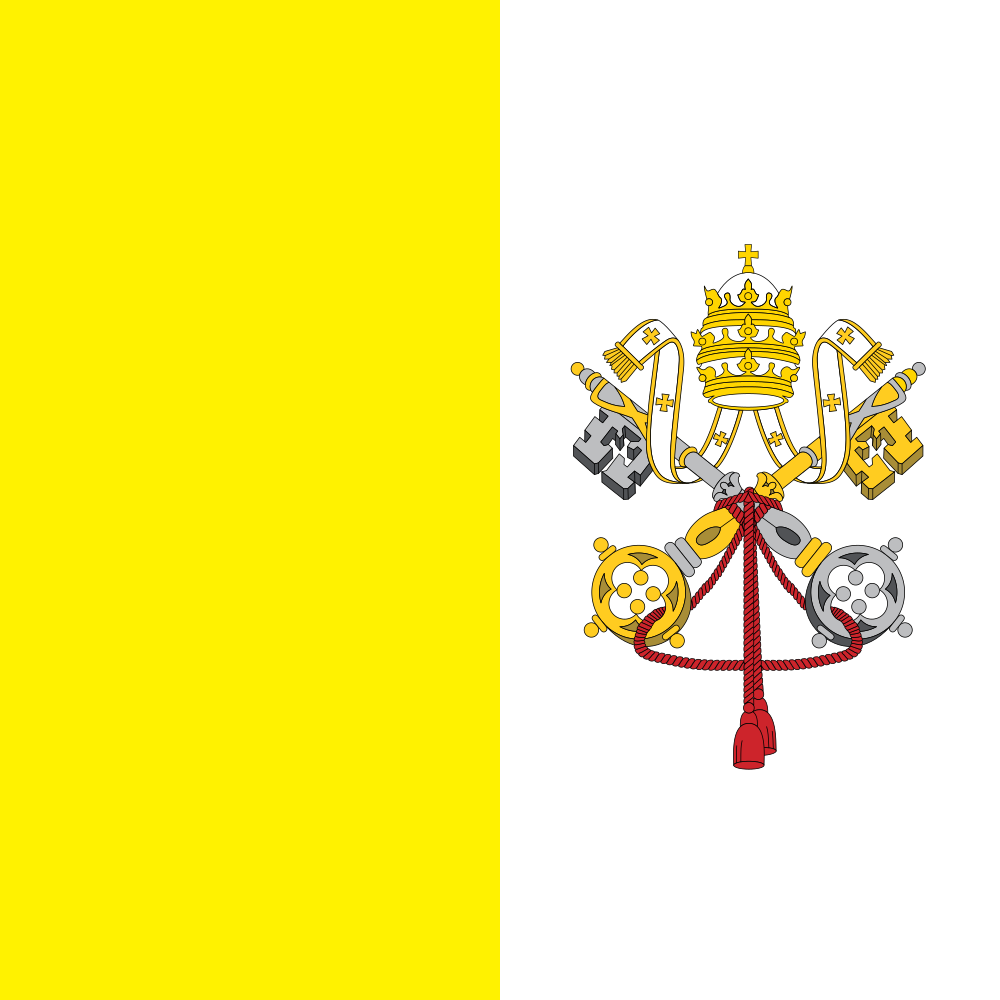
Vatican City
Europe · Vatican City · VA
The Vatican City is the smallest independent state in the world, a tiny sovereign enclave of barely half a square kilometre within the city of Rome, and the spiritual and governing heart of the Catholic Church, the seat of the Pope and home to the great basilicas and collections of the Christian world. The state, encircled by the walls of the eternal city, gathers within its confines the immense basilica of the Saint Peter with its sweeping colonnade and its enormous dome, the apostolic palace and the incomparable museums of the Vatican, whose galleries hold masterpieces of the civilization, from the frescoes of the Sistine chapel to the statue of the Laocoön. It is a living state of the small population, the Swiss guard and the learned life of the church, whose daily rites and official functions take place against the backdrop of the art and the architecture of two thousand years. Tiny, monumental and infinitely profound, the Vatican City is the sacred acropolis of the western world.
Overview
Vatican City is a country in Europe. Its capital is Vatican City and the international dialling code is +379. Languages commonly used in everyday life here include Italian and Latin. Local currency is the Euro (EUR). We also list 1 city in Vatican City: Vatican City.
The Basilica of the Saint Peter and the Dome of the Faith
The great basilica of the Saint Peter, the immense church that rises from the tomb of the apostle over the vast piazza of the columns and the obelisk, is the largest sacred building of the Christendom and the monumental heart of the Vatican State. The cathedral, rebuilt from the fifteenth to the seventeenth centuries by the temple of the greatest artists and the architects of the Renaissance, gathers the colossal sculptures, the gilded baldachin and the chambered tombs of the popes beneath its soaring dome of the Michelangelo, and the climb to the crowning lantern of the dome gives the unforgettable panorama over the whole of the city of the Rome. The holy door, opened at the jubilees, and the crowds of the pilgrims crossing the great threshold of the basilica, make the immense church the supreme pilgrimage destination of the western faith.
The Chapel of the Sistine and the Vision of the Ceiling
The chapel of the Sistine, the small, austere papal chapel of the apostolic palace that holds the conclave of the cardinals, preserves the most celebrated artistic works of the renaissance within its walls, the ceiling of the Michelangelo and the enormous judgements wall behind the altar of the pope. The frescoes of the ceiling, the extraordinary visions of the creation and the prophets of the Italian master painted on his back over the scaffold of the chapel, and the terrible, awe-inspiring last judgement filled with the bodies and the saints, have drawn the world to the small vaulted room since they were unveiled. The pre-conclave silence of the chapel, where the greatest artists and the popes of the age sit with the crowds of the faithful, remains the supreme artistic and spiritual encounter of the Vatican.
The Museums of the Vatican and the Treasures of the Papacy
The museums of the Vatican, the vast assemblage of the galleries, the courtyards and the palace rooms that stretch through the apostolic buildings of the state, hold one of the greatest art collections on earth, the treasure accumulated by the popes across half a millennium of the patronage and the acquisition. The galleries of the museums thread the extraordinary sequences of the art, from the classical sculpture of the Belvedere and the enormous Laocoön, to the golden corridors of the maps and the Raphael rooms with their frescoes of the renaissance, and the celebrated spiral staircase that spirals the visitor out to the daylight of the courtyard. The collections of the Egyptian, the Etruscan and the early Christian antiquities, and the modern art of the twentieth-century gallery, complete the incomparable museums of the world's smallest great state.
The Gardens of the Vatican and the Walls of the Enclave
The gardens of the Vatican, the quiet, manicured green enclave of the state that slopes behind the basilica and the palaces toward the summit of the old hill, offer the serene counter-world of the crowded galleries, the fountains and the grottoes of the papal park. The path of the gardens, threading the lawns, the statues and the small buildings of the state under the protection of the formidable walls of the city, gives the visitor the sense of the whole little country contained within its historic ramparts. The towers and the gates of the walls, with the famous gate of the bronze that opens onto the great basilica and the fortified passages that once linked the state to the castle of the region, complete the fortified, self-contained geography of the smallest independent country of the world.
The Swiss Guard and the Ceremonies of the Papacy
The famous guard of the Swiss, the small, spectacular corps of the helvetian soldiers who have protected the popes since the sixteenth century, is the living colour of the Vatican State, with their orange-and-blue striped uniforms of the renaissance tradition and their halberds still standing guard at the gates and the doors of the papal palace. The extraordinary ceremonies of the state, from the throning of the popes and the canonizations of the great basilica to the window addresses of the palace that draw the crowds to the piazza, run the ancient rhythm of the whole world of the church. The post office and the stamps of the state, the smallest fully functioning postal system of the world, and the daily observances of the clergy of the small state, complete the unique, functioning civic life of the sacred enclave of the Rome.
Compare hotels, cover your trip and stay connected.
- Capital
- Vatican City
- Currency
- Euro (EUR)
- Languages
- Italian, Latin
- Calling code
- +379
- Internet TLD
- va
Entry requirements
Check who can enter →See which passports travel visa-free or need a visa to enter Vatican City.
Which nationalities can enter Vatican City?
Current visa status for tourism for the origins we cover, with links to the detailed requirements.
Cities (1)
All cities →Frequently asked questions
Do I need a visa to visit Vatican City?
For the origins we track, Vatican City requires a visa for tourism (Morocco: visa required). Entry rules depend on your passport, so confirm the current requirements for your own nationality with our entry requirements tool.
What is the capital of Vatican City?
Vatican City is the capital of Vatican City, and the country sits in Europe.
What currency is used in Vatican City?
You pay with Euro (EUR) in Vatican City. Exchange rates move day to day, so check the current rate before you change money or use your card abroad.
Which languages do people speak in Vatican City?
The languages we list for Vatican City are Italian and Latin. A couple of greetings in the local language go a long way when you travel, even in cities where another language is widely used.
What is the international dialling code for Vatican City?
The dialling code for Vatican City is +379 — keep the plus sign when you save the number.
Which cities in Vatican City do you cover?
Our guide lists 1 city for Vatican City: Vatican City (capital).