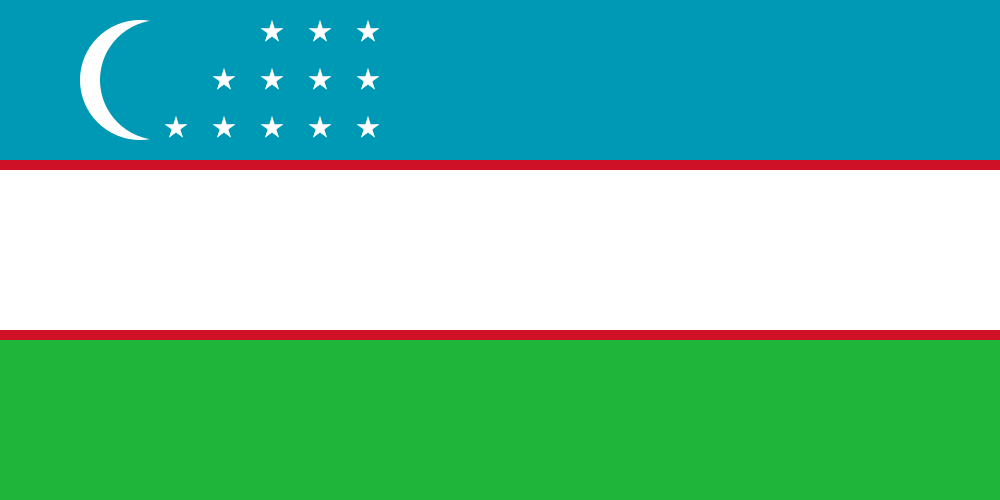
Uzbekistan
Asia · Tashkent · UZ
Uzbekistan is the double-landlocked heart of the Silk Road, a country of turquoise domes, vast desert cities and a history that runs from the empire of Tamerlane to the modern republic. Tashkent, the capital, is a green, orderly, Soviet-planned city, but the real treasures are the three great cities of the old route: Samarkand, with its Registan square and its blue-tiled monuments of the Timurid era, Bukhara with its miles of madrassas, domes and trading lanes, and Khiva with its walled old town in the desert. The country spreads the desert of the Kyzylkum, the river cities and the crafts of the carpet, the ceramic and the silk that made the route famous, and the warmth of the table, the plov, the bread and the melons of the oasis, closes the picture. The architecture, the history and the hospitality make Uzbekistan one of the great journeys of Central Asia.
Overview
Uzbekistan is a country in Asia. Its capital is Tashkent and the international dialling code is +998. Languages commonly used in everyday life here include Uzbek. Local currency is the Uzbekistani Som (UZS). Our guide covers 1 airport, including Islam Karimov Tashkent International Airport. We also list 1 city in Uzbekistan: Tashkent.
The Registan, Samarkand and the Blue of the Empire
The Registan of Samarkand, the great square of the city, is the most famous sight of the whole Silk Road, its three enormous madrassas facing one another across the open space, their turquoise domes, their arched portals and their mosaics of the blue and the gold the very image of the empire of Tamerlane. The rest of the city keeps the scale: the great Bibi-Khanym mosque, the mausoleum of the Shakh-i-Zinda with its mile of the tombs and the necropolis, and the observatory of the astronomers of the Timurid court, where the great instruments of the medieval sky were built. The Registan glows at its most dramatic under the floodlights of the evening, when the whole square turns to a stage of the empire's glory. Samarkand is the essential city of the Uzbek journey, and its blue is the colour that defines the country.
Bukhara and the Domes of the Trading Routes
The old city of Bukhara, one of the greatest of the Silk Road's merchant cities, spreads its low, warm townscape of the domes, the madrassas and the courtyards over more than a century of continuous habitation. The centre of the city is a living museum: the enormous trading domes where the carpets and the jewellery are still sold, the po-i-kalyan ensemble with its great minaret, and the fortress of the Ark that crowns the old town. The quiet streets of the old quarter run the caravanserai courtyards, the baths and the textile workshops, and the whole city keeps a dusty, golden atmosphere that feels closer to the medieval than to the modern. The evening walks around the pool of the Lyabi-Hauz and the tea terraces of the old town close the day in the perfect Bukhara style.
Khiva and the Walled City of the Desert
The ancient city of Khiva, on the edge of the desert of the Kyzylkum, is the most perfectly preserved of the three great cities of the country, its walled old town the Itchan Kala standing almost untouched in its four-square kilometres of the brick and the blue tile. The tall watchtowers and the minarets of the city rise over the walls, the palaces and the mausoleums of the Khans of Khiva fill its lanes, and the view from the great watchtower shows the whole medieval skyline intact against the desert. The city was the slave market and the fortress of the old trade, and its history, its mosques and its winding walls make it the most immersive of the country's ancient sights. The empty lanes of the evenings, lit in the amber of the old lamps, are one of the great time-travel experiences of Central Asia.
The Plov, the Bread and the Table of the Oasis
The food of Uzbekistan is the pride of the Central Asian table, and its great dish is the plov, the enormous pot of the saffron rice, the carrots, the onions and the lamb of the oasis, cooked over the open fire and served to the whole table from the single great platter. The bread of the country, the round, stamped loaves of the tandoor ovens, is the sacred daily bread, and no meal is complete without it, torn and shared at the centre of the table. The melons of the summer, the sweetest in the world, and the tea ceremonies of the evenings round out the day. The bazaars of the cities sell the spices, the dried fruits, the nuts and the silk and the paper of the old crafts, and the table of the country, always shared with the guest, is the warmest part of the whole journey.
The Desert, the Camels and the Rivers of the Route
The desert of the Kyzylkum, the red sand that covers the heart of the country between the great rivers, is the empty backdrop of the whole journey, crossed by the roads and the camels of the caravans that once carried the trade of the entire Silk Road. The river cities of the Samarkand and the Fergana valleys, green and fertile between the arid lands, hold the villages, the mulberry groves and the silkworm farms that fed the great silk routes, and the desert camps of the modern travellers offer the camel rides, the overnight glamping and the empty stars of the night. The border towns and the bazaars of the region still have the feel of the great trade, and the routes of the country, ancient and modern, all lead toward the same golden, turquoise heart of the story.
Compare hotels, cover your trip and stay connected.
- Capital
- Tashkent
- Currency
- Uzbekistani Som (UZS)
- Languages
- Uzbek
- Calling code
- +998
- Internet TLD
- uz
Entry requirements
Check who can enter →See which passports travel visa-free or need a visa to enter Uzbekistan.
Which nationalities can enter Uzbekistan?
Current visa status for tourism for the origins we cover, with links to the detailed requirements.









Airports (1)
All airports →Cities (1)
All cities →Frequently asked questions
Do I need a visa to visit Uzbekistan?
For the origins we track, travellers from Australia, Canada, France, Germany and Italy currently enter Uzbekistan visa-free for tourism, and 3 more origins are visa-free too. Entry rules depend on your passport and the purpose of your trip, so check the current requirements for your own nationality with our entry requirements tool.
What is the capital of Uzbekistan?
Tashkent is the capital of Uzbekistan, and the country sits in Asia.
What currency is used in Uzbekistan?
You pay with Uzbekistani Som (UZS) in Uzbekistan. Exchange rates move day to day, so check the current rate before you change money or use your card abroad.
Which languages do people speak in Uzbekistan?
The languages we list for Uzbekistan are Uzbek. A couple of greetings in the local language go a long way when you travel, even in cities where another language is widely used.
What is the international dialling code for Uzbekistan?
The dialling code for Uzbekistan is +998 — keep the plus sign when you save the number.
Which airports serve Uzbekistan?
Islam Karimov Tashkent International Airport (TAS) in Tashkent is the airport we cover for Uzbekistan.
Which cities in Uzbekistan do you cover?
Our guide lists 1 city for Uzbekistan: Tashkent (capital).