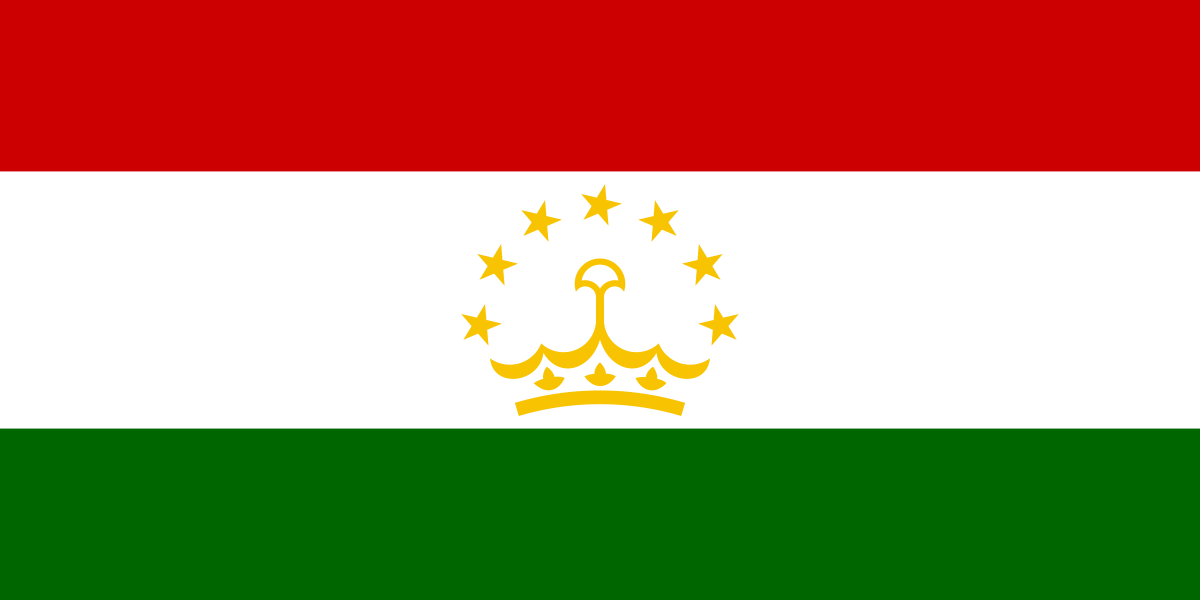
Tajikistan
Asia · Dushanbe · TJ
Tajikistan is the mountainous heart of Central Asia, the small, proud country of the High Pamir that holds the roof of the world, the extraordinary collision of the peaks and the valleys that the nomads and the traders of the Silk Road crossed for two thousand years. It is a country of the snows of the seven-thousand-metre summits, the turquoise lakes of the high plateaus, the deep river gorges and the ancient citadel towns of the valleys, inhabited by the famously hospitable people of the mountains and the ancient mixed cultures of the Persian world. The capital of the Dushanbe, the great bazaar cities of the north and the astonishing mountain roads of the Pamir highway open up the heart of this remote, beautiful and little-known land. Rugged, dramatic, deeply historic and endlessly rewarding, Tajikistan is the crowning mountain kingdom of Central Asia.
Overview
Tajikistan is a country in Asia. Its capital is Dushanbe and the international dialling code is +992. Languages commonly used in everyday life here include Tajik. Local currency is the Tajikistani Somoni (TJS). We also list 1 city in Tajikistan: Dushanbe.
The Peaks of the Pamir and the Roof of the World
The mountains of the Pamir, the vast highland system of the east of the country that geographers call the roof of the world, hold the highest and the wildest country of the former Soviet Central Asia, the peaks of the Academy of Sciences, the Lenin and the Ismoil Somoni rising above the glaciers of the region. The famous highway of the Pamir, threading the passes and the valleys of the high plateau between the eastern towns, is one of the great road journeys of the planet, crossing the passes of more than four thousand metres above the sea. The landscapes of the region, the bare high valleys, the colossal glaciers and the deep blue lakes of the roof of the world, together with the remote villages of the Pamiri peoples, give the visitor one of the most dramatic and least visited corners of the entire continent.
The Capital of the Dushanbe and the Avenues of the New City
The capital of the Dushanbe, the city of the Monday market that grew from the village of the foothills into the political heart of Tajikistan, is a green, orderly city of the wide avenues, the fountains and the white buildings of the modern republic. The capital, which was almost flattened by the troubles of the civil war of the nineteen-nineties, has been rebuilt into an extraordinary showcase of the central Asian monuments and the palatial ministries, and its parks, its opera house and its famous teahouse of the Oriental garden carry the civic life of the country. The book bazaar and the markets of the city, the museum of the antiquities of the region and the enormous flag of the mast of the independence complete the picture of this surprising, polished capital of the mountains.
The Gorge of the Central Asian Rivers and the Wall of the Fann
The central ranges of the country, the mountains of the Fann and the Gissar that rise in the west of the nation between the capital and the lakes, hold the most beloved hiking country of Tajikistan and some of the finest mountain scenery of the whole of the region. The deep gorges of the rivers of the massif, the walls of the granite and the beautiful turquoise lakes of the high valleys, from the classic lake of the Iskanderkul to the chain of the Seven Lakes, cluster in the accessible heart of the range. The trails of the Fann, crossing the passes between the lakes and the peaks of more than five thousand metres, with their wild flowers, their yurts of the shepherds and their evenings around the high campfires, give the visitor the incomparable mountain trekking of the Central Asian world.
The Forts of the Valley and the Heritage of the Silk Road
The valleys of the country, the cultivated lowlands of the north and the south that follow the rivers of the region, hold the citadels, the caravanserais and the towns of the ancient trade that defined the history of the Tajik lands. The fortress of the Hissar, the hilltop citadel of the valley near the capital with its madrassa of the eighteenth century and its bazaar gate, and the walled old city of the Istaravshan, with its mosques and its mausoleums of the medieval era, preserve the historical heart of the region. The bazaars of the valley towns, the silk and the cotton factories of the industrial era and the archaeological sites of the ancient Buddhist and the Sogdian world complete the storied heritage of the Silk Road through the Tajik mountains.
The Corridor of the Wakhan and the Passes of the Far East
The far east of the country, the extraordinary corridor of the Wakhan that runs along the border of the region between the high spurs of the Pamir and the Afghan ranges beyond, is one of the most remote and the most historically charged corners of the planet. The valleys of the corridor, wedged between the giants of the mountains, hold the roads, the forts and the stone camps of the traders and the travellers of the past, from the convoys of the Great Game to the caravans of the Silk Road. The passes of the region, thick with the snow for most of the year and crossed by the hardy jeeps and the tracks of the shepherds, open the views over the vast white mountain walls of both the countries, and the sparse, resilient villages of the corridor complete the picture of the last great mountain frontier of Central Asia.
Compare hotels, cover your trip and stay connected.
- Capital
- Dushanbe
- Currency
- Tajikistani Somoni (TJS)
- Languages
- Tajik
- Calling code
- +992
- Internet TLD
- tj
Entry requirements
Check who can enter →See which passports travel visa-free or need a visa to enter Tajikistan.
Cities (1)
All cities →Frequently asked questions
What is the capital of Tajikistan?
Dushanbe is the capital of Tajikistan, and the country sits in Asia.
What currency is used in Tajikistan?
You pay with Tajikistani Somoni (TJS) in Tajikistan. Exchange rates move day to day, so check the current rate before you change money or use your card abroad.
Which languages do people speak in Tajikistan?
The languages we list for Tajikistan are Tajik. A couple of greetings in the local language go a long way when you travel, even in cities where another language is widely used.
What is the international dialling code for Tajikistan?
The dialling code for Tajikistan is +992 — keep the plus sign when you save the number.
Which cities in Tajikistan do you cover?
Our guide lists 1 city for Tajikistan: Dushanbe (capital).