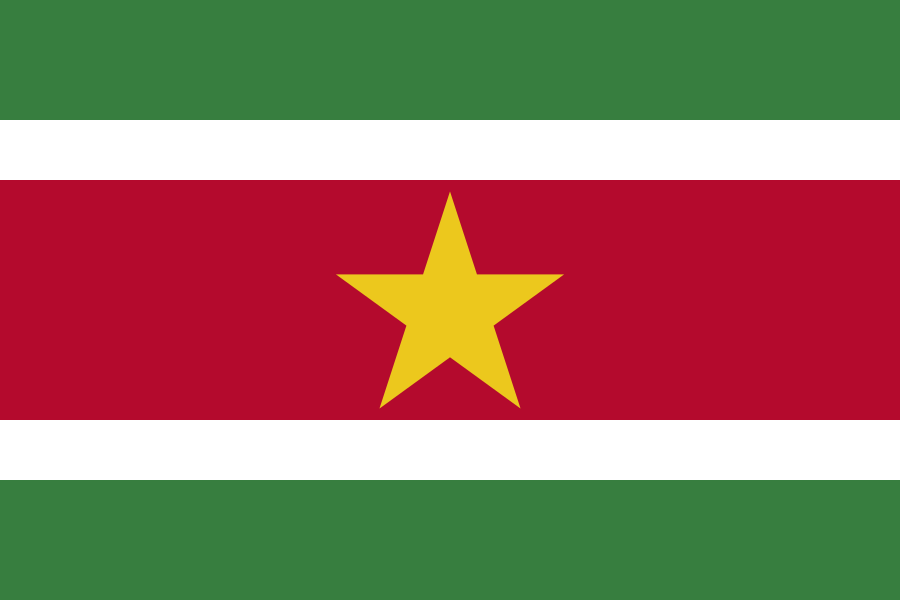
Suriname
South America · Paramaribo · SR
Suriname is the small, wildly forested country of the north coast of South America, the independent nation squeezed between French Guiana and Guyana, a Dutch-speaking enclave that carries its capital port on the great river of the Suriname to the sea. It is one of the most forested countries on earth, with more than ninety percent of its compact territory covered by the untouched Amazonian rainforest of the hinterland, a vast wild of the rivers, the rapids and the savannas that shelters the tribes of the Maroons and the Amerindians in the deep interior. The capital of the Paramaribo, an extraordinary historic city of the Dutch colonial architecture, the timber buildings and the jumble of the market cultures, is the gateway of the country, while the waterways of the interior, ascended by the launches and the dugouts, thread the true Amazonian world of the republic. Multi-ethnic, deeply green and almost entirely unknown, Suriname is the hidden forest nation of the South American coast.
Overview
Suriname is a country in South America. Its capital is Paramaribo and the international dialling code is +597. Languages commonly used in everyday life here include Dutch. Local currency is the Surinamese Dollar (SRD). We also list 1 city in Suriname: Paramaribo.
The Historic Town of the Paramaribo and the Timber of the City
The capital of the Paramaribo, the wonderfully atmospheric historic town of the country that spreads along the bank of the great river of the Suriname, is one of the great surviving colonial cities of the South American coast, a UNESCO-listed wonder of the Dutch wooden architecture and the brick mansions of the eighteenth century. The enormous white wooden cathedral of the capital, the largest timber building of the continent, the fortress of the Zeelandia and the palm-filled central square with its statue of the national hero anchor the historic town, while the markets of the city, from the great fish market of the port to the fragrant herb and flower stands of the covered hall, give the capital its daily, many-cultured bustle. The mansions of the old streets, the synagogues and the mosques of the tolerant capital, complete the extraordinary humanist heritage of this small, beautiful city of the river.
The River of the Suriname and the Rapids of the Interior
The great river of the Suriname, the living artery of the country that rises in the heart of the forest and falls by the rapids and the reservoirs to the capital on the sea, carries the historic route to the interior, the famous river journeys of the country that have opened the hinterland since the earliest explorations. The upper river, above the measure of the Brokopondo reservoir and the tangled world of the rapids beyond, threads the dense forest of the interior through the walls of the white sand cliffs, the sandbars and the islands, and the boat journeys of the river, the overnight stands and the villages of the Maroon riverside, give the deep experience of the interior. The waterfalls and the swimming holes of the upper tributaries, and the night sounds of the forest that surrounds the river camps, complete the classic river adventure of the country.
The Villages of the Maroons and the Culture of the Saramaka
The interior of the country is home to the Maroon peoples, the descendants of the escaped slaves who founded their independent villages in the deep forest from the seventeenth century, and who preserved the African traditions of their origin in the rivers of the interior for more than three centuries. The villages of the Saramaka and the other Maroon groups, built along the rivers with their decorated houses, their drums and their strict, ceremonial social world, live today largely as their ancestors lived, and the visits of the villages give a rare contact with a genuinely independent African-derived civilization. The crafts of the Maroons, the beautiful paddles and the carved calabashes of the tradition, and the rites and the music of their festivals, make the interior journeys of the country into deep cultural encounters with the living history of the Americas.
The Reef of the Smoke Falls and the Savannas of the South
Beyond the forest of the north and the heights of the central plateau, the deep south of Suriname opens onto the great savannas of the country, the green grasslands of the interior drained by the rivers of the border and crowned by the extraordinary geological wonders of the remote south. The falls of the Smoke, the colossal double cascade of the river of the Nicaragua Creek that plunges through the forest of the remote savanna, is the greatest waterfall of the country, a thunder of the water on the verge of the wilderness, while the enormous granite dome of the Voltzberg rises from the forest with its famous boulder crown. The glowing rocks of the Sipaliwini savanna, the giant anteaters and the tropical birds of these southern plains, complete the extraordinary wild of the deep Suriname, reached only by the boat and the foot of the true interior.
The Coast of the Mangroves and the Turtles of the Beaches
The low Atlantic shore of the country, the long, muddy coast of the mangroves that faces the sea between the mouths of the rivers, is one of the great wildlife coastlines of the continent, a frontier of the tidal forest where the birds of the entire hemisphere gather in the great intertwining estuaries. The vast mudflats and the mangrove creeks of the coast, crowded with the scarlet ibis, the herons and the kingfishers, and the remote beaches of the area, where the leatherback and the green turtles of the ocean haul ashore to nest through the months of the year, make the coastal zone a spectacular wild reserve. The boats of the coast threading the creeks and the mangroves of the settlements, and the fish camps of the sea, complete the extraordinary, little-known natural fringe of the green republic of the north coast.
Compare hotels, cover your trip and stay connected.
- Capital
- Paramaribo
- Currency
- Surinamese Dollar (SRD)
- Languages
- Dutch
- Calling code
- +597
- Internet TLD
- sr
Entry requirements
Check who can enter →See which passports travel visa-free or need a visa to enter Suriname.
Cities (1)
All cities →Frequently asked questions
What is the capital of Suriname?
Paramaribo is the capital of Suriname, and the country sits in South America.
What currency is used in Suriname?
You pay with Surinamese Dollar (SRD) in Suriname. Exchange rates move day to day, so check the current rate before you change money or use your card abroad.
Which languages do people speak in Suriname?
The languages we list for Suriname are Dutch. A couple of greetings in the local language go a long way when you travel, even in cities where another language is widely used.
What is the international dialling code for Suriname?
The dialling code for Suriname is +597 — keep the plus sign when you save the number.
Which cities in Suriname do you cover?
Our guide lists 1 city for Suriname: Paramaribo (capital).