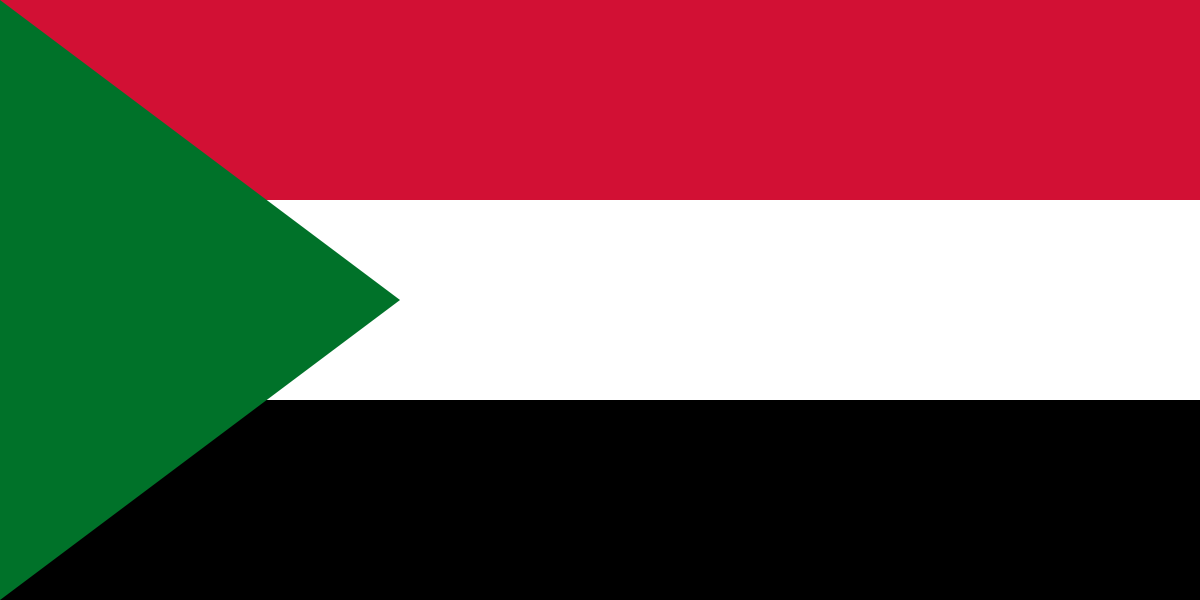
Sudan
Africa · Khartoum · SD
Sudan is the vast country of the north-east of Africa that lies at the meeting of the Nile, the desert and the cultures of the African and the Arab worlds, the largest land of the former continent and the heir of the ancient kingdoms of the Nile valley. The country stretches from the green borderlands of the east to the endless sands of the west, and its great river ties the pyramids of the ancient Meroe, the caravans of the desert and the modern capital at the confluence of the two Niles into one immense nation. Beneath the single most dramatic desert landscape of the Sahara, the country holds the deep history of the black Pharaohs, the extraordinary underwater reefs of its Red Sea coast and the warm, resilient culture of its peoples. Ancient, harsh and staggeringly beautiful, Sudan is the great underestimated country of the river and the sand.
Overview
Sudan is a country in Africa. Its capital is Khartoum and the international dialling code is +249. Languages commonly used in everyday life here include Arabic and English. Local currency is the Sudanese Pound (SDG). We also list 1 city in Sudan: Khartoum.
The Capital of the Khartoum and the Meeting of the Niles
The capital region of the country, the triple city of the Khartoum, the Omdurman and the North Khartoum that spreads around the extraordinary meeting point of the White and the Blue branches of the Nile, is the heart of the modern Sudanese nation. The confluence of the two rivers, where the pale waters of the White Nile meet the dark stream of the Blue Nile, is the great landmark of the region, and the camel market of the Omdurman, the great mosque and the tomb of the Mahdi of the town, carry the historic and the Islamic life of the capital. The museums of the country, the national museum with its famous collections of the antiquities, and the river promenades and the bridges of the city, give the visitor the essential introduction to the whole history of the Nile valley of the region.
The Pyramids of the Meroe and the Royal Tombs of the Desert
The royal cemetery of the Meroe, the extraordinary field of the steep, slender pyramids of the ancient kingdom of the Kush that rises from the golden sands of the Nile valley north of the capital, is the great archaeological treasure of the country. The pyramids of the site, the royal tombs of the kings and the queens of the black Pharaohs who ruled the region for nearly a thousand years, stand in their breathtaking, isolated rows among the dunes, far smaller and far steeper than their Egyptian cousins and set in one of the most photogenic landscapes of the desert world. The nearby royal cities of the Naga and the Musawwarat es-Sufra, with their temples, their lions and the extraordinary carved monuments of the kingdom of the Kush, complete the deep tour of the ancient Nubian world of the country.
The Reefs of the Red Sea and the Diving of the North Coast
The coast of the country, the long Red Sea shoreline of the north-east, from the border of the region to the great port of the country, holds one of the least spoiled coral reef systems of the planet and the finest diving of the Red Sea world. The reefs of the coast, from the offshore banks of the deep water with their sharks and their mantas to the fringing gardens of the shore, have escaped the northern crowds, and the liveaboards and the dive camps of the region, from the port towns of the coast, open the untouched walls of the coral. The islands and the wrecks of the coast, the ruins of the old Ottoman settlements and the loneliest beaches of the sea, together with the extraordinary marine life of the protected waters, make the Sudanese coast a secret pilgrimage for the world's divers.
The Sands of the Nubian Desert and the Caravans of the Camels
The deserts of the country, the immense expanses of the sand and the rock from the Nubian desert of the east to the Bayuda plain and the western dunes, form one of the greatest wildernesses of the Sahara world. The caravans of the past, the camel trains of the traders that carried the gum arabic, the gold and the slaves along the ancient routes of the desert, left the wells, the caravanserais and the forts of the region, and the camel trade of the country still survives in the great markets and the encampments of the lands of the west. The extraordinary scenery of the desert of the region, the black volcanic hills of the Bayuda, the burning sands of the Nubian of the east and the mysterious pyramids of the northern reaches, gives the country the immense, silent, stern beauty of the great Sahara land.
The Valleys of the Nile and the Temples of the Ancient North
The valley of the Nile that crosses the northern states of the country, the long green corridor of the river between the desert cliffs and the dunes, holds the villages, the palm groves and the monuments of the ancient kingdoms of the region. The temple sites of the valley, from the great sanctuary of the Amun at the holy mountain of the Jebel Barkal, the world heritage of the Kushite religion, to the temples of the Soleb and the Sesebi of the New Kingdom, preserve the archaeology of the nubian pharaohs of the Nile. The town of the Wadi Halfa at the northern border, the view from the boats of the lake of the Nasser and the island forts of the cataract, together with the small museums of the region, complete the deep journey up the great river into the ancient black world of the Sudan.
Compare hotels, cover your trip and stay connected.
- Capital
- Khartoum
- Currency
- Sudanese Pound (SDG)
- Languages
- Arabic, English
- Calling code
- +249
- Internet TLD
- sd
Entry requirements
Check who can enter →See which passports travel visa-free or need a visa to enter Sudan.
Cities (1)
All cities →Frequently asked questions
What is the capital of Sudan?
Khartoum is the capital of Sudan, and the country sits in Africa.
What currency is used in Sudan?
You pay with Sudanese Pound (SDG) in Sudan. Exchange rates move day to day, so check the current rate before you change money or use your card abroad.
Which languages do people speak in Sudan?
The languages we list for Sudan are Arabic and English. A couple of greetings in the local language go a long way when you travel, even in cities where another language is widely used.
What is the international dialling code for Sudan?
The dialling code for Sudan is +249 — keep the plus sign when you save the number.
Which cities in Sudan do you cover?
Our guide lists 1 city for Sudan: Khartoum (capital).