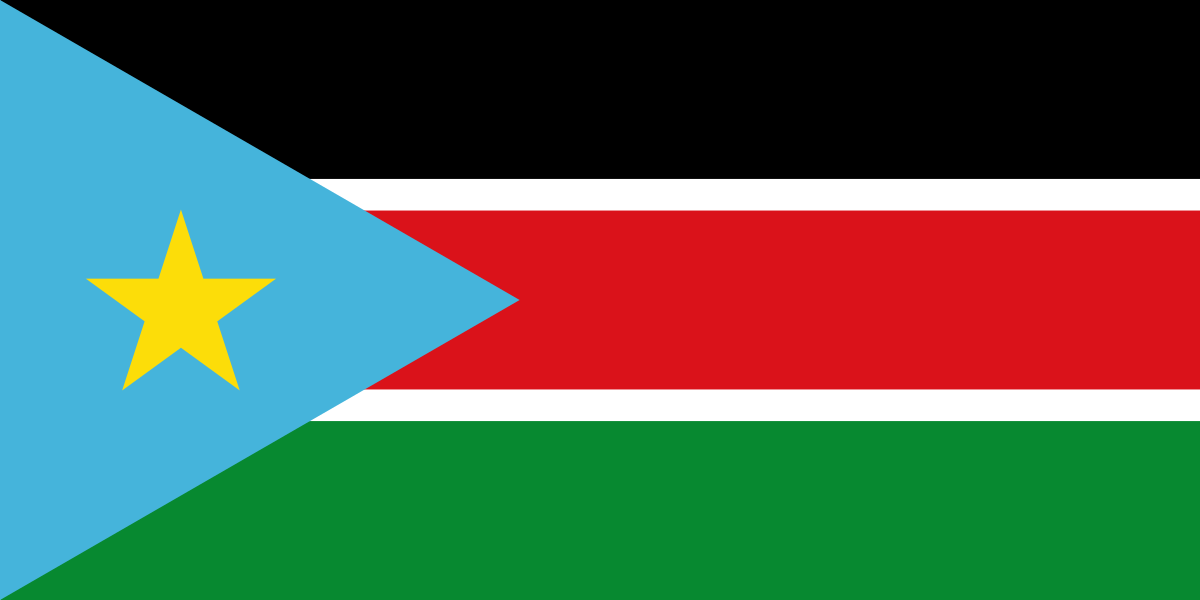
South Sudan
Africa · Juba · SS
South Sudan is the newest country of the African continent, a river and savanna state that split from its northern neighbour in the great vote for the independence and began its life as the nation of the world. It is a land of the enormous wetlands, the wandering herds and the cattle cultures of the plains, watered by the White Nile and the great floodplain of the Sudd that spans the centre of the country. The country remains one of the least developed and the least visited on earth, its roads rough, its towns improvised and its wildlife little known, but its people, from the pastoral communities of the cattle to the settled farmers of the rivers, carry an extraordinary dignity and warmth. The giant herds of the antelope, the birds of the great swamps and the immense, beautiful emptiness of the land give South Sudan one of the most extraordinary natural frontiers of the planet.
Overview
South Sudan is a country in Africa. Its capital is Juba and the international dialling code is +211. Languages commonly used in everyday life here include English. Local currency is the South Sudanese Pound (SSP). We also list 1 city in South Sudan: Juba.
The Capital of the Juba and the Boats of the Nile
The capital of the Juba, the young river city of the south of the country that spreads over the hills above the broad waters of the White Nile, is the improvised, hopeful heart of the newest nation of Africa. The city, which grew from a riverside garrison and the camp of the peacekeeping era into the seat of the government of the new state, holds the markets, the memorials and the new ministries of the young country, with the river giving it the calm and the escape of the late afternoons. The boat trips of the Nile, threading the islands and the fishing villages below the city, and the viewpoints of the hills above the port, with the enormous river landscape of the region, show the visitor the beautiful, fragile stage on which the youngest capital of the world begins its story.
The Floodplains of the Sudd and the Birds of the Great Swamp
The great floodplain of the Sudd, the enormous seasonally flooded wetland of the White Nile that spreads across the centre of the country, is one of the largest swamps on earth and the extraordinary heart of the bird life of the region. With the floodwaters of the rivers of the year, the grasslands of the Sudd turn into a vast inland sea of the papyrus, the reeds and the channels, and the millions of the migratory birds, from the ibises and the storks to the enormous flocks of the ducks and the herons, settle in the wetland of the country. The rare mammals of the floodplain, the hippos, the giant otter shrews and the waterbuck of the marshes, and the classic river journeys of the region, gliding through the papyrus corridors of the great swamp, give the visitor the incomparable wilderness of the Sudd.
The Parks of the Country and the Migrations of the Antelope
The national parks and the reserves of the country, the protected lands of the savannas and the rivers of the south and the north, hold the last great mammalian wilderness of the continent, the enormous herds that once thronged the plains of the region. The parks of the country, from the reserve of the banding of the south to the enormous protected areas of the Boma and the Nimule, shelter the white-eared kob, the tiang, the oryx and the elephants of the plains, and the great seasonal migrations of the herds of the country, the second-largest wildlife migration of Africa, move across the borders of the parks. The game-viewing of the region, still raw, difficult and almost entirely undeveloped, offers the determined traveller the glimpse of the African savanna as it existed before the fences of the modern century.
The Peoples of the Cattle and the Kings of the Plains
The peoples of the country, the great ethnic families of the Dinka, the Nuer, the Shilluk and the many other groups of the region, are among the most striking cattle cultures of the world, the herdsmen of the enormous plains whose lives revolve around the herds of the long-horned cattle of the south. The cattle camps of the dry season, where the young men of the clans graze the herds and sing the praise songs of their families, and the ceremonies of the initiation, the wrestling and the scarification of the age sets, carry the deep cultural life of the peoples of the land. The courts of the Shilluk kings on the river, the fishing and the canoe culture of the waterways and the warm, dignified hospitality of the villages complete the picture of the proud, cattle-centred world of South Sudan.
The Rivers and the Ferries of the Great Basin
The rivers of the country, the White Nile and its great tributaries of the region that drain the basin of the south toward the north, are the enormous lifelines of the newest state, carrying the fish, the water and the trade of the whole land between the towns and the villages. The river travel of the country, the ferries and the cargo boats that still run the great waterway north from the capital into the heart of the Sudd and beyond, is the most romantic and the most fragile form of the journey of the region. The fishing of the rivers, the funnel traps and the canoe harvests of the islands, and the crocodiles and the hippos of the sandbanks, together with the timeless landscape of the water and the palms, complete the picture of the river basin that nourishes the remarkable young nation of the south.
Compare hotels, cover your trip and stay connected.
- Capital
- Juba
- Currency
- South Sudanese Pound (SSP)
- Languages
- English
- Calling code
- +211
- Internet TLD
- ss
Entry requirements
Check who can enter →See which passports travel visa-free or need a visa to enter South Sudan.
Cities (1)
All cities →Frequently asked questions
What is the capital of South Sudan?
Juba is the capital of South Sudan, and the country sits in Africa.
What currency is used in South Sudan?
You pay with South Sudanese Pound (SSP) in South Sudan. Exchange rates move day to day, so check the current rate before you change money or use your card abroad.
Which languages do people speak in South Sudan?
The languages we list for South Sudan are English. A couple of greetings in the local language go a long way when you travel, even in cities where another language is widely used.
What is the international dialling code for South Sudan?
The dialling code for South Sudan is +211 — keep the plus sign when you save the number.
Which cities in South Sudan do you cover?
Our guide lists 1 city for South Sudan: Juba (capital).