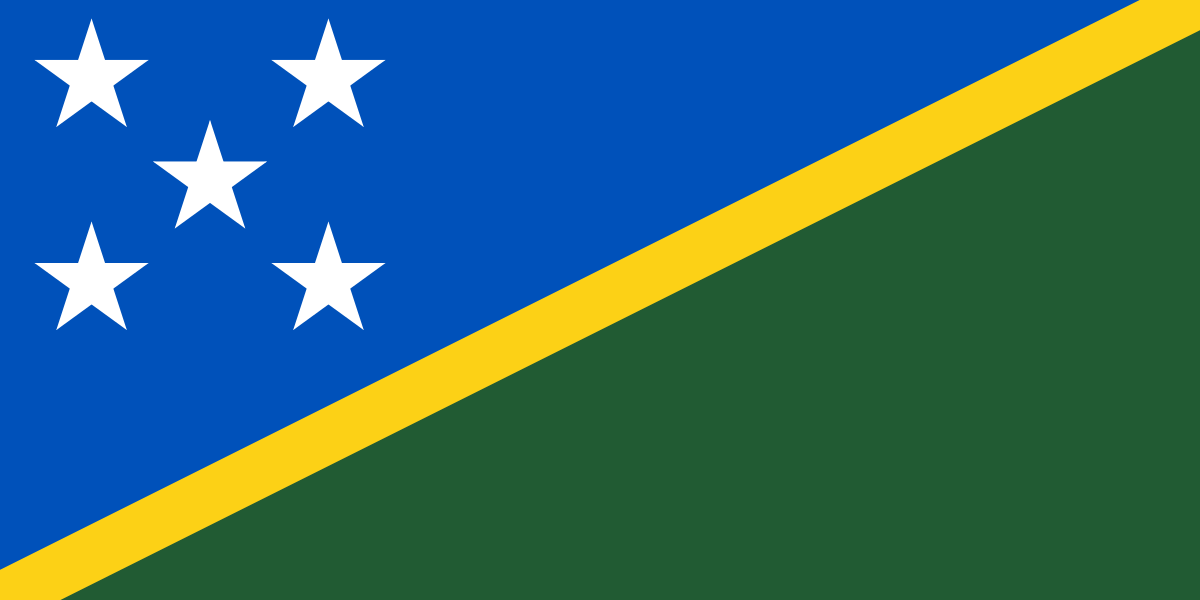
Solomon Islands
Oceania · Honiara · SB
The Solomon Islands are the wild, beautiful archipelago of the south-west Pacific, a scattered double chain of the forested islands and atolls that lies between the islands of the Papua New Guinea and the Vanuatu, one of the least visited countries of the Pacific. The nation, roughly nine hundred islands of the volcanic peaks, the reefs and the lagoons, was the stage of some of the fiercest battles of the Second World War, and the waters and the jungles of the country still hold the wrecks and the relics of that terrible, transforming chapter, part of the story that gave the islands their name of the Iron Bottom Sound. The capital of the Honiara, a small, growing town on the northern coast of the Guadalcanal, anchors the modern nation, while the outer islands, with their shell money, their villages, their diving reefs and their deep traditional cultures, remain the heart of the country. Beautiful, poignant and profoundly traditional, the Solomons are the untouched islands of the Melanesian Pacific.
Overview
Solomon Islands is a country in Oceania. Its capital is Honiara and the international dialling code is +677. Languages commonly used in everyday life here include English. Local currency is the Solomon Islands Dollar (SBD). Our guide covers 1 airport, including Honiara International Airport. We also list 1 city in Solomon Islands: Honiara.
The Capital of the Honiara and the Shores of the Guadalcanal
The capital of the Honiara, the modest, lively town that spreads along the plain of the northern coast of the great island of the Guadalcanal, is the political and the commercial heart of the modern Solomons, a low waterfront city of the markets, the churches and the open beaches lining its central road. The national museum of the town, with its extraordinary shell money and its cultural treasures, the great central market of the produce and the crafts, and the beaches of the coast anchor the essential life of the capital. The coastline of the island, the scene of the famous conflict of the war, still offers the white memorials and the peacetime beaches of the Bonegi and its famous accessible shipwreck, giving the capital its deep and sober historical frame.
The Reefs of the Western Sea and the Wrecks of the War
The waters of the western islands of the country, the lush, reef-filled group of the New Georgia with its great lagoon systems, hold one of the great diving provinces of the Pacific, the walls of the coral and the extraordinary shipwrecks of the wartime era that lie throughout the passages of the west. The wrecks of the Iron Bottom Sound off the capital, the World War Two warships and the transport aircraft that litter the seabed, are among the most celebrated the wreck dives of the world, their intact hulls encrusted with the corals and haunting with the fish life after eighty years. The reefs of the western lagoon, with their soft corals, their mantas and their sharks, and the channels where the tuna still run, complete the incomparable underwater heritage of the Solomon seas.
The Shell Money and the Canoes of the Outer Islands
The traditional societies of the Solomon Islands, the coastal and the island peoples of the great Melanesian web, maintain one of the most intact customary worlds of the Pacific, the world of the shell money, the war canoes and the ceremonies of the village. The famous shell money of the islands of the eastern lagoon, the elaborately strung currency of the hand-drilled shell fragments still made and worn through the islands, and the great carved war canoes of the western villages, remain the living emblems of the old order of the archipelago. The ceremonies of the exchange, the dances and the feasts that still govern the social life of the outer islands, give the visitor the deepest traditional immersion available anywhere in the contemporary Pacific.
The Islands of the East and the Raised Heritage of the Reef
The eastern group of the country, the long, raised chain of the eastern islands of the outer islands with their limestone ridges, their caves and their scattered villages, preserves the quieter, more timeless world of the Solomons beyond the passages of the tourists. The huge waves of the outer coasts, the choppy ladder of the southeast trade winds, and the lagoons and the shorelines of the calm sides, shape the slow life of the villages, and the sea runs of the tuna and the fishing of the reefs anchor the economy of the islands. The flights and the boats of the province, threading the stunning green islands scattered across the open sea, carry the visitor into the least-visited heart of the Melanesian world of the Pacific.
The Mountains and the Rivers of the Islands and the Croc of the Coast
The interior of the main islands, the steep volcanic ridges and the rivers that plunge through the rainforests from the summits to the sea, guard the wild, geological heart of the Solomons, the high country of the Guadalcanal and the mountains of the Bellona that still hold the remnant forests and the rare endemic wildlife of the archipelago. The roads and the tracks of the interior descend through the gardens of the taro and the sweet potato to the stony rivers where the coastal crocodiles still swim in the lowest reaches of the channels. The hot springs and the volcanic coast of the western islands, with their smoking vents and their reefs, and the nesting turtles of the remote beaches, complete the raw natural world of one of the last great undeveloped archipelagos of the Pacific.
Compare hotels, cover your trip and stay connected.
- Capital
- Honiara
- Currency
- Solomon Islands Dollar (SBD)
- Languages
- English
- Calling code
- +677
- Internet TLD
- sb
Entry requirements
Check who can enter →See which passports travel visa-free or need a visa to enter Solomon Islands.
Airports (1)
All airports →Cities (1)
All cities →Frequently asked questions
What is the capital of Solomon Islands?
Honiara is the capital of Solomon Islands, and the country sits in Oceania.
What currency is used in Solomon Islands?
You pay with Solomon Islands Dollar (SBD) in Solomon Islands. Exchange rates move day to day, so check the current rate before you change money or use your card abroad.
Which languages do people speak in Solomon Islands?
The languages we list for Solomon Islands are English. A couple of greetings in the local language go a long way when you travel, even in cities where another language is widely used.
What is the international dialling code for Solomon Islands?
The dialling code for Solomon Islands is +677 — keep the plus sign when you save the number.
Which airports serve Solomon Islands?
Honiara International Airport (HIR) in Honiara is the airport we cover for Solomon Islands.
Which cities in Solomon Islands do you cover?
Our guide lists 1 city for Solomon Islands: Honiara (capital).