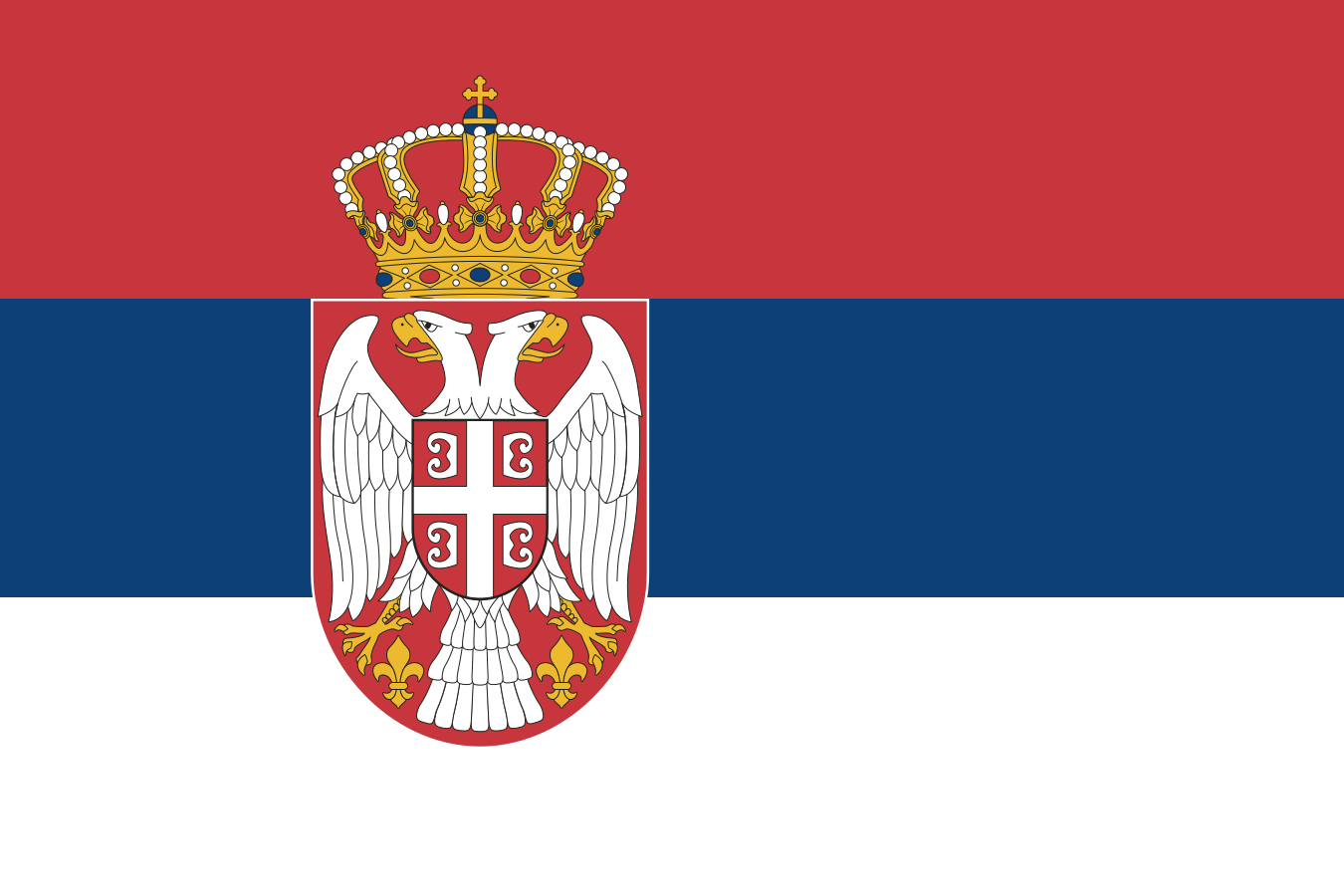
Serbia
Europe · Belgrade · RS
Serbia is the green heart of the Balkans, a country of the Danube, the mountains, the monasteries and the lively cities that its turbulent history has left wonderfully full of life. Belgrade, the capital, sits where the Sava and the Danube meet, its fortress, its bohemian quarter and its famous river nightlife holding the energy of the whole country, while Novi Sad, the second city, hosts the huge music festival of the Exit in its old fortress of Petrovaradin. The countryside spreads the plains of the north, the vineyards of the Fruška Gora and the mountains of the east, with the painted monasteries of the Orthodox world and the gorge of the Iron Gates of the Danube. Rakija, ćevapi and the local hospitality make the table a big part of the trip. Affordable, musical and fascinating, Serbia is a country that gives far more than it asks.
Overview
Serbia is a country in Europe. Its capital is Belgrade and the international dialling code is +381. Languages commonly used in everyday life here include Serbian. Local currency is the Serbian Dinar (RSD). Our guide covers 1 airport, including Belgrade Nikola Tesla Airport. We also list 1 city in Serbia: Belgrade.
Belgrade, the Fortress and the Meeting of the Two Rivers
The capital of Belgrade stands where the Sava and the Danube meet, and the great fortress of the Kalemegdan above the confluence is the historical and the emotional centre of the whole country. The fortress grounds spread their parks, their walks and their enormous views over the two rivers, and the old town that grows from its base holds the bohemian street of Skadarlija, the paved squares and the cafes of the centre. The nightlife of the city increasingly takes the river: the floating clubs and the bars of the pontoons line both banks through the warm season, and the energy of the evenings spills into the dawn. The city has been destroyed and rebuilt more often than almost any other in Europe, and its ragged, heroic vibrancy is the clearest expression of the country's character.
Novi Sad, the Petrovaradin and the Festival of the Exit
The second city of the country, Novi Sad on the Danube, is the cultural capital of the north, its old centre spreading the painted facades, the squares and the pleasures of a Habsburg-era town on the river. The fortress of the Petrovaradin, with its maze of the tunnels and its clock tower whose hands are painted long, rises above the city, and its summer festival of the Exit, the enormous music and arts celebration of the region, turns the whole fortress into the greatest stage of the Balkans for a week every July. The city beyond the festival holds the art galleries, the synagogues and the cafes of the university town, and the nearby hills of the Fruška Gora hold the monasteries and the vineyards of the old wineries. Novi Sad is friendly, manageable and, for that one summer week, the centre of the European festival world.
The Monasteries and the Faith of the Orthodox Heart
The Orthodox monasteries of Serbia, scattered through the mountains and the valleys of the country, are among the great artistic and spiritual treasures of the Balkan world. The painted churches of the Studenica, the Sopoćani and the Gračanica, their frescoes among the finest surviving of the medieval era, stand in their lonely valleys and their orchards, and the prayers and the candlelight of the everyday services keep the old crafts of the icon and the incense alive. The monasteries of the Fruška Gora, the string of the monastic houses of the northern hills, and the great complex of the Žiča and the other royal foundations of the medieval kingdoms round out the picture. For the traveller, the monasteries are quiet, beautiful and deeply atmospheric, and the countries of the Balkans keep their believers and their pilgrimages close to the heart of the modern life.
The Iron Gates and the Gorge of the Danube
The Danube, as it crosses the east of Serbia between the mountains and the border of Romania, cuts the Iron Gates, the great gorge that is the most spectacular passage of the whole river's journey to the sea. The gorge is best seen from the boats that run the waters of the reservoirs and from the drives of the road that clings to the cliff and the river, and the legend of the Romanian hero carved in the rockface of the gorge, high above the water, gives the passage its story. The archaeological park of the Lepenski Vir, with its nine-thousand-year-old settlement and its strange sculptures of the ancient fishermen, holds the deeper history of the river peoples. The gorge is a landscape of the dramatic and the profound.
The Rakija, the Cevapi and the Table of the Country
The table of Serbia is a serious, generous and endlessly sociable institution, and the rakija, the strong fruit brandy of the plum and the quince, is its ritual opening, drunk in small glasses at the start of every gathering. The cevapi, the grilled rolls of the minced meat, and the pljeskavica, the great Balkan burger, are the daily feasts of the street stalls and the restaurants, usually served with the thousand-stored salads of the country, the ajvar and the cheese. The brass bands, the turbos and the pop of the evenings keep the music, and the long dinners of the family and the friends stretch into the nights. The country's warmth is expressed in its table, and eating well is one of the great pleasures of the whole trip.
Compare hotels, cover your trip and stay connected.
- Capital
- Belgrade
- Currency
- Serbian Dinar (RSD)
- Languages
- Serbian
- Calling code
- +381
- Internet TLD
- rs
Entry requirements
Check who can enter →See which passports travel visa-free or need a visa to enter Serbia.
Which nationalities can enter Serbia?
Current visa status for tourism for the origins we cover, with links to the detailed requirements.









Airports (1)
All airports →Cities (1)
All cities →Frequently asked questions
Do I need a visa to visit Serbia?
For the origins we track, travellers from Australia, Canada, France, Germany and Italy currently enter Serbia visa-free for tourism, and 3 more origins are visa-free too. Entry rules depend on your passport and the purpose of your trip, so check the current requirements for your own nationality with our entry requirements tool.
What is the capital of Serbia?
Belgrade is the capital of Serbia, and the country sits in Europe.
What currency is used in Serbia?
You pay with Serbian Dinar (RSD) in Serbia. Exchange rates move day to day, so check the current rate before you change money or use your card abroad.
Which languages do people speak in Serbia?
The languages we list for Serbia are Serbian. A couple of greetings in the local language go a long way when you travel, even in cities where another language is widely used.
What is the international dialling code for Serbia?
The dialling code for Serbia is +381 — keep the plus sign when you save the number.
Which airports serve Serbia?
Belgrade Nikola Tesla Airport (BEG) in Belgrade is the airport we cover for Serbia.
Which cities in Serbia do you cover?
Our guide lists 1 city for Serbia: Belgrade (capital).