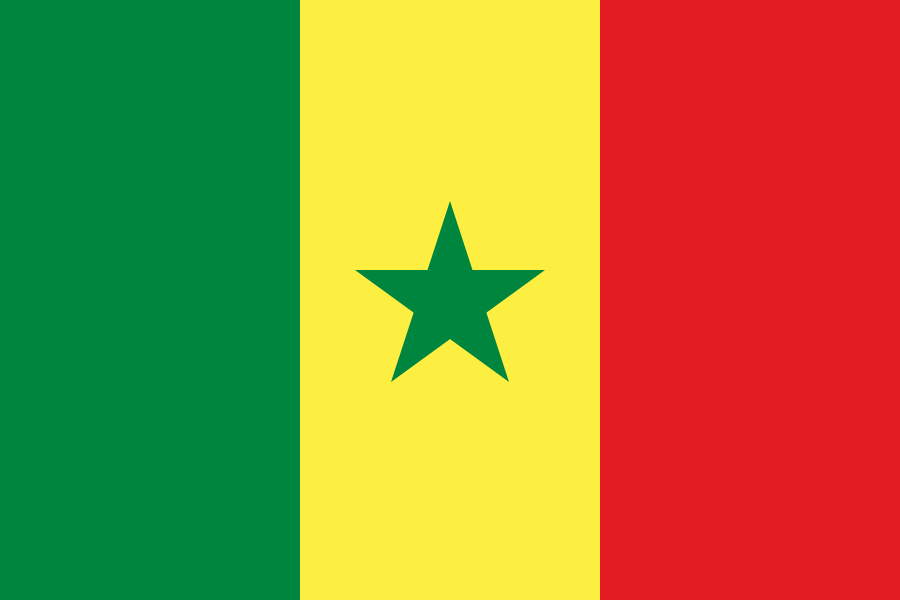
Senegal
Africa · Dakar · SN
Senegal is the westernmost country of the African mainland, a coastal, musical and deeply hospitable nation that wraps the French inheritance and the Wolof heart in a cheerful, sunlit embrace. Dakar, the capital, juts into the Atlantic with the great bronze monument rising from its headland, while the island of Gorée, a short ferry away, holds the memory of the slave trade in its silent houses and its door of no return. The country spreads north to the baobab-studded savannah, the bird lakes of the Djoudj and the old streets of Saint-Louis, and south to the beaches of the Petite Côte and the rainforest edge of the Casamance. Music, from the mbalax of Youssou Ndour to the drumming of the villages, runs through everything, and the teranga, the word for hospitality, is the country's declared religion. Warm, welcoming and full of rhythm, Senegal is the gentlest of introductions to West Africa.
Overview
Senegal is a country in Africa. Its capital is Dakar and the international dialling code is +221. Languages commonly used in everyday life here include French. Local currency is the West African CFA franc (XOF). Our guide covers 1 airport, including Blaise Diagne International Airport. We also list 1 city in Senegal: Dakar.
Dakar, the Monument and the Rhythm of the Capital
The capital of Dakar, crowded at the tip of the peninsula of Cap-Vert, is the most lively and the most modern of the West African capitals, its market streets, its grand avenues and its ocean-front promenades framing the working pulse of the region. The African Renaissance monument, the huge bronze couple on the hill above the city, looks out over the suburbs and the sea, and the markets, from the grand Soumbedioune with its carvings and its boats to the packed central markets of the town, hold the commerce of the whole country. The nightclubs of the capital run the mbalax, the drum-and-dance rhythm that the local legend carries to the world, and the galleries and the museums of the town give the art of the region its proper stage. The city is loud, musical and unapologetically itself, and its energy is part of the draw.
Gorée, the Door of No Return and the Memory of the Sea
The little island of Gorée, a short ferry from the port of Dakar, packs the history of the Atlantic slave trade into its pastel streets and its silent houses, and its museum in the House of the Slaves, with its holding cells and its famous door of no return, stands as one of the most moving monuments on the African coast. The gardens and the palms of the island are calm, the cafes and the galleries of the lanes more recent, and the fort and the great houses of the old settlement keep their stories. The visitors walk the island slowly, in the shade and the sun, and the waters of the bay around it give the day a last, beautiful frame. Gorée is a place where the history of the entire diaspora is held in a few cobbled hectares, and its visit leaves a permanent mark.
Saint-Louis, the Bridge and the Old Colonial Streets
The old capital of Saint-Louis, at the mouth of the Senegal river, is a French colonial jewel of the nineteenth century, its narrow island of the old town linked to the mainland by the iron bridge of the last century and lined with the faded, elegant facades of the trading era. The city was the capital of French West Africa, and its architecture, its cathedral and its streets of the two-storey terraces make it a photographers' dream, while the shops and the houses of the island hold the artists and the musicians who still colour its life. The river mouth and the fishing boats of the coast, and the bird islands of the Djoudj national park nearby, add the wildlife to the history. The city is gentle, atmospheric and endlessly photogenic, a sleepier and more beautiful relative of the capital.
The Beaches of the Petite Côte and the Coast of the South
The coast of Senegal south of the capital, the Petite Côte, runs the long beaches and the fishing villages that have become the weekend playground of the country. The resorts and the camps of the beach line the shores of Saly and Somone, and the pirogues of the villages carry the visitors to the lagoons, the bird islands and the quiet coves of the reef. Further south, the region of the Casamance, cut from the rest of the country by the Gambian wedge, holds the riverine beauty of the mangroves, the villages of the rice terraces and the quieter, wilder beach of the borderlands. The coast of Senegal is warm, golden and alive with the fishing and the surf, and its islands and its lagoons give the swimmer and the birdwatcher a great stretch of Atlantic green.
The Teranga, the Music and the Table of the Country
The word that Senegal lives by is teranga, the hospitality that welcomes every visitor as a guest of the home, and it colours the whole experience of the country. The music is the second language: the drums and the singing of the villages, the mbalax of the clubs and the kora of the praise singers, and the festivals of the year bring it all to the surface. The table of the country is generous: the thieboudienne, the national fish and rice dish, the yassa of the marinated meats and the grilled fish of the beaches, eaten with the hands off the shared platters of the family style. The tea of the three rounds, poured high and sweet, closes every encounter. The welcome, the rhythm and the food make Senegal feel like a country that has decided to treat its visitors as friends.
Compare hotels, cover your trip and stay connected.
- Capital
- Dakar
- Currency
- West African CFA franc (XOF)
- Languages
- French
- Calling code
- +221
- Internet TLD
- sn
Entry requirements
Check who can enter →See which passports travel visa-free or need a visa to enter Senegal.
Which nationalities can enter Senegal?
Current visa status for tourism for the origins we cover, with links to the detailed requirements.
Airports (1)
All airports →Cities (1)
All cities →Frequently asked questions
Do I need a visa to visit Senegal?
For the origins we track, travellers from Morocco currently enter Senegal visa-free for tourism. Entry rules depend on your passport and the purpose of your trip, so check the current requirements for your own nationality with our entry requirements tool.
What is the capital of Senegal?
Dakar is the capital of Senegal, and the country sits in Africa.
What currency is used in Senegal?
You pay with West African CFA franc (XOF) in Senegal. Exchange rates move day to day, so check the current rate before you change money or use your card abroad.
Which languages do people speak in Senegal?
The languages we list for Senegal are French. A couple of greetings in the local language go a long way when you travel, even in cities where another language is widely used.
What is the international dialling code for Senegal?
The dialling code for Senegal is +221 — keep the plus sign when you save the number.
Which airports serve Senegal?
Blaise Diagne International Airport (DSS) in Dakar is the airport we cover for Senegal.
Which cities in Senegal do you cover?
Our guide lists 1 city for Senegal: Dakar (capital).