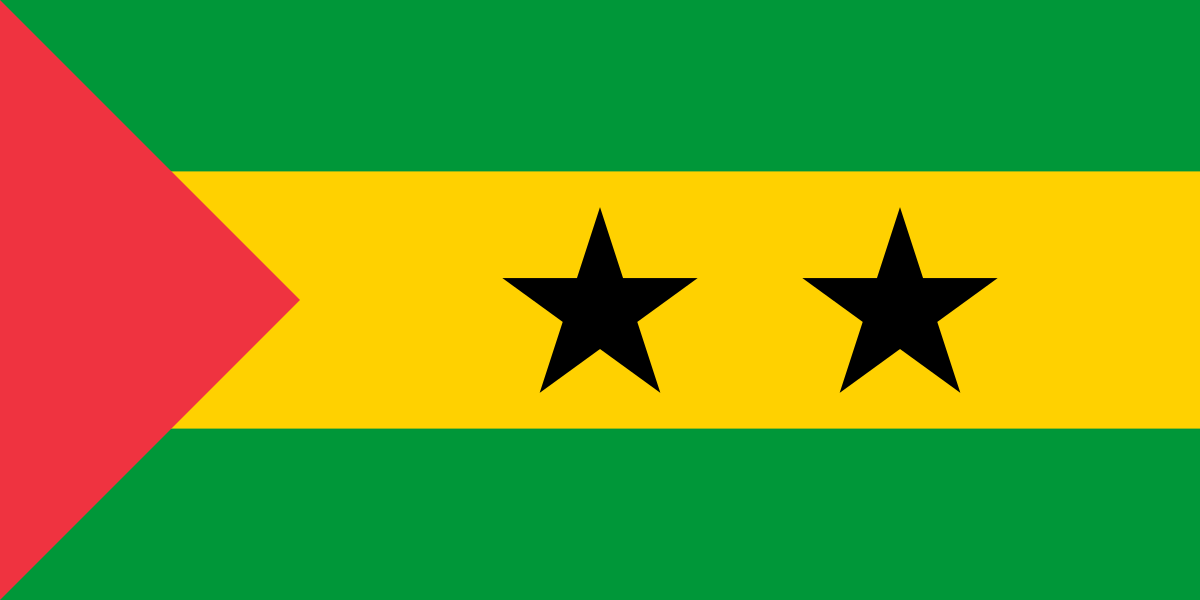
São Tomé and Príncipe
Africa · São Tomé · ST
Sao Tome and Principe is the small, forested island country of the Gulf of Guinea, the equatorial nation formed by two main volcanic islands and their surrounding islets, poised off the West African coast at the very bottom of the great curve of the continent. It is a country of the wet, haunting beauty, of the towering rainforests of the interior, the black-sand beaches and the abandoned cocoa estates that tell the whole story of the islands, settled by the Portuguese in the late fifteenth century and run for centuries by the plantation agriculture that carried the slaves of the Atlantic. The islands, famed for their coffee and their chocolate, are now a sanctuary of the rare birds, the sea turtles and the slowly recovering gardens of the farms, with the capital of the Sao Tome, its old colonial cathedral and its tree-choked streets giving the island its sleepy, beautiful centre. Small, lush and almost untouched by the world tourism, the islands are the hidden forests of the equatorial Atlantic.
Overview
São Tomé and Príncipe is a country in Africa. Its capital is São Tomé and the international dialling code is +239. Languages commonly used in everyday life here include Portuguese. Local currency is the Dobra (STN). We also list 1 city in São Tomé and Príncipe: São Tomé.
The Capital of the Sao Tome and the Bay of the Fortress
The capital town of the Sao Tome, the old colonial settlement that climbs its gentle hills behind the wide bay of the south-east of the island, is one of the loveliest and the most atmospheric small towns of the African coast, a jumble of the peeling colonial façades, the mango trees and the forts of the sixteenth century. The fortress of the Sao Sebastian, the old stone castle of the coast that guards the harbour and now hosts the national museum, the cathedral of the capital and the market of the town anchor the historic quarter, while the palm-lined bay and the boats of the fishing give the town its easy, equatorial rhythm. The coffee houses and the viewpoints of the town, the old mansions of the plantation era and the easy pace of the streets, give the introduction to the island republic.
The Forest of the Obo and the Peaks of the Islands
The national park of the Obo, the great protected blanket of the primary rainforest that covers the higher interior of the main island and entire north of the island of the Principe, is the wild green heart of the country, a sanctuary of the extraordinary endemic birds and the primitive flora of this ancient equatorial forest. The trails of the park climb the great summit of the Pico of Sao Tome, the extinct volcanic peak at nearly two thousand metres that gathers its own cloud forest of the giant begonias and the rare birds of the island above the belly of the island. The crater lakes and the waterfalls of the forest, and the golden frogs and the poetic sun birds of the canopy, make the Obo one of the most important and least disturbed rainforests of the whole of the African tropics.
The Roças of the Chocolate and the Stories of the Estates
The islands were built on the plantation economy of the cocoa, and the great estates of the roças, the grand mansions and their dependent villages that once covered the islands with their chocolate and their coffee, are the haunted architectural memory of the country. Many of the great roças, abandoned since the independence, still stand in the forest, their ballrooms, their churches and their hospitals crumbling among the cocoa trees, in the semi-tropical decay that entrances the visitors of the interior. The restored roças of the country, several now run again as the working farms and the tourist lodges of the royal-sounding names, give the curious traveller the deep, bittersweet experience of the plantation era and the cocoa heart of the islands.
The Islets of the Bom Bom and the Corals of the South
The waters around the islands, and the little islets that dot the southern and the western coasts, shelter the great intact world of the sea of this equatorial nation, the coral reefs of the south coast and the hidden bays where the nesting turtles of the beaches haul their great bodies through the sand. The islets of the coast, flanking the channels of the south with their reefs and their sandy keys, are reached by the boats of the villages, and the diving and the snorkelling of the reefs, with their reef sharks, their turtles and their lobes of the coral, rank among the finest of the untouched waters of the African coast. The beaches of the south of the main island, black and gold in turn, and the islet of the Rolas, exactly on the equator line, complete the watery fringe of the island nation.
The Festivals of the Calendar and the Sounds of the Islands
The islands, settled from the Portuguese vineyards of the longer centuries, developed on their isolated shores the deep Creole culture of the southern Atlantic, the music, the poetry and the festivals of the forros that still fill the nights of the towns with the tchiloli and the danço Congo of the tradition. The feast of the Sao Tome of the capital, the great celebration of the island's patron in the streets of the town, with its processions, its dances and its drums, and the marvellous seasonal festivals of the Principe, keep the strong Creole heart of the archipelago. The music of the islands, from the acoustic viola of the towns to the night percussion of the plantations, and the cuisine of the fish, the palm oil and the banana, carry the unique African-Portuguese culture of this tiny world of the equatorial Atlantic.
Compare hotels, cover your trip and stay connected.
- Capital
- São Tomé
- Currency
- Dobra (STN)
- Languages
- Portuguese
- Calling code
- +239
- Internet TLD
- st
Entry requirements
Check who can enter →See which passports travel visa-free or need a visa to enter São Tomé and Príncipe.
Cities (1)
All cities →Frequently asked questions
What is the capital of São Tomé and Príncipe?
São Tomé is the capital of São Tomé and Príncipe, and the country sits in Africa.
What currency is used in São Tomé and Príncipe?
You pay with Dobra (STN) in São Tomé and Príncipe. Exchange rates move day to day, so check the current rate before you change money or use your card abroad.
Which languages do people speak in São Tomé and Príncipe?
The languages we list for São Tomé and Príncipe are Portuguese. A couple of greetings in the local language go a long way when you travel, even in cities where another language is widely used.
What is the international dialling code for São Tomé and Príncipe?
The dialling code for São Tomé and Príncipe is +239 — keep the plus sign when you save the number.
Which cities in São Tomé and Príncipe do you cover?
Our guide lists 1 city for São Tomé and Príncipe: São Tomé (capital).