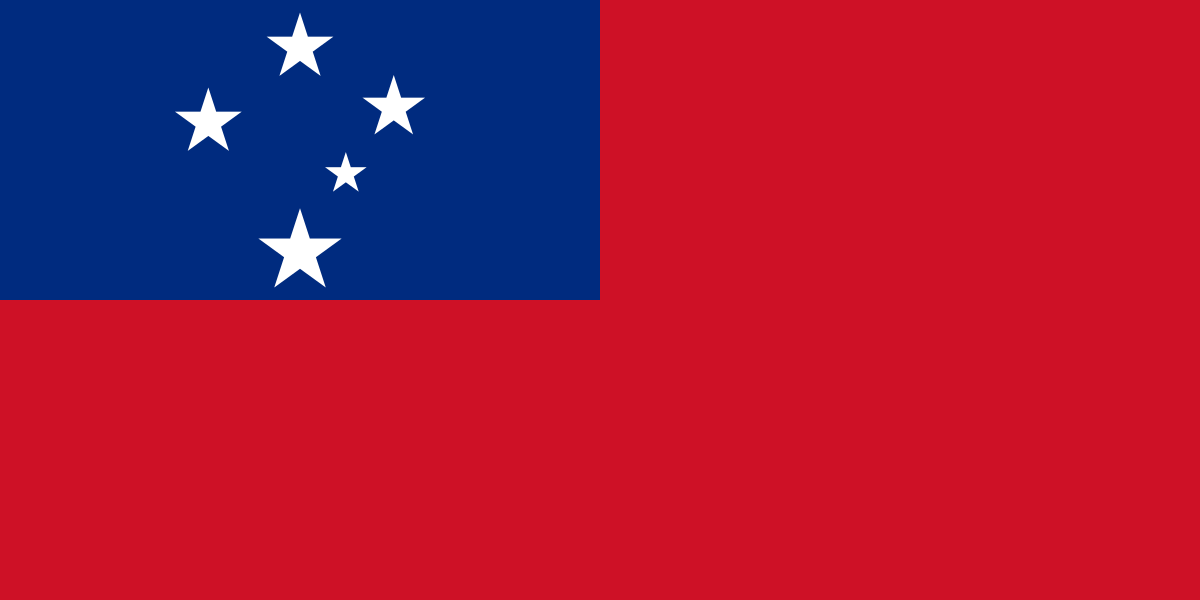
Samoa
Oceania · Apia · WS
Samoa is the sovereign Polynesian nation of the south Pacific, the independent country of the two main islands of the Upolu and the Savaii that keeps the traditional way of the fa Samoa at the heart of its modern life. The capital of the Apia, set on the sheltered harbour of the Upolu, holds the markets, the churches and the museum of the nation, while the green islands spread the waterfalls, the ocean trenches, the lava fields and the beaches of the volcanic landscape. The country is famous for the heritage of the writer Robert Louis Stevenson, who made his home in the hills above the capital and is buried on the summit of the mountain of Vaea, and for the distinctive culture of the fale, the tatau and the ava ceremony that reaches back to the deep Polynesian past. Warm, devout and genuinely hospitable, Samoa is the authentic heart of the Pacific.
Overview
Samoa is a country in Oceania. Its capital is Apia and the international dialling code is +685. Languages commonly used in everyday life here include Samoan and English. Local currency is the Samoan Tālā (WST). We also list 1 city in Samoa: Apia.
The Capital of the Apia and the Markets of the Town
The capital of the Apia, the easy-going town on the beautiful harbour of the north coast of the Upolu, is the commercial and the political heart of the country, a warm, leafy city of the churches, the markets and the historic buildings of the colonial era. The famous market of the town, the colourful open-air market that holds the produce, the crafts and the woven mats of the whole country, is the vibrant centre of the daily life of the capital, and the clock tower, the cathedral and the painted government buildings of the centre line the harbourside. The multi-cultural history of the town, the German and the New Zealand periods, the mission churches and the Chinese shops, gives the small capital its distinctive layering of the Pacific and the colonial past.
The Ocean Trench of the To Sua and the Gardens of the Coast
The famous ocean trench of the To Sua, one of the great natural swimming holes of the Pacific, is the deep turquoise lagoon that fills the collapsed lava sinkhole of the coast of the south, ringed by the green gardens of the land. The long stairs of the opening drop the visitor into the perfect pool of the blue-green water, with the underwater cave of its side and the lush foliage of the edges, and the swimming in the calm, clear water gives one of the most unusual bathing experiences of the region. The surrounding coast of the country, the blowholes of the Savaii and the beaches of the south of the main island, completes the picture of the volcanic shores and the ocean life of the nation.
The Lava Fields of the Savaii and the Buried Churches
The island of the Savaii, the larger and the less developed of the two main islands, holds the extraordinary lava fields of its central plateau, the flows of the great eruption of the Mount Matavanu that overwhelmed the villages of the north coast at the beginning of the last century. The buried villages of the lava, the half-submerged churches and the roofless stone houses that the black flows swamped, remain as the haunting monuments of the disaster, and the visitor can walk through the village of the Saleaula with its engulfed church and its skeletal remnants frozen in the volcanic rock. The paths across the wide black fields and the craters and the cones of the volcano complete the unique geological visit of the island.
The Villa of the Stevenson and the Mountain of the Writer
The house of the great writer Robert Louis Stevenson above the capital, the villa of the Vailima where the author of the adventures of the Pacific spent his final years, is the beloved literary shrine of the country and the only place in the world where the treasure island novelist is buried. The restored villa, with the gardens, the verandas and the rooms of the family, tells the story of the final chapter of the life of the Scottish genius, who was adopted by the chiefs and honoured with the great funeral of his passing, and the path of the mountain of the Vaea, where his grave and that of his wife rest on the summit, climbs through the rainforest to the tomb with the views of the sea. The pilgrimage of the writer, from the garden trails to the summit, is the essential visit of the small capital.
The Culture of the Fa Samoa and the Fales of the Island
The fa Samoa, the way of the country, is the deep traditional order that defines the life of the nation, the respect for the matai, the chiefs of the villages, the custom of the exchange and the collective ownership of the land and the sea. The villages of the country follow the cultural code in their daily rounds, and the visitor is welcomed to the fale, the open-sided thatched house of the family, with the ceremony of the ava and the drinking of the kava of the honoured guest. The fales of the coast, the simple beachside guest houses of the traditional style, offer the genuine staying experience of the islands, and the tatau, the traditional tattoo of the country, remains the proud cultural practice of the Samoan world.
Compare hotels, cover your trip and stay connected.
- Capital
- Apia
- Currency
- Samoan Tālā (WST)
- Languages
- Samoan, English
- Calling code
- +685
- Internet TLD
- ws
Entry requirements
Check who can enter →See which passports travel visa-free or need a visa to enter Samoa.
Which nationalities can enter Samoa?
Current visa status for tourism for the origins we cover, with links to the detailed requirements.









Cities (1)
All cities →Frequently asked questions
Do I need a visa to visit Samoa?
For the origins we track, Samoa requires a visa for tourism (Australia: visa on arrival, Canada: visa on arrival, France: visa on arrival, Germany: visa on arrival and India: visa required). Entry rules depend on your passport, so confirm the current requirements for your own nationality with our entry requirements tool.
What is the capital of Samoa?
Apia is the capital of Samoa, and the country sits in Oceania.
What currency is used in Samoa?
You pay with Samoan Tālā (WST) in Samoa. Exchange rates move day to day, so check the current rate before you change money or use your card abroad.
Which languages do people speak in Samoa?
The languages we list for Samoa are Samoan and English. A couple of greetings in the local language go a long way when you travel, even in cities where another language is widely used.
What is the international dialling code for Samoa?
The dialling code for Samoa is +685 — keep the plus sign when you save the number.
Which cities in Samoa do you cover?
Our guide lists 1 city for Samoa: Apia (capital).