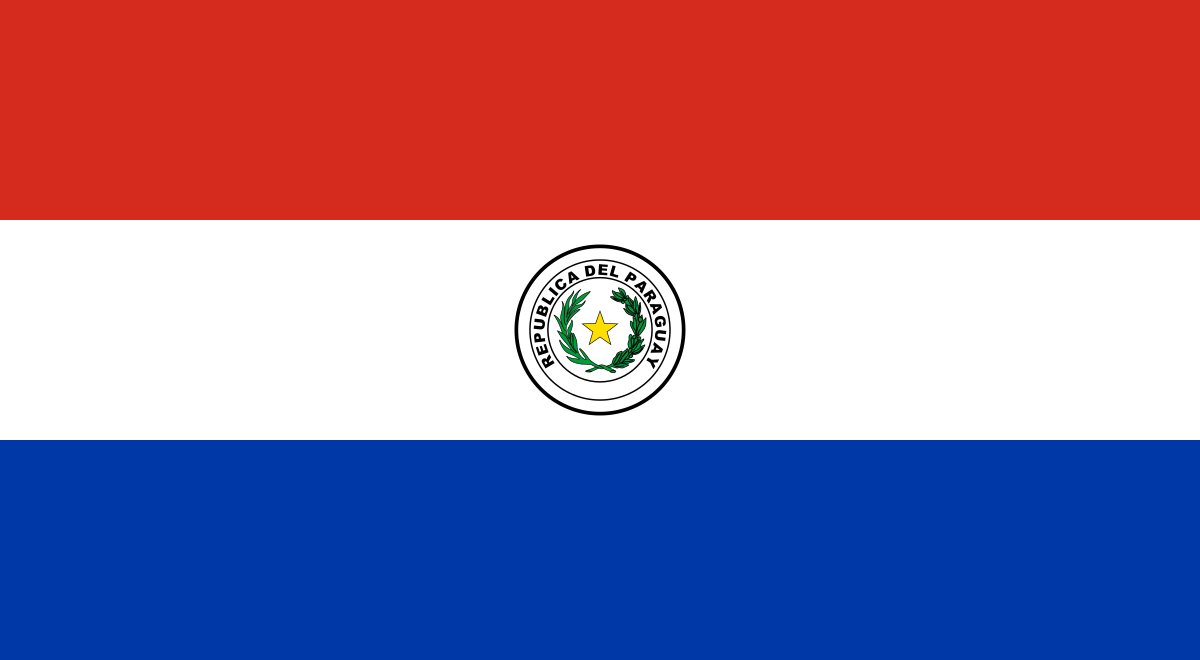
Paraguay
South America · Asunción · PY
Paraguay is the small, landlocked heart of South America, a country that kept its indigenous tongue and its quiet character through the great wars and the long colonial centuries, and home of the only nation of the continent where the native language, the Guarani, runs as a true national language beside the Spanish of the colonisers. Asuncion, the capital, mixes the colonial alleys, the parks and the riverside of the Paraguay river with the modern city that spreads beyond it, and the country holds the Jesuit missions of the seventeenth century, the vast wetland wilderness of its northern border and the green farms of its eastern plains. The table of the country runs on the beef of its ranches, the corn of its fields and the terere, the cold mate drink of the everyday, and the music and the crafts of the Guarani carry its soul. Poor but proud, Paraguay is a slow, warm, deeply singular world all its own.
Overview
Paraguay is a country in South America. Its capital is Asunción and the international dialling code is +595. Languages commonly used in everyday life here include Spanish and Guarani. Local currency is the Paraguayan Guaraní (PYG). Our guide covers 1 airport, including Silvio Pettirossi International Airport. We also list 1 city in Paraguay: Asunción.
The Capital and the Rivers of the Paraguayan Heart
The capital of Asuncion sits on the high eastern bank of the Paraguay river, and its old town, the clusters of the colonial-era buildings around the cathedral and the presidential palace, holds the memory of the city that was once the largest of the southern continent. The streets of the centre, the markets, the plazas and the restaurants of the historic blocks are compact and walkable, and the modern city beyond spreads the malls, the towers and the nightlife of the present. The waterfront of the capital, the bay and the green riverbanks with the view over the low western shore, give the city its setting, and the museums of the capital, the history of the wars and the memory of the great national struggles, frame the story of the country. The old quarter repays a slow morning on foot.
The Missions of the Jesuits and the Ruins of the First Era
The eastern region of the country, the lands of the missions, holds the most remarkable ruins of the Jesuit era, the settlements of the seventeenth century where the priests and the indigenous Guarani built the famous mission towns that gave the modern imagination its image of the reduction. The largest and the best preserved of the missionary sites of the region, the ruins of the Trinidad and the Jesus de Tavarangue, both of them world heritage, spread the carved stone churches, the courtyards and the altar carvings that still astonish with the skill of their making. The museums of the sites and the visitor centres tell the story of the missions, the music and the craft of the Guarani and the tragedy of their end. The missions of Paraguay are the ghost of a dream that the country keeps alive.
The Wetlands of the Pantanal and the Birds of the North
The far north of the country, the region of the upper Paraguay, holds the Paraguayan share of the great Pantanal, the enormous wetland that spreads across the borders of the three countries, and in its wet season the flooded savannah of the region fills with the greatest concentration of the wildlife of the Americas. The river trips and the lodges of the region meet the capybaras, the caimans, the jabiru storks and the jaguars of the wetland, and the bird life of the flooded plains, the herons, the kingfishers and the ducks, is beyond counting. The region of the Chaco, the vast dry plain to the west of the river, holds the Mennonite colonies and the great cattle ranches of the country, and the giant anteaters and the armadillos of the dry west guard the older America. The north is the wild face of the nation.
The Terere, the Beef and the Table of the Everyday
The everyday drink of Paraguay is the terere, the cold infusion of the yerba mate sipped through the metal straw from the shared gourd, passed from hand to hand in the offices, the parks and the buses of the whole country, and it is the true national ceremony, the sign of the conversation and the friendship. The table of the country runs on the beef of the great ranches, the asado of the grills that fills the weekends, and the chipa, the cheese bread of the Guarani inheritance, and the corn cake of the national kitchen. The markets of the country, the tropical fruit, the cheeses and the sweets of the region, feed the everyday life. The food of Paraguay, simple, generous and heavy on the grill, carries the warmth of the whole country.
The Music, the Festival and the Hands of the Guarani
The soul of Paraguay lives in its music and its craft, and the harp of the country, with its plucked, sweet cascades, and the guitar of the folk traditions fill the festivals and the evenings of the towns. The craft of the nanduti, the delicate lace woven in the spiderweb patterns of the region, and the ao po'i, the embroidered cotton of the traditional blouses, are the great handiworks of the national culture, sold in the markets and worn in the festivals of the country. The artisans of the villages, the silversmiths and the woodcarvers, keep the traditions of the hands alive, and the music festivals and the parades of the towns draw the whole country together. The culture of Paraguay is strong, warm and wonderfully its own, and it gives the country its particular soul.
Compare hotels, cover your trip and stay connected.
- Capital
- Asunción
- Currency
- Paraguayan Guaraní (PYG)
- Languages
- Spanish, Guarani
- Calling code
- +595
- Internet TLD
- py
Entry requirements
Check who can enter →See which passports travel visa-free or need a visa to enter Paraguay.
Airports (1)
All airports →Cities (1)
All cities →Frequently asked questions
What is the capital of Paraguay?
Asunción is the capital of Paraguay, and the country sits in South America.
What currency is used in Paraguay?
You pay with Paraguayan Guaraní (PYG) in Paraguay. Exchange rates move day to day, so check the current rate before you change money or use your card abroad.
Which languages do people speak in Paraguay?
The languages we list for Paraguay are Spanish and Guarani. A couple of greetings in the local language go a long way when you travel, even in cities where another language is widely used.
What is the international dialling code for Paraguay?
The dialling code for Paraguay is +595 — keep the plus sign when you save the number.
Which airports serve Paraguay?
Silvio Pettirossi International Airport (ASU) in Asunción is the airport we cover for Paraguay.
Which cities in Paraguay do you cover?
Our guide lists 1 city for Paraguay: Asunción (capital).