Papua New Guinea
Oceania · Port Moresby · PG
Papua New Guinea is the magnificent, bewildering country of the islands of the south-west Pacific, a nation of the rugged mountains, the dense rainforest and the coral seas that occupies the eastern half of the great island of the New Guinea and the surrounding archipelagos of the Bismarck and the north coast. It is one of the most linguistically and culturally diverse countries on earth, with more than eight hundred languages spoken among its villages of the mossy highlands, the river plains and the coastal islands. The country is the world of the remote treks, the sacred sing-sing festivals, the carvers of the Sepik and the diving of the war wrecks of the Coral Sea, and its dramatic geography has kept much of it barely touched by the outside world. Beautiful, tough and astonishingly varied, Papua New Guinea is the last great wild frontier of the Pacific.
Overview
Papua New Guinea is a country in Oceania. Its capital is Port Moresby and the international dialling code is +675. Languages commonly used in everyday life here include English and Tok Pisin. Local currency is the Papua New Guinean Kina (PGK). Our guide covers 1 airport, including Jacksons International Airport. We also list 1 city in Papua New Guinea: Port Moresby.
The Capital of the Port Moresby and the Hills of the Harbour
The capital of the Port Moresby, the sprawling port city of the south coast of the country that curls around the great natural harbour of the Fairfax, is the political and the commercial heart of Papua New Guinea. The parliament buildings of the city, the remarkable national museum with its famous collection of the masks and the carvings of the tribes, and the views from the hills over the harbour and the reefs anchor the essential visits of the capital. The city, hot, edgy and powerful, holds the national institutions and the everyday buzz of the growing nation, while the beaches and the villages of the coast, with their outrigger canoes and their traditional houses, sit barely beyond the suburbs. The parks of the borders of the town and the coral snorkelling of the harbour give the softer edges of the city.
The Highlands of the Islands and the Sing-Sing of the Villages
The highlands of the mainland, the great central cordillera of the country where the mountain valleys of the agricultural cultures crowd with the villages of the gardens, are the heartland of the traditional life of Papua New Guinea. The tribal groups of the highlands, famous around the world for the extraordinary headdresses, the painted faces and the performances of the sing-sing festivals, gather their clans, their pigs and their birds of paradise for the great gatherings of the region. The roads and the airstrips of the highlands open the valleys of the Wahgi and the Asaro, where the warriors of the Mud Men and the coffee gardens of the clans hold the deep ceremonial life of the mountains, and the treks of the region, climbing between the villages of the high valleys, give the visitor the great cultural immersion of the island.
The River of the Sepik and the Carvers of the Villages
The great river of the Sepik, the largest river system of the island of the New Guinea that winds through the vast wet lowlands of the north, is the spiritual waterway of the country, a mile-broad artery of the mud and the vegetation whose villages stand on the stilt houses above the swamps. The peoples of the river, the Iatmul and the other cultures of the Sepik, are the great carvers of the country, the makers of the crocodile masks, the slit drums and the spirit houses that the museums of the world collect, and the river journeys, with the ceremonial houses of the men and the rituals of the villages, give the deep encounter with the oldest river civilization of the island. The bird life of the river, the enormous variety of the waterfowl and the crocs of the wetlands, completes the world of the great northern river.
The Reefs of the Coral Sea and the Wrecks of the War
The waters of the country, the warm seas of the Coral Sea, the Solomon Sea and the Bismarck that surround the islands, are among the great diving destinations of the planet, holding the reefs of the hard coral and the shipwrecks of the battles of the Second World War. The famous wrecks of the region, the warships and the aircraft that the campaigns of the Pacific left in the clear water of the northern harbours, now lie encrusted with the coral and crowded with the fish, and the dive boats of the region, based between the islands of the north, give the unforgettable descent into the history of the war. The untouched reefs of the islands of the Louisiade and the offshore waters, with their mantas, their sharks and their turtles, and the swimming with the dugong of the bays, complete the extraordinary underwater world of the country.
The Crossings of the Kokoda and the Peaks of the Owen Stanley
The mountains of the Owen Stanley, the dramatic spine of the south-east of the mainland that rises straight from the valleys of the north coast, hold the legendary trail of the Kokoda, the wartime crossing that the Australian and the Japanese forces fought over in the campaigns of the Pacific war. The trail, a muddy, steep, utterly demanding route of the mountain passes, the villages and the rainforest of the range, has become the great pilgrimage trek of the country, where the memorials of the battle and the hospitality of the local peoples honour the extraordinary history of the crossing. The views from the summits of the range, from the peaks down the valleys to both coasts of the island, give the climbers the incomparable panorama of the wild, green heart of Papua New Guinea.
Compare hotels, cover your trip and stay connected.
- Capital
- Port Moresby
- Currency
- Papua New Guinean Kina (PGK)
- Languages
- English, Tok Pisin
- Calling code
- +675
- Internet TLD
- pg
Entry requirements
Check who can enter →See which passports travel visa-free or need a visa to enter Papua New Guinea.
Airports (1)
All airports →Cities (1)
All cities →Travel guides for Papua New Guinea
All guides →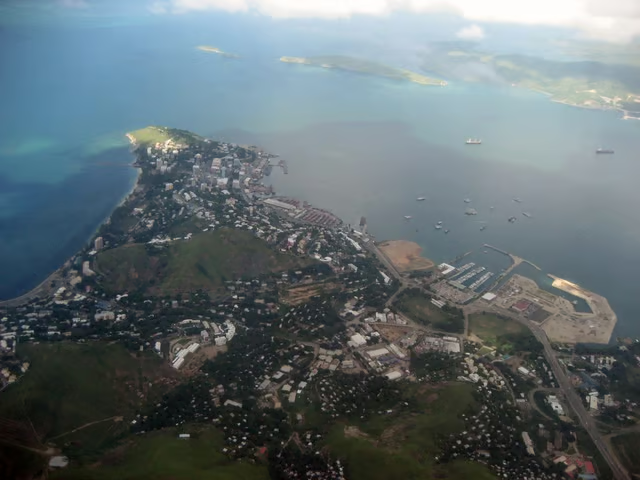
Frequently asked questions
What is the capital of Papua New Guinea?
Port Moresby is the capital of Papua New Guinea, and the country sits in Oceania.
What currency is used in Papua New Guinea?
You pay with Papua New Guinean Kina (PGK) in Papua New Guinea. Exchange rates move day to day, so check the current rate before you change money or use your card abroad.
Which languages do people speak in Papua New Guinea?
The languages we list for Papua New Guinea are English and Tok Pisin. A couple of greetings in the local language go a long way when you travel, even in cities where another language is widely used.
What is the international dialling code for Papua New Guinea?
The dialling code for Papua New Guinea is +675 — keep the plus sign when you save the number.
Which airports serve Papua New Guinea?
Jacksons International Airport (POM) in Port Moresby is the airport we cover for Papua New Guinea.
Which cities in Papua New Guinea do you cover?
Our guide lists 1 city for Papua New Guinea: Port Moresby (capital).