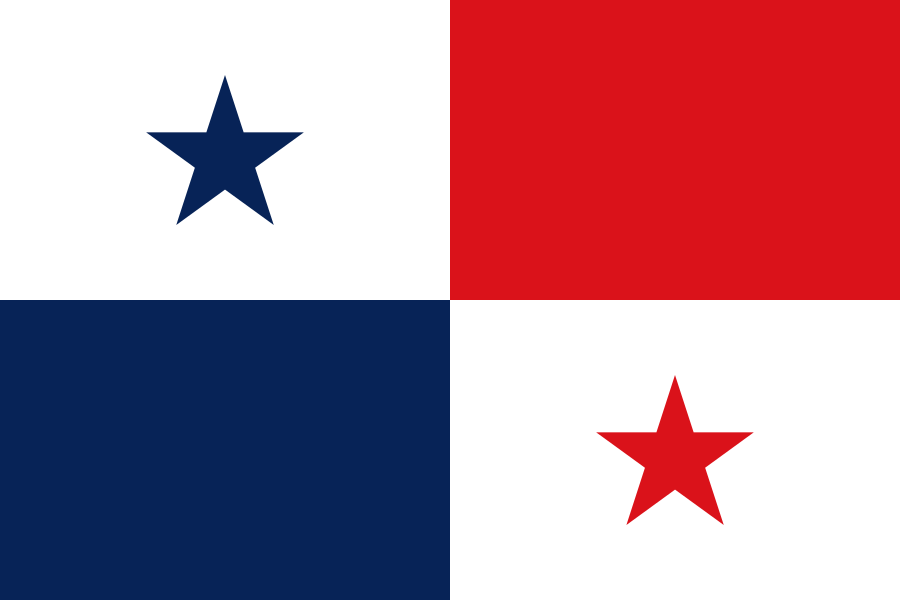
Panama
North America · Panama City · PA
Panama is the isthmus nation that joins the two Americas and divides the two oceans, and the canal that bears its name, the great waterway of the ships, is the engine and the symbol of the country. The capital of Panama City, the most modern metropolis of the region, layers the glass towers of its bay above the colonial ruins of the old settlement, and the rest of the country spreads the highland coffee of the Boquete, the surf and the reefs of the islands of both coasts, and the indigenous world of the Guna of the Caribbean. The country is fast, prosperous and increasingly cosmopolitan, a bridge and a crossroads, and its protected forests, its cloud mountains and its underwater parks hold the natural beauty of the region. Compact, easy and full of the surprises of two oceans, Panama is the gateway of the continent.
Overview
Panama is a country in North America. Its capital is Panama City and the international dialling code is +507. Languages commonly used in everyday life here include Spanish. Local currency is the Balboa (PAB). Our guide covers 1 airport, including Tocumen International Airport. We also list 1 city in Panama: Panama City.
The Canal of the Two Oceans and the Locks of the Ships
The canal of Panama, the great waterway that carries the cargo ships of the world between the two oceans, is the defining engineering achievement of the country, and the observation of the transit is the classic experience of the region. The Miraflores locks, on the Pacific edge of the canal, give the front-row view of the enormous container ships as they are raised and lowered between the levels, and the visitor centre of the site runs the films and the simulators of the whole system. The partial transits of the canal, through the locks and the great lake of the centre, give the full experience of the waterway, and the stories of the builders, French and American, are told in the museums of both coasts. The canal is a living monument of the century, still busy, still remarkable.
The Old Town and the Skyline of the Capital
The capital of Panama City is the most dramatic of the Central American capitals, its enormous modern skyline of the glass towers rising around the bay while the colonial old town, the Casco Viejo, sits on the promontory of the sea. The winding streets of the Casco, with its painted balconies, its plazas, its cathedral and its cafes, are the historic heart of the city and a world heritage, while the more ancient ruins of the old Panama, the original settlement destroyed by the pirate, lie at the edge of the city. The waterfront of the capital, the causeway of the Amador with its views over the bridge and the ships of the canal, is the classic walk, and the evening life of the Casco runs from the roof decks to the dance halls. The capital is a spectacular base.
The Islands of the Guna and the Sailing of the San Blas
The Caribbean islands of the country, the archipelago of the San Blas that runs along the coast of the indigenous territory of the Guna, hold some of the least developed and most beautiful island waters of the region. The hundreds of tiny islands of the archipelago, each with its palms and its beach of the blinding white sand, are reached by the boats of the Guna communities, and the sailing between them, the snorkelling of their reefs and the nights on the inhabited islands of the territory make up one of the great island journeys of the Americas. The Guna, with their colourful molas and their traditional governance, welcome the visitors with the simplicity of their islands, and the whole region keeps its indigenous character intact. The resort islands of the Bocas del Toro offer the livelier, easier version of the same coast.
The Highlands of the Boquete and the Coffee of the Volcan
The western highlands of the country, the green mountains around the town of Boquete, hold the coffee lands of Panama that produce some of the most famous and expensive beans of the world, the celebrated variety that has broken the records of the auctions. The town of Boquete, set in the valley beneath the volcano of the Baru, is the base of the coffee estates, and the visits to the fincas take the traveller through the shaded groves, the wet mills and the cupping rooms of the harvest. The hiking of the region, the quetzal trail of the cloud forest, the waterfall walks and the brutal pre-dawn climb of the volcano, fill the active days of the highlands. The town is cool, green, easy and increasingly popular with the retirees and the travellers of the region.
The Beaches and the Parks of the Two Coasts
The country of the canal holds the forests and the beaches of both of its coasts, and the national parks of the region protect a remarkable share of the biodiversity of the continent. The Pacific coast, with the surf breaks of the province of the Chiriqui and the beaches of the Azuero peninsula, is the windward face of the country, and the boat trips of the wild southern rivers reach the capuchins, the sloths and the crocodiles of the waterways. The national park of the Darien, the vast, roadless wilderness of the eastern border, is the great green door to the continent of the south, and the protected forests of the interior hold the quetzals and the hummingbirds of the mountains. The parks of Panama are the green bonus of the country, easy, close and very much alive.
Compare hotels, cover your trip and stay connected.
- Capital
- Panama City
- Currency
- Balboa (PAB)
- Languages
- Spanish
- Calling code
- +507
- Internet TLD
- pa
Entry requirements
Check who can enter →See which passports travel visa-free or need a visa to enter Panama.
Which nationalities can enter Panama?
Current visa status for tourism for the origins we cover, with links to the detailed requirements.










Airports (1)
All airports →Cities (1)
All cities →Frequently asked questions
Do I need a visa to visit Panama?
For the origins we track, travellers from Australia, Canada, France, Germany and Italy currently enter Panama visa-free for tourism, and 3 more origins are visa-free too. Entry rules depend on your passport and the purpose of your trip, so check the current requirements for your own nationality with our entry requirements tool.
What is the capital of Panama?
Panama City is the capital of Panama, and the country sits in North America.
What currency is used in Panama?
You pay with Balboa (PAB) in Panama. Exchange rates move day to day, so check the current rate before you change money or use your card abroad.
Which languages do people speak in Panama?
The languages we list for Panama are Spanish. A couple of greetings in the local language go a long way when you travel, even in cities where another language is widely used.
What is the international dialling code for Panama?
The dialling code for Panama is +507 — keep the plus sign when you save the number.
Which airports serve Panama?
Tocumen International Airport (PTY) in Panama City is the airport we cover for Panama.
Which cities in Panama do you cover?
Our guide lists 1 city for Panama: Panama City (capital).