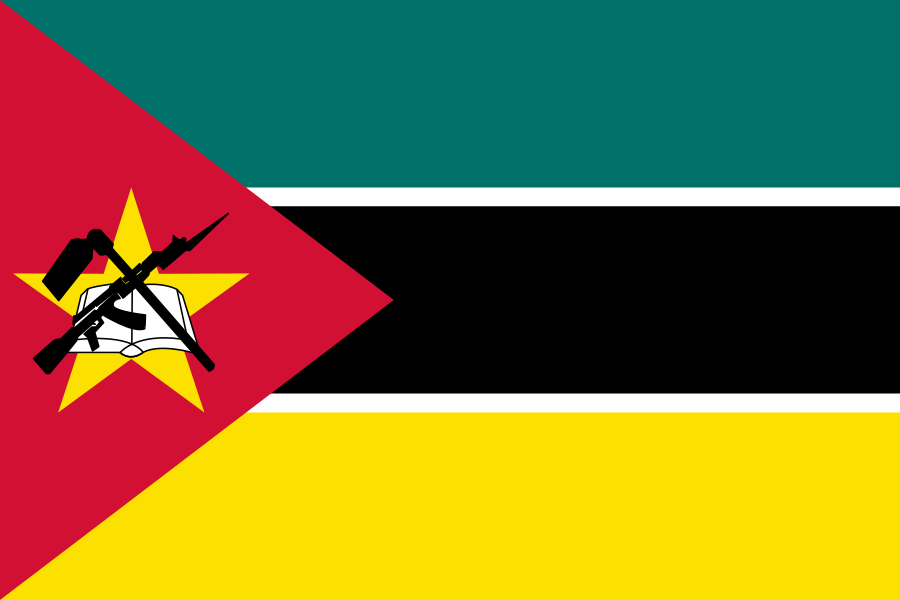
Mozambique
Africa · Maputo · MZ
Mozambique runs the long Indian Ocean coast of southeastern Africa, a country of palm-lined beaches, coral reefs and the rebuilding, hopeful energy of its capital, Maputo, where the colonial architecture stands against the modern Africa. The Bazaruto and Quirimbas archipelagos of the north guard some of the best diving and the wildest, most beautiful islands of the continent, while the interior of the country holds the game reserves, the great rivers and the cultures of the Zambezi and the Limpopo. The history of the Portuguese empire, the languid city parks, the jazz cafes of Maputo and the seafood of the coast give the country its particular, sun-warmed mix, and the dhows of the coast keep the oldest links of its trade alive. Poor but full of life, with a language, a music and a food all its own, Mozambique is a warm, musical and deeply optimistic place.
Overview
Mozambique is a country in Africa. Its capital is Maputo and the international dialling code is +258. Languages commonly used in everyday life here include Portuguese. Local currency is the Mozambican Metical (MZN). We also list 1 city in Mozambique: Maputo.
Maputo and the Rusting Charm of the Capital
The capital of Maputo, at the southern end of the country, is the most elegant city of the region, its wide, tree-lined avenues and its faded colonial-era buildings giving it an air of a tropical Lisbon fallen on slow, beautiful times. The central market spreads the fruit, the cloth and the crafts of the whole country, and the waterfront and the gardens of the city hold the cafes and the restaurants of the evening. The art galleries of the capital and the jazz clubs of the downtown keep the city's cultural pulse, and the story of the independence struggles is told in the museums of the centre. The pace is languid, the city is safe and friendly, and the seafood of the Maputo restaurants, the prawns and the peri-peri grills, is the best in the country.
The Islands of the Bazaruto and the Diving of the Channel
The archipelago of the Bazaruto, a marine park off the coast of the centre of the country, holds some of the most beautiful islands of the Indian Ocean, their white dunes, their palms and their shallow reefs rising from a turquoise that strains the colour of the paint on a palette. The islands of the park, reachable by the boats and the island-hopping trips from the town of Vilanculos, hold the dive sites of the deep channels, the dugongs of the seagrass and the turtles and the whale sharks of the season. The lodges of the archipelago run the full range, from the simple camels of the beach to the private islands of the luxury end, and the diving of the Bazaruto, on the reefs and the walls of the open ocean, ranks with the best of the continent. The islands are the dream of the African coast made real.
The Quirimbas, the Reefs and the North of the Coast
The far north of the Mozambique coast, the archipelagos of the Quirimbas, spreads more than thirty islands from the port of Pemba toward the border of Tanzania, a chain of coral keys, mangroves and dhow routes that has long been a crossroads of the Indian Ocean trade. The islands of the group hold the fishing villages, the Portuguese ruins and the reef systems of the channel, where the diving meets the dugongs, the mantas and the whale sharks of the deep currents. The culture of the coast, the Swahili of the dhows and the islands, runs in its own rhythm of the tides, and the islands of the archipelago, some without any development at all, give the sense of an Africa before the schedules. The north of the coast is the wilder, quieter Mozambique, and the reward for the distance is a solitude that the south no longer has.
The Reserves, the Rivers and the Big Game of the Interior
The interior of Mozambique, the broad plains and the river valleys between the coast and the borders of the neighbours, holds a fast-growing network of wildlife reserves that are restoring the big game of the region. The Limpopo National Park, the huge park of the south with its elephants, its lions and its great herds, connects to the reserves of the Kruger across the border, and the Coutada of the north, the old hunting concessions now rewilded, hold the buffalo, the leopard and the wild dogs. The rivers of the Zambezi delta and the Lake of Cahora Bassa, the great dammed water of the western highlands, add the bird life and the fishing to the wildlife of the land. The safaris of the interior are still developing, still wild and still wonderfully quiet compared to the crowds of the better-known parks of the region.
The Seafood, the Peri Peri and the Table of the Coast
The table of Mozambique is built on the sea and the fire, and the great dishes of the country are the prawns and the fish grilled over the hot coals and drenched in the peri-peri, the hot pepper sauce of the Portuguese-African trade. The coconut curries of the north and the stews of the interior, the matapa of the cassava leaves and the rice of the coast, complete the spread, and the local rum of the coast, the bread and the tropical fruit finish the meal. The street food of the towns, the grilled squid and the espetadas of the sticks, is the everyday feast, and the seafood of the Maputo restaurants is served in the grandest Portuguese style. The food of Mozambique is hot, fresh and flavourful, and its pleasures are the simplest and the most generous gifts of the coast.
Compare hotels, cover your trip and stay connected.
- Capital
- Maputo
- Currency
- Mozambican Metical (MZN)
- Languages
- Portuguese
- Calling code
- +258
- Internet TLD
- mz
Entry requirements
Check who can enter →See which passports travel visa-free or need a visa to enter Mozambique.
Which nationalities can enter Mozambique?
Current visa status for tourism for the origins we cover, with links to the detailed requirements.










Cities (1)
All cities →Frequently asked questions
Do I need a visa to visit Mozambique?
For the origins we track, Mozambique requires a visa for tourism (Australia: e-visa, Canada: e-visa, France: e-visa, Germany: e-visa and India: e-visa). Entry rules depend on your passport, so confirm the current requirements for your own nationality with our entry requirements tool.
What is the capital of Mozambique?
Maputo is the capital of Mozambique, and the country sits in Africa.
What currency is used in Mozambique?
You pay with Mozambican Metical (MZN) in Mozambique. Exchange rates move day to day, so check the current rate before you change money or use your card abroad.
Which languages do people speak in Mozambique?
The languages we list for Mozambique are Portuguese. A couple of greetings in the local language go a long way when you travel, even in cities where another language is widely used.
What is the international dialling code for Mozambique?
The dialling code for Mozambique is +258 — keep the plus sign when you save the number.
Which cities in Mozambique do you cover?
Our guide lists 1 city for Mozambique: Maputo (capital).