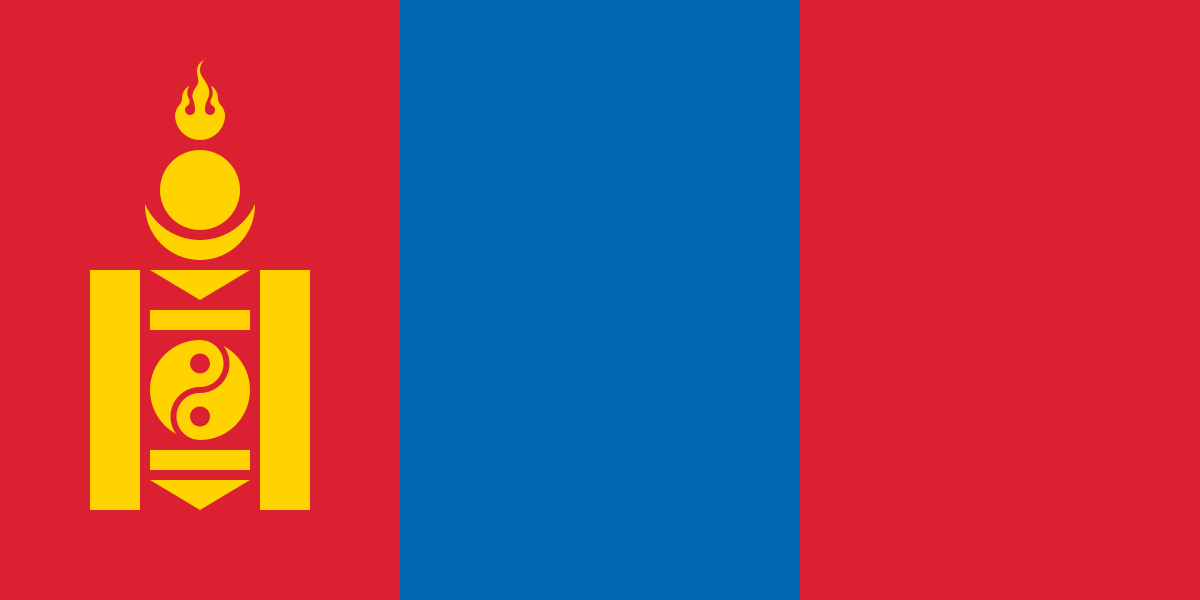
Mongolia
Asia · Ulaanbaatar · MN
Mongolia is the landlocked heart of Asia, the country of the steppe, the nomads and the sky that seems to have more space than the earth beneath it. Ulaanbaatar, the capital, mixes the ger districts of the felt tents, the Soviet-era blocks and the modern skyline in a sudden jolt of the old and the new, while the countryside spreads the rolling grasslands where the herders still move with the seasons. The Gobi in the south holds the dinosaur bones, the singing dunes and the ice canyons of a desert that is cooler than its fame, and the wilderness of the north and the west runs the reindeer herders, the great lakes and the wild horses of the mountains. The festivals of the Naadam, the wrestling, the archery and the horse racing, and the winter camps of the herders draw the travellers. Vast, empty, generous and profound, Mongolia is a land of the wide open.
Overview
Mongolia is a country in Asia. Its capital is Ulaanbaatar and the international dialling code is +976. Languages commonly used in everyday life here include Mongolian. Local currency is the Mongolian Tögrög (MNT). We also list 1 city in Mongolia: Ulaanbaatar.
Ulaanbaatar, the Gers and the Capital of the Steppe
The capital of Ulaanbaatar is a city of sudden contrasts, its Soviet-era blocks and its modern glass towers rising between the ger districts where the felt tents of the traditional dwelling still stand in the rows of the suburban yards. The centre holds the great square with the statue of the national hero, the opera house and the museums of the country's history, from the empire of Genghis to the Buddhist monasteries that survived the purges. The equestrian statue of the great khan, twenty minutes out of the city, towers over the steppe that his empire once ruled. The markets of the city, the state department store and the stalls of the Narantuul fill the merchants and the herders of the surrounding country on their days in town, and the nightlife and the cafes of the capital give the urban Mongolia its modern face.
The Naadam and the Games of the Three Manly Sports
The Naadam festival, held in the capital and the aimag towns every July, is the great national celebration of the country, and its three sports, the wrestling, the archery and the horse racing, are the traditional competitions of the warrior herdsmen. The opening ceremony of the capital's Naadam, with the horsemen, the dancers and the parade of the athletes, fills the stadium, and the wrestling matches of the grand tournament run through the days with the national dress and the ceremonial of the bouts. The archery contests of the festival use the traditional bows, and the horse races of the countryside run the young jockeys across the open steppe over enormous distances. The whole country stops for the festival, and the gers of the festival camps ring the stadia with the food and the drink of the celebration.
The Gobi, the Dunes and the Dinosaur Bones of the Desert
The Gobi, the great desert of the south, is cooler and more varied than its desert fame suggests, a land of the red cliffs, the ringing dunes, the ice canyons and the fossil beds that have made it one of the great treasure houses of the dinosaurs. The singing dunes of the Khongoryn Els, the largest of the Gobi's dunes, rise and fall with the wind, and the clay cliffs of the Bayanzag, where the eggs of the dinosaurs were first found, still scatter the white fossil bones across the red earth. The ice canyon of the Yol valley holds its frozen river through the heat of the summer, and the small towns of the desert hold the camps of the shepherds and the camels of the caravans. The Gobi road trip is a journey into the vast, silent heart of the country.
The Steppe, the Ger Camps and the Life of the Nomads
The open steppe of Mongolia is the country's true heartland, and the most immersive of its experiences is the staying with the herder families in their ger camps, the felt yurts of the moving household that still frame the whole rhythm of life. The days with the herders run the milking of the mares and the goats, the herding of the flocks with the horses and the dogs, and the simple, fire-cooked meals of the nomad table, and the nights under the enormous stars of the steppe hold the silence and the cold of the vast land. The welcome of the herders is famously generous, the milk tea and the airag, the fermented mare's milk, always offered, and the conversation, even through an interpreter, runs into the evening. It is a way of life that has shaped the country for a thousand years.
The Lakes of the North, the Reindeers and the Wild Horses
The north of Mongolia, the forested land between the steppe and the Siberian border, holds the country's great lakes and the wilderness of the mountains, the land of the shamanic traditions and the reindeer herders of the Tsaatan, the tiny people of the far north who move with their herds through the larch forests and the high passes. The great lake of the Hovsgol, the second largest of the country, spreads its deep, cold, blue water beneath the mountains and the pine forests of its shores, and the national parks of the region protect the ibex, the argali and the reintroduced wild horses of the mountain herds. The expeditions of the north, by horse, by boat and on foot, are the great adventures of the country, and the landscapes of the far lakes are among the purest in Asia.
Compare hotels, cover your trip and stay connected.
- Capital
- Ulaanbaatar
- Currency
- Mongolian Tögrög (MNT)
- Languages
- Mongolian
- Calling code
- +976
- Internet TLD
- mn
Entry requirements
Check who can enter →See which passports travel visa-free or need a visa to enter Mongolia.
Cities (1)
All cities →Frequently asked questions
What is the capital of Mongolia?
Ulaanbaatar is the capital of Mongolia, and the country sits in Asia.
What currency is used in Mongolia?
You pay with Mongolian Tögrög (MNT) in Mongolia. Exchange rates move day to day, so check the current rate before you change money or use your card abroad.
Which languages do people speak in Mongolia?
The languages we list for Mongolia are Mongolian. A couple of greetings in the local language go a long way when you travel, even in cities where another language is widely used.
What is the international dialling code for Mongolia?
The dialling code for Mongolia is +976 — keep the plus sign when you save the number.
Which cities in Mongolia do you cover?
Our guide lists 1 city for Mongolia: Ulaanbaatar (capital).