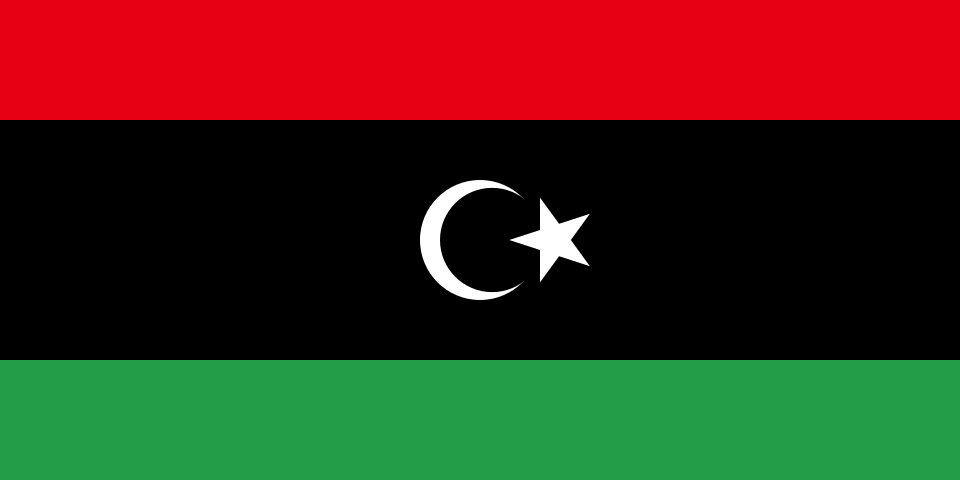
Libya
Africa · Tripoli · LY
Libya is the vast country of the North African coast that holds some of the most spectacular archaeological treasures of the Roman world, from the ruins of the Leptis Magna to the Greek theatres of the Cyrene, most of them closed to visitors through the long conflict and the instability of the recent years. Tripoli, the capital, spreads its Ottoman and its Italian colonial quarters along the coast, while the interior runs the desert of the Sahara with the volcanic peaks of the Acacus and the rock art of the ancient peoples. The country is currently in a fragile and unsafe state for travel, and the wise traveller must follow the current advice of the authorities with the greatest seriousness; the ruins, the desert and the warm hospitality of the people remain the great prize for the day when the stability returns. It is a land of an extraordinary heritage and a difficult present.
Overview
Libya is a country in Africa. Its capital is Tripoli and the international dialling code is +218. Languages commonly used in everyday life here include Arabic. Local currency is the Libyan Dinar (LYD). We also list 1 city in Libya: Tripoli.
The Leptis Magna and the Greatness of the Roman Port
The ruins of the Leptis Magna, on the coast east of the capital, are among the most complete and the most impressive of the Roman world, the birthplace of the emperor who lavished his wealth on his native city and the great port of the African province. The site preserves the forum, the basilica, the theatre, the market and the enormous colonnaded street of the Severan era, standing across the sand and the scrub of the headland in their pale rose-coloured stone, and the harbour works of the city reach into the sea beyond the walls. The archaeology of the city, the most extensive of Africa and among the best preserved of the empire, is the crown of the heritage of the country, a magnificent sight awaiting the return of the travelers.
The Acacus and the Rock Art of the Desert
The massif of the Acacus in the deep south-west of the country, the mountain range of the Sahara at the edge of the empty sand seas, preserves one of the greatest galleries of the rock art in the world, painted and engraved over thousands of years by the peoples of the green Sahara. The sites of the range, discovered and recorded through the last century, hold the astonishing herds of the giraffes, the elephants and the cattle of the wet age, the dancers, the warriors and the boats of the later periods, painted in the shelters of the eroded rock towers. The desert around the massif, the dunes, the arches and the oases of the west, is among the most dramatic landscapes of the country, and the whole region is the great objective of the desert expeditions.
The Tripoli of the Coasts and the Quarters of the Colonies
The capital of the country, the Tripoli on the Mediterranean coast, holds the layers of the centuries in its downtown, the Roman arch of the Marcus Aurelius, the great mosque and the Ottoman markets of the old city and the Italian colonial quarters of the early century. The city, rebuilt and modernised again in the years of the oil wealth and scarred by the conflicts of the recent decade, spreads its coastal boulevards, its monuments and its markets along the waterfront of the port that gave the region its name. The museum of the red castle, the citadel of the old town with the remarkable collections of the antiquities of the country and the mosaics of the Roman cities, is the essential institution of the capital.
The Desert of the South and the Oases of the Sahara
The interior of the country, the enormous Libyan desert of the south with its sand seas and its oases, is one of the harshest and the most beautiful deserts of the world, the landscapes that the expeditions of the last century made famous from the sea of the dunes of the Ubari to the volcanic massifs of the central Sahara. The oasis towns of the south, from the Ghadames with its covered streets and its white houses to the Sabhah and the towns of the Fezzan with their palm groves and their old forts, hold the life of the desert edge, and the lakes of the dunes, the turquoise pools among the great dunes of the Ubari, are among the most photogenic sights of the whole region. The desert crossings of the country, between the oases and the ancient caravan routes, are the ultimate Sahara experience.
The Current Conditions and the Honest Planning of the Visit
The current situation of the country, after the conflict and the division of the decade, is unsafe and unpredictable, and the wise traveller must treat any journey with the greatest caution, following the current advice of the official authorities of one's own country and taking no risks in the regions of the tension. The infrastructure of the country, its hospitals, its banking and its public services, is in a fragile state, and the insurance and the security planning need to be entirely realistic. The people of the country, however, remain characteristically warm and proud, and the heritage of their land, the ruins and the desert of one of the great civilisations of the Mediterranean, is waiting for the day when the country can welcome the travellers again.
Compare hotels, cover your trip and stay connected.
- Capital
- Tripoli
- Currency
- Libyan Dinar (LYD)
- Languages
- Arabic
- Calling code
- +218
- Internet TLD
- ly
Entry requirements
Check who can enter →See which passports travel visa-free or need a visa to enter Libya.
Cities (1)
All cities →Frequently asked questions
What is the capital of Libya?
Tripoli is the capital of Libya, and the country sits in Africa.
What currency is used in Libya?
You pay with Libyan Dinar (LYD) in Libya. Exchange rates move day to day, so check the current rate before you change money or use your card abroad.
Which languages do people speak in Libya?
The languages we list for Libya are Arabic. A couple of greetings in the local language go a long way when you travel, even in cities where another language is widely used.
What is the international dialling code for Libya?
The dialling code for Libya is +218 — keep the plus sign when you save the number.
Which cities in Libya do you cover?
Our guide lists 1 city for Libya: Tripoli (capital).