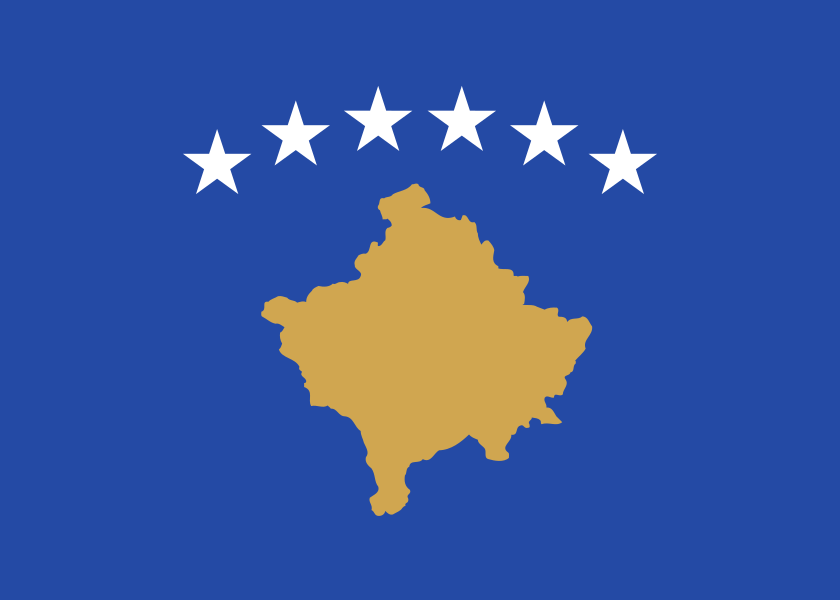
Kosovo
Europe · Pristina · XK
Kosovo is the small, landlocked country of the central Balkans, the youngest state of Europe, whose high mountain valleys, Ottoman towns and fiercely proud identity sit at the crossroads of the Albanian and the Serbian worlds. The capital of the Pristina, with its cafes, its bookshops and its striking interplay of the Ottoman, the socialist and the new European quarters, is among the liveliest and the youngest cities of the region, while the west of the country holds the old town of the Prizren with its fortress, its mosques and its lively stone bridge. The mountains of the Sharri and the canyons of the Accursed range frame the hiking and the ski country, and the Serbian orthodox monasteries of the medieval heritage, the treasures of the Decani and the Gracanica, are among the finest of the Balkans. Inexpensive, safe, welcoming and endlessly warm, Kosovo is the quiet, underrated surprise of the peninsula.
Overview
Kosovo is a country in Europe. Its capital is Pristina and the international dialling code is +383. Languages commonly used in everyday life here include Albanian and Serbian. Local currency is the Euro (EUR). We also list 1 city in Kosovo: Pristina.
The Pristina of the Cafes and the Youngest Capital
The capital of the country, the Pristina at the centre of the plain, is the youngest and the most energetic city of the Balkans, a university town whose streets fill with the students, the cafes, the bookshops and the nightlife of a deeply youthful population. The centre of the city layers its eras abruptly, the Ottoman baths, the socialist buildings of the past and the glass towers and the pedestrian boulevards of the new Europe standing side by side, and the national library, the strange concrete invention of the socialist era, is the most photographed monument of the whole country. The museums of the city, from the ethnographic collections to the memorial of the recent war, and the lively shopping streets of the centre, give the capital its unfiltered, forward-looking identity.
The Prizren of the Bridge and the Ottoman Town
The historic town of the Prizren in the south-west of the country, built on the banks of the river beneath its medieval fortress, is the most beautiful of the Ottoman towns of the Balkans, a world of the minarets, the stone bridges and the colourfully painted houses of the old bazaar. The old town of the town climbs from the river with its mosques, its churches, its hammam and its craft lanes, and the fortress on its hill above the rooftops gives the classic panorama over the whole city and the valley. The festivals of the town, the film festival and the music festivals of the summer that fill its lanes and its squares, have made the Prizren the cultural capital of the young country, and its cafes along the river hold the elegant evening life.
The Monastery of the Decani and the Frescoes of the Medieval
The monastery of the Decani, in the valley of the west of the country, is one of the greatest monuments of the medieval art of the Balkans, a fortified Serbian orthodox monastery of the fourteenth century whose church preserves one of the largest and best-preserved cycles of the frescoes in the world. The paintings of the church, the vivid processions, the saints and the scenes of the bible that cover every wall of the interior, are the masterwork of the Byzantine mural tradition, and the marble and the grey stone of the building, built with the riches of the king who founded it, crown the green valley. The monastery, protected by the peacekeeping forces and closed to casual tourism, is visited by appointment, and the other monasteries of the heritage, from the Gracanica near the capital to the churches of the inner valleys, complete the medieval circuit.
The Canyon of the Rugova and the Mountains of the Sharri
The west of the country, beyond the Prizren and the Peja, holds the dramatic mountain world of the Accursed range, and the canyon of the Rugova, the deep gorge of the river that cuts into the peaks, is its greatest spectacle. The canyon, threaded by the old paklenica paths and now connected by the famous panoramic road, is climbed and climbed with the rock faces and the waterfalls of the valley, and the alpine pastures and the peaks beyond it hold the hiking of the whole range. The mountains of the Sharri in the south, the lower and the greener range along the border, hold the ski town of the Brezovica and the summer treks of the high valleys, and the villages of the mountains keep the shepherd life of the highlands.
The Villages of the Highlands and the Hospitality of the Country
The villages of the highlands and the small towns of the valleys of the country keep the older rhythms of the Balkan life, the stone houses, the shepherds and the long evenings of the raki and the local food. The hospitality of the country, the famous warmth of the Kosovar welcome that stops the visitor in the street and shares the coffee and the meal, is the deep, real heart of any journey here, and the food of the country, the grilled meat, the burek, the hot peppers and the cheeses of the mountains, is among the most generous of the whole peninsula. The market days of the small towns, the weddings and the festivals of the villages, and the slow life of the countryside complete the picture of the young, proud, incomparably friendly country.
Compare hotels, cover your trip and stay connected.
- Capital
- Pristina
- Currency
- Euro (EUR)
- Languages
- Albanian, Serbian
- Calling code
- +383
- Internet TLD
- xk
Entry requirements
Check who can enter →See which passports travel visa-free or need a visa to enter Kosovo.
Which nationalities can enter Kosovo?
Current visa status for tourism for the origins we cover, with links to the detailed requirements.
Cities (1)
All cities →Frequently asked questions
Do I need a visa to visit Kosovo?
For the origins we track, Kosovo requires a visa for tourism (Morocco: visa required). Entry rules depend on your passport, so confirm the current requirements for your own nationality with our entry requirements tool.
What is the capital of Kosovo?
Pristina is the capital of Kosovo, and the country sits in Europe.
What currency is used in Kosovo?
You pay with Euro (EUR) in Kosovo. Exchange rates move day to day, so check the current rate before you change money or use your card abroad.
Which languages do people speak in Kosovo?
The languages we list for Kosovo are Albanian and Serbian. A couple of greetings in the local language go a long way when you travel, even in cities where another language is widely used.
What is the international dialling code for Kosovo?
The dialling code for Kosovo is +383 — keep the plus sign when you save the number.
Which cities in Kosovo do you cover?
Our guide lists 1 city for Kosovo: Pristina (capital).