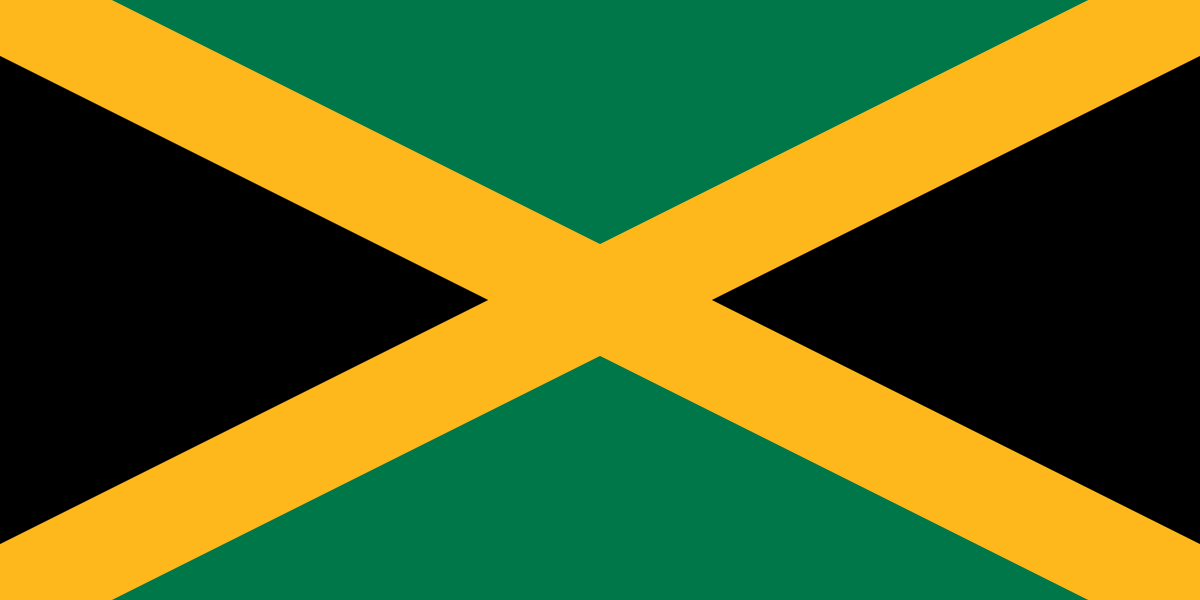
Jamaica
North America · Kingston · JM
Jamaica is an island of blue mountains, green valleys and a sea that turns every shade of turquoise along its northern coast. Kingston, the capital, sits between the harbour and the Blue Mountain peaks, home to one of the island's proudest traditions in its coffee and its music. The north coast towns of Montego Bay, Ocho Rios and Negril line the beaches with resorts, waterfalls and the small fishing communities that keep the island's rhythm honest. The interior climbs through rain forest and coffee country, past the ruins of great houses and the caves that hide the river systems beneath the limestone. Port Antonio, on the east, wears its lushness like a crown, and the southern coast holds quiet beaches and the fishermen's villages where the food is grilled on the sand. Reggae music, from the studios of Kingston to the beach bars of Negril, is the island's heartbeat, and every meal runs on jerk, patties and the strong coffee brewed from the heights.
Overview
Jamaica is a country in North America. Its capital is Kingston and the international dialling code is +1876. Languages commonly used in everyday life here include English. Local currency is the Jamaican Dollar (JMD). Our guide covers 1 airport, including Norman Manley International Airport. We also list 1 city in Jamaica: Kingston.
The Blue Mountain Ascent and Its Coffee Terraces
The Blue Mountains rise east of Kingston to more than two thousand two hundred metres, and their slopes carry the coffee that made the island's name. The coffee district, a stretch of smallholdings strung along the ridge, produces one of the world's most protected brews, with local farms and co-ops offering tastings among the misty terraces. The climb itself may be the draw: the trail from the village of Holywell threads through cloud forest and ruins until the ridge opens over Kingston and, on clear days, the far coast. Guides walk the peak at night to time sunrise from the summit, passing old barracks, coffee pulping stations and the terraced homesteads of the district. The coffee route also skirts the estates where the crop was first planted. The cool air, the ocean glittering below and the beans drying on the racks keep the region humming with purpose.
The White Water and Cascades of Ocho Rios
Ocho Rios, on the island's north coast, builds its charm out of water, and the falls at Dunn's River are its signature. The falls step down the rock face in a natural staircase that visitors have climbed for generations, the cold spring water pouring between the steps while the guides lead laughing chains up the middle of the torrent. Just outside the town, the swing bridges, swimming holes and rope jumps over jade-green pools add a calmer layer. The town itself holds the Turtle River gardens, while the coast east toward Runaway Bay hides quieter coves. The full water tour could begin at the falls, ride downstream to the river mouth, and end pegging the beaches beside the boutique hotels. Between the main falls and the lesser pools, Ocho Rios gives visitors the island's most concentrated cascade experience without ever leaving the sea breeze.
The Sunset Drift of Negril's Seven Mile Beach
Negril, furthest west of the island's resort towns, swims in the softest light and the simplest pleasures. Its Seven Mile Beach, actually more like six, runs a long curve of white sand and calm water that holds some of the country's oldest established beach bars. Rick's Cafe perches on the cliffs at the town's western end, where the diving cliffs and the sunsets gather the whole west coast crowd. The shallow gradient keeps the water warm and clear, and swimming, paddleboarding and snorkelling over the coral patches occupy the calm days. The town's resort belt hugs the middle of the beach, while the stalls at the east end serve fresh catches grilled over charcoal. Negril is where the island's pace drops to a distinct drift: reggae plays all day, the rum punch arrives with the sun, and the cliffs turn coral and gold as the sun drops into the Caribbean.
The Palisadoes Shores and the Energy of Kingston
Kingston, the capital, crowds a flat coastal plain between the harbour's long arm and the Blue Mountains that rise straight behind it. The downtown district holds the National Gallery, the Bob Marley Museum that marks the home where reggae's world stage was built, and the bustle of the Harbour Street markets. The Palisadoes peninsula, the narrow spit that reaches toward Port Royal, guides the eye along the water to the sunken port that was once a pirate capital of the Caribbean. Uptown, the gardens of Devon House serve some of the island's best patties and ice cream. The city's food tells its history: rice and peas, escovitch fish, jerk from the hills and the strong Blue Mountain brew that refills the cafes each morning. Kingston rewards street smarts and a warm temperament, and its energy hums day and night in a way no other part of the island matches.
The Ravine Coast and Eastward Serenity of Port Antonio
Port Antonio, on the island's far eastern coast, keeps the lush beauty that earned it a reputation as the ultimate Jamaican retreat in the age of early cinema stars. The twin harbours split the town, and the cascades along the Rio Grande, with their bamboo raft rides through the glade, remain the region's great natural draw. The Blue Lagoon, a deep spring-fed pool of ink and cobalt, sits among the hills that the eastern rainfall keeps perpetually green. The old hotels pile up around the bays, and the small fishing coves at Frenchman's Cove and Boston Beach still work as the island does, with the famous jerk cook-off at Boston heading up the spice route. The coast north of the town holds the most secluded swimming spots in Jamaica, reachable by boat along the cliffs. Slow, green and little commercialized, Port Antonio is where the island still feels wildest.
Compare hotels, cover your trip and stay connected.
- Capital
- Kingston
- Currency
- Jamaican Dollar (JMD)
- Languages
- English
- Calling code
- +1876
- Internet TLD
- jm
Entry requirements
Check who can enter →See which passports travel visa-free or need a visa to enter Jamaica.
Which nationalities can enter Jamaica?
Current visa status for tourism for the origins we cover, with links to the detailed requirements.
Airports (1)
All airports →Cities (1)
All cities →Frequently asked questions
Do I need a visa to visit Jamaica?
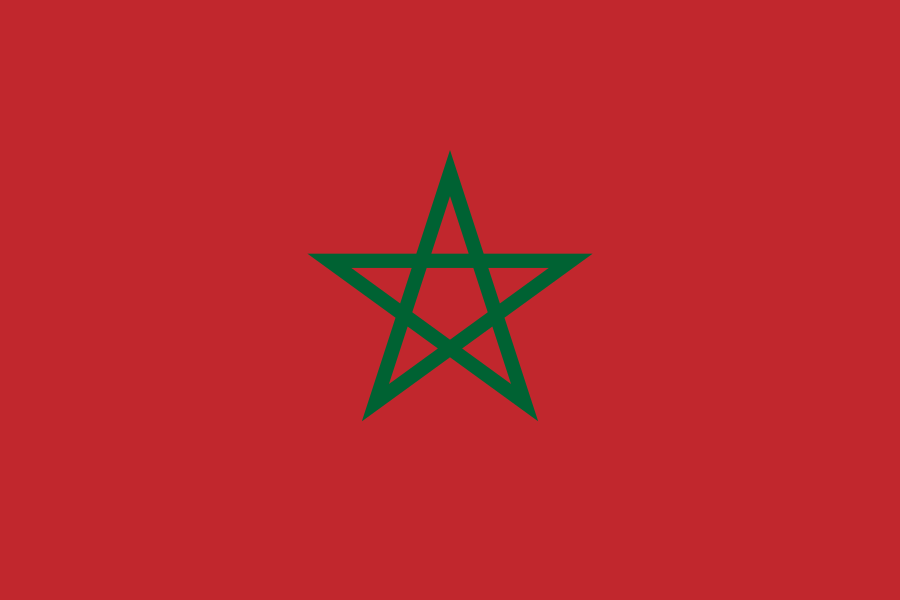
For the origins we track, Jamaica requires a visa for tourism (Morocco: visa required). Entry rules depend on your passport, so confirm the current requirements for your own nationality with our entry requirements tool.
What is the capital of Jamaica?
Kingston is the capital of Jamaica, and the country sits in North America.
What currency is used in Jamaica?
You pay with Jamaican Dollar (JMD) in Jamaica. Exchange rates move day to day, so check the current rate before you change money or use your card abroad.
Which languages do people speak in Jamaica?
The languages we list for Jamaica are English. A couple of greetings in the local language go a long way when you travel, even in cities where another language is widely used.
What is the international dialling code for Jamaica?
The dialling code for Jamaica is +1876 — keep the plus sign when you save the number.
Which airports serve Jamaica?
Norman Manley International Airport (KIN) in Kingston is the airport we cover for Jamaica.
Which cities in Jamaica do you cover?
Our guide lists 1 city for Jamaica: Kingston (capital).