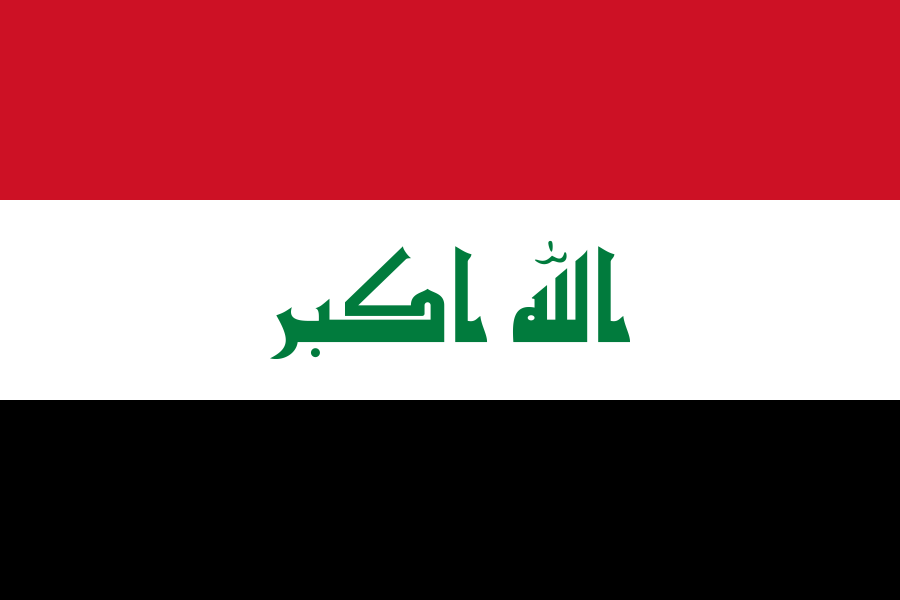
Iraq
Asia · Baghdad · IQ
Iraq is the ancient land of the Mesopotamian plain, the cradle of the first cities and of the writing, where the ruins of the Babylon and the Ur and the great mosques of the Islamic world anchor one of the deepest historical layers of any country on earth. Baghdad, the capital of the Arabian Nights, holds the museums of the national treasures, the monuments of the modern state and the riverfront life of the Tigris, while the south spreads the marshlands with their reed houses and holy cities with their golden domes and their pilgrims. The region of the Kurdistan in the north, around the Erbil and the Sulaymaniyah with their citadels, their mountains and their lively towns, is increasingly open and safe, though the wider country still demands honest caution and current advice. Monumental beyond compare, Iraq is the deep-history journey of the Middle East.
Overview
Iraq is a country in Asia. Its capital is Baghdad and the international dialling code is +964. Languages commonly used in everyday life here include Arabic and Kurdish. Local currency is the Iraqi Dinar (IQD). We also list 1 city in Iraq: Baghdad.
The Babylon and the Ruins of the First Cities
The mounds of the Babylon, on the plain south of the capital, hold the ruins of the greatest city of the ancient world, the capital of the empires of the Hammurabi and the Nebuchadnezzar and the seat of the hanging gardens and the tower of the legend. The site of the palace, the lions of the gate of the Ishtar and the processional way of the glazed bricks, reconstructed in part over the original archaeology, gives the visitor the scale and the story of the ancient metropolis, and the nearby site of the Borsippa with its colossal ziggurat completes the picture of the plain. The ruins of the Ur, the great city of the biblical homeland of the patriarch, with its ziggurat of the moon god rising from the desert, anchor the even deeper layer of the first civilisations.
The Baghdad of the Rivers and the Museum of the Nation
The capital of the country, the Baghdad of the two rivers, spreads its historic quarters, its modern boulevards and its teeming riverbanks along the Tigris, the city of the caliphs and the Nights now the enormous, exhausted heart of the modern state. The national museum of the country, among the great collections of the Middle East, holds the treasures of the whole Mesopotamian past, from the tablets of the first writing to the jewels of the royal graves of the Ur, painstakingly recovered after the losses of the war years. The monuments of the modern city, the freedom monument, the mosque and the towers of the bridge of the martyrs, and the river cafés of the old town, give the capital its layered, painful, proud character.
The Holy Cities of the Najaf and the Karbala of the Domes
The holy cities of the south of the country, the Najaf and the Karbala, are among the most sacred places of the Islamic world, the shrines of the imams that draw the millions of the pilgrims from across the whole region. The great shrine of the Imam Ali in the Najaf, the golden dome and the vast courtyard that the faithful believe to hold the tomb of the cousin and son-in-law of the Prophet, and the even more venerated shrine of the Imam Hussain in the Karbala, with its golden domes and its enormous processions of the pilgrimage, are the religious capitals of the Shiite world. The bazaars, the seminaries and the hospitality of the cities, arranged around the great pilgrimages and the rituals of the calendar, give the traveller a profound and moving introduction to the faith and the society of the region.
The Marshes of the Chibayish and the Houses of the Reeds
The marshlands of the south of the country, the vast wetlands of the junction of the two great rivers, are the legendary landscape of the story of the flood, a water world of the reed beds, the lagoons and the islands where the communities of the Maadan still build their famous houses of the qasab reeds. The marshes, drained and then flooded again in the years of the recovery, hold the water buffalo of the traditional life, the fish of the lagoons and the enormous birdlife of the flyways, and the boat journeys between the reed villages give the visitor the strange, beautiful, timeless world of the southern delta. The modern reconstruction of the region, after the damage of the draining era, is one of the extraordinary restoration stories of the natural world.
The Erbil and the Mountains of the Kurdistan of the North
The region of the Kurdistan in the north, the autonomous and comparatively stable corner of the country, holds the old citadel city of the Erbil, the walled mound of the ancient settlement that claims to be among the longest-inhabited towns on earth, and the modern Kurdish cities with their towers and their lively cafes. The towns of the region, from the Sulaymaniyah with its museum of the Kurdish culture to the Christian and the Yazidi villages of the plains and the mountains, hold the deep diversity of the north, and the mountains of the region, the forested valleys and the gorges of the crater lakes, give the hiking and the summer life of the Kurdish country. The region is the safest and the most welcoming area for the traveller of the whole country.
Compare hotels, cover your trip and stay connected.
- Capital
- Baghdad
- Currency
- Iraqi Dinar (IQD)
- Languages
- Arabic, Kurdish
- Calling code
- +964
- Internet TLD
- iq
Entry requirements
Check who can enter →See which passports travel visa-free or need a visa to enter Iraq.
Cities (1)
All cities →Frequently asked questions
What is the capital of Iraq?
Baghdad is the capital of Iraq, and the country sits in Asia.
What currency is used in Iraq?
You pay with Iraqi Dinar (IQD) in Iraq. Exchange rates move day to day, so check the current rate before you change money or use your card abroad.
Which languages do people speak in Iraq?
The languages we list for Iraq are Arabic and Kurdish. A couple of greetings in the local language go a long way when you travel, even in cities where another language is widely used.
What is the international dialling code for Iraq?
The dialling code for Iraq is +964 — keep the plus sign when you save the number.
Which cities in Iraq do you cover?
Our guide lists 1 city for Iraq: Baghdad (capital).