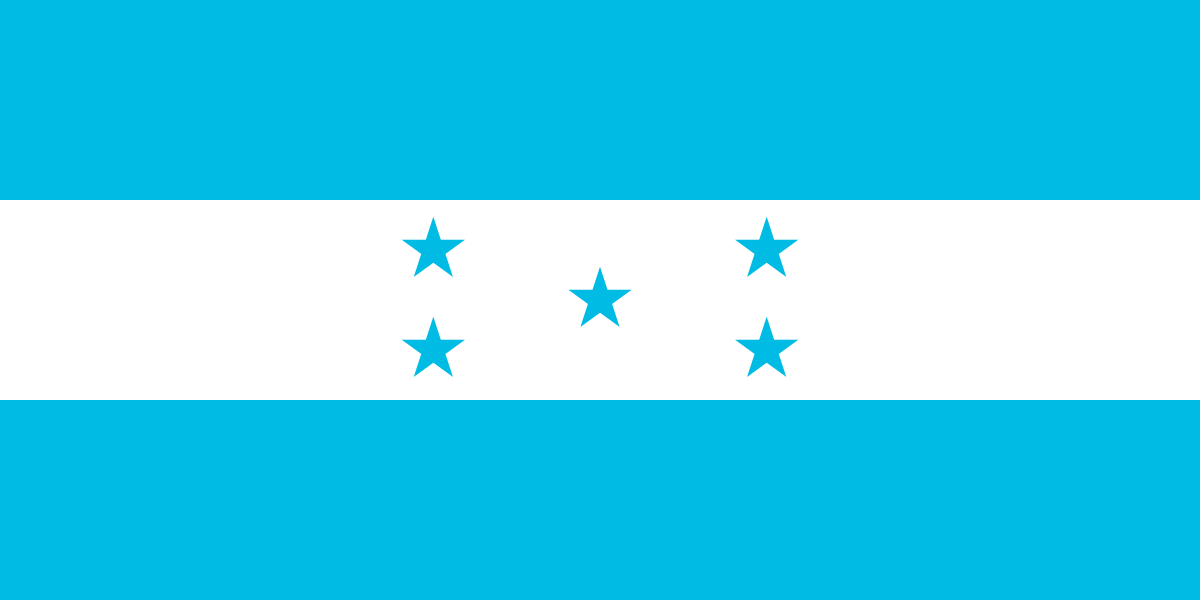
Honduras
North America · Tegucigalpa · HN
Honduras is the rugged heart of Central America, the mountain land of the Maya ruins, the Caribbean islands and the wildest lowland forests of the region, with a short Pacific thread at its far south. The ruins of Copan, the finest Maya city of the region, reach back to the classic age, and the bay islands of the Caribbean coast, with their reefs, their diving and their relaxed island towns, draw the travellers of the sea. The capital of Tegucigalpa and the colonial highlands of the interior, the coffee mountains and the cloud forests, spread the country's deeper life, while the Mosquitia of the east remains one of the least explored wildernesses of the hemisphere. Poor, proud and richly varied, Honduras is the Central America that the guidebooks rarely reach and the brave traveller rarely forgets. Its beaches, its forests and its fiercely independent spirit make it a destination of genuine depth and surprising reward.
Overview
Honduras is a country in North America. Its capital is Tegucigalpa and the international dialling code is +504. Languages commonly used in everyday life here include Spanish. Local currency is the Honduran Lempira (HNL). We also list 1 city in Honduras: Tegucigalpa.
The Ruins of Copan and the Stelae of the Classic Maya
The ruins of Copan, near the western border of the country, are the finest of the Maya cities of the region and among the greatest of the whole ancient world, a ceremonial capital of the classic age crowded with the sculpted stelae and the altars that record the reigns of its kings in the finest carving of the Americas. The great plaza, the hieroglyphic stairway with its thousands of the glyphs, the ball court and the acropolis of the city spread across the grassy valley at the foot of the surrounding hills, and the tunnels of the site take the visitor beneath the later temples to the earlier buildings of the royal families. The museum of the site, with its full-size reconstruction of the temple of the rulers, completes the story of the city. It is best seen with a good guide at the opening of the day.
The Bay Islands and the Reefs of the Caribbean
The bay islands of the north coast, the three main islands of the Roatan, the Utila and the Guanaja, hold the Caribbean face of the country, a world of the white beaches, the coconut palms and the barrier reef, the second largest in the world, that runs along the whole coast. The reef of the islands is the great draw, and the diving and the snorkelling of the walls and the channels meet the nurse sharks, the rays, the morays and the enormous variety of the reef fish of the Caribbean. The town of West End on the Roatan runs the dive shops, the bars and the backpacker life of the islands, and the smaller islands, quieter and greener, hold the lodge life and the boat-based holidays. The season of the storms is best avoided, but the islands at their calm are the purest Caribbean of the region.
The Highlands of the Coffee and the Colonial Towns
The highlands of the interior, the green spine of the country between the two coasts, hold the coffee farms, the cloud forests and the colonial towns that give the traveller the other Honduras. The town of the Copan Ruinas, beside the great Maya site, is one of the most pleasant bases of the country with its cobbled streets and its galleries, while the mountains around the capital hold the pine forests and the waterfalls of the interior. The coffee of the Honduran highlands, grown in the volcanic and the limestone soils of the region, is now among the most awarded of the world, and the tours of the western estates run through the drying patios and the cupping rooms of the harvest. The highland towns are small, safe and deeply agricultural, a peaceful, green contrast to the coasts.
The Mosquitia and the Last Wilderness of the Caribbean
The eastern lowlands of the country, the Mosquitia, form one of the largest intact wildernesses of the Americas, a vast, wet, river-cut region of the rainforest and the wetlands that the rivers of the Patuca and the Coco drain toward the Caribbean. The region holds the legendary white city of the eastern rainforest, explored in recent years in the unexplored heart of the forest, and the national parks of the region guard the tapirs, the jaguars, the harpy eagles and the river turtles of the wild. The travel in the Mosquitia is by the boat and the machete, the rivercraft and the camps of the guides, and the indigenous communities of the region, the Miskito and the Pech, live as they have for generations. It is a genuine wilderness adventure, expensive, difficult and utterly of another time.
The Capital, the Markets and the Everyday of the Country
The capital of Tegucigalpa, the mountain city that wraps its crowded hillside streets around the river of the centre, is a real, working Latin American capital, and its markets, its cathedral and its museums give the visitor the everyday face of the country. The central market of the city, the crowded stalls of the fruit, the crafts and the herbs, is the great sensory introduction, and the views from the hilltops of the city over the red rooftops and the green mountains frame the whole dramatic setting. The nightlife of the modern districts, the restaurants and the shopping of the newer areas complete the picture. The capital is the transport hub of the country, and the buses and the connections of the region run through it, but it repays a day of its own exploration.
Compare hotels, cover your trip and stay connected.
- Capital
- Tegucigalpa
- Currency
- Honduran Lempira (HNL)
- Languages
- Spanish
- Calling code
- +504
- Internet TLD
- hn
Entry requirements
Check who can enter →See which passports travel visa-free or need a visa to enter Honduras.
Cities (1)
All cities →Frequently asked questions
What is the capital of Honduras?
Tegucigalpa is the capital of Honduras, and the country sits in North America.
What currency is used in Honduras?
You pay with Honduran Lempira (HNL) in Honduras. Exchange rates move day to day, so check the current rate before you change money or use your card abroad.
Which languages do people speak in Honduras?
The languages we list for Honduras are Spanish. A couple of greetings in the local language go a long way when you travel, even in cities where another language is widely used.
What is the international dialling code for Honduras?
The dialling code for Honduras is +504 — keep the plus sign when you save the number.
Which cities in Honduras do you cover?
Our guide lists 1 city for Honduras: Tegucigalpa (capital).