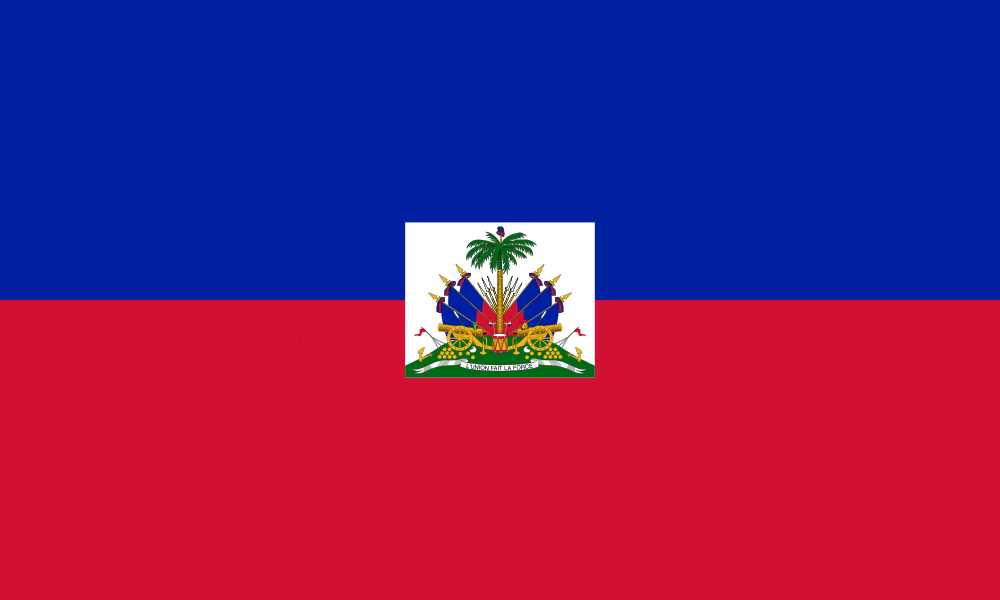
Haiti
North America · Port-au-Prince · HT
Haiti is the western third of the island of the Hispaniola, the first nation to throw off the slave empire and a country of the mountains, the beaches and a deeply African culture that has survived an extraordinary run of hardship. The capital of the Port-au-Prince, set on its bay beneath the mountains, holds the national museum and the iron market of the centre, while the ruins of the Citadelle Laferriere, the enormous fortress built after the revolution, and the palace of the Sans-Souci crown the northern mountains above the Cap-Haitien. The coastline holds the beaches of the Jacmel and the villages of the art and the ironwork, and the vodou and the carnival of the country thread through the everyday life. The security and the infrastructure problems of the country are severe and demand deep caution and honest planning before any visit.
Overview
Haiti is a country in North America. Its capital is Port-au-Prince and the international dialling code is +509. Languages commonly used in everyday life here include Haitian Creole and French. Local currency is the Haitian Gourde (HTG). We also list 1 city in Haiti: Port-au-Prince.
The Citadelle of the Laferriere and the Fortress of the Revolution
The fortress of the Citadelle Laferriere, the enormous mountaintop stronghold that the revolutionary leaders raised after the victory over the colonial empire, stands above the northern plain as one of the great monuments of the history of the Americas and the largest fortress of the western hemisphere. The citadel, built by the labour of the thousands and stocked against a return of the old powers, crowns its razor ridge with the walls, the ramps and the rusted cannons of the improbable enterprise, and the mule ride up the mountain and the guided tour of the battlements give the panorama over the northern coast. The nearby ruins of the palace of the Sans-Souci, the baroque royal residence of its builder, and the town of the Milot below frame the extraordinary story.
The Cap-Haitien and the Colonial Heart of the North
The second city of the country, the Cap-Haitien on the northern coast, was the richest city of the colony in the years before the revolution, and its centre preserves the colonial squares, the churches and the gingerbread houses of that golden age. The city, surrounded by the green mountains and the plantations of the north, was the birthplace of the rebellion that made the island the first free republic, and its museums and its monuments tell the story of that history with pride. The coastline of the north, the beaches of the Labadee and the coral of the coast, holds the resort life of the region, and the market streets of the old city run the vivid everyday of the second capital.
The Iron Market of the Port-au-Prince and the Murals of the City
The capital of the country, the Port-au-Prince set on its bay beneath the mountains, holds the national institutions, the palace rebuilt after the great earthquake and the iron market of the historic centre, the vast wrought-iron bazaar that the city has rebuilt around its original pillars. The art of the country, the famous naive paintings of the Haitian school that the galleries of the capital and the world collect, is one of the great creative voices of the Caribbean, and the murals of the city and the crafts of the ironwork fill the walls and the markets. The everyday life of the capital, the tap-tap buses, the markets and the music of the street, runs with an energy and a resilience that visitors remember long after.
The Beaches of the Jacmel and the Art of the Coast
The town of the Jacmel on the south coast, the historic port of the coffee trade and the one-time capital of the region, holds the gingerbread buildings of its belle-epoque era, the murals and the papier-mache workshops of its celebrated carnival culture. The beaches of the south around the town, the bays of the sandy coves and the river gorges of the interior, are among the finest of the island, and the fishing villages of the coast hold the peaceful, traditional life of the region. The carnival of the Jacmel, the yearly festival of the masquerades and the papier-mache giants, is the most famous celebration of the country, and the town, easier and calmer than the capital, is the classic southern destination.
The Mountains of the Interior and the Culture of the Vodou
The interior of the country, the mountain chains that cross the whole island, holds the remote villages, the waterfalls and the rural life of the majority of the people, and the hiking and the horseback routes of the high valleys reach the true heart of the Haitian countryside. The vodou of the country, the African religion that the enslaved carried across the sea and that fused with the folk faith of the island, is the spiritual foundation of the culture, with its temples, its ceremonies and its songs woven into the life of the communities. The pilgrimages of the faith, from the waterfalls of the sacred site of the Saut d'Eau to the festivals of the year, and the market days of the mountain towns give the visitor the deep, living culture of the nation.
Compare hotels, cover your trip and stay connected.
- Capital
- Port-au-Prince
- Currency
- Haitian Gourde (HTG)
- Languages
- Haitian Creole, French
- Calling code
- +509
- Internet TLD
- ht
Entry requirements
Check who can enter →See which passports travel visa-free or need a visa to enter Haiti.
Cities (1)
All cities →Frequently asked questions
What is the capital of Haiti?
Port-au-Prince is the capital of Haiti, and the country sits in North America.
What currency is used in Haiti?
You pay with Haitian Gourde (HTG) in Haiti. Exchange rates move day to day, so check the current rate before you change money or use your card abroad.
Which languages do people speak in Haiti?
The languages we list for Haiti are Haitian Creole and French. A couple of greetings in the local language go a long way when you travel, even in cities where another language is widely used.
What is the international dialling code for Haiti?
The dialling code for Haiti is +509 — keep the plus sign when you save the number.
Which cities in Haiti do you cover?
Our guide lists 1 city for Haiti: Port-au-Prince (capital).