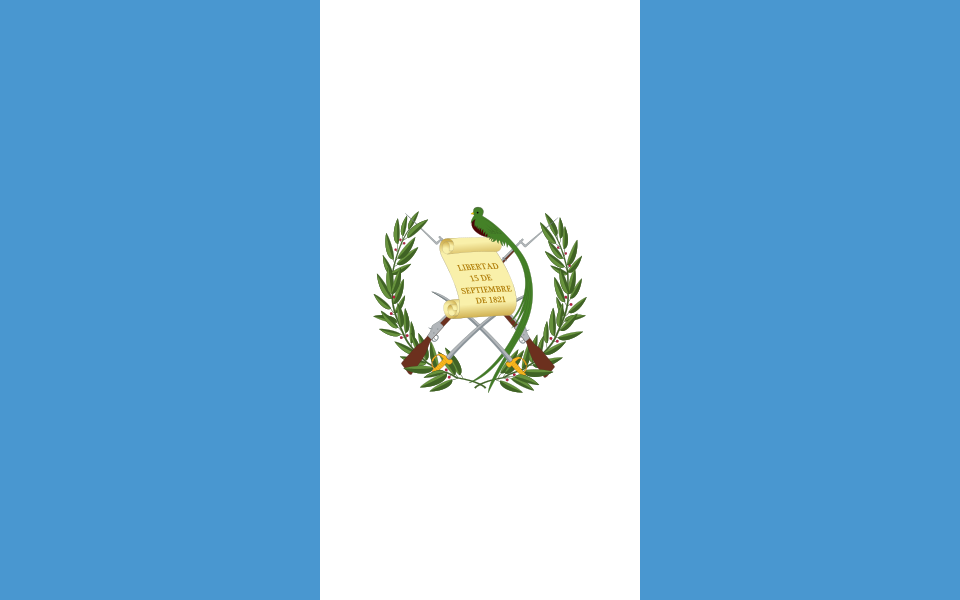
Guatemala
North America · Guatemala City · GT
Guatemala is the Central American country of volcanoes, lakes and a deep Maya inheritance that reaches from the ruined cities of the lowlands to the living villages of the highlands. The ruined city of Tikal, rising out of the jungle with its enormous pyramids, holds one of the supreme sights of the ancient world, and the colonial city of Antigua, tucked under its volcanoes, is the postcard of cobbles, painted facades and the processions of the holy week. Lake Atitlán, ringed by the three great volcanoes and the market villages of the shore, is the travellers' heart, and the highland town of Chichicastenango runs on its famous market and the rituals on the steps of its church. The lowlands of the north hold the waterways and the wildlife of the Petén, and the cloud forests of the mountains hold the quetzal. Volcanic, colourful and profoundly Maya, Guatemala is a country of constant wonder.
Overview
Guatemala is a country in North America. Its capital is Guatemala City and the international dialling code is +502. Languages commonly used in everyday life here include Spanish. Local currency is the Guatemalan Quetzal (GTQ). We also list 1 city in Guatemala: Guatemala City.
The Pyramids of Tikal Rising from the Jungle
The ruined city of Tikal, in the deep green of the Petén jungle, is the greatest of the lowland Maya cities, a vast ceremonial capital whose temples rise above the canopy in a landscape of howler monkeys and parrots. The great plaza holds the two towering pyramids of the classic age, and the climb up the temple steps gives a view across the green ocean of the forest that seems to spread to the horizon. The city numbers its squares, its palaces, its stelae and its ball courts by the hectare, and the routes between the ruins run through the hot, bird-filled shade where the coatis and the occasional jaguar patrol the margins. The dawn and the dusk are the times of the magic, when the silhouettes of the temples stand black against the light. Tikal is the monument that every traveller to Guatemala comes to measure themselves against.
Antigua and the Streets of the Painted Facades
The colonial city of Antigua, once the capital of the whole region, is the prettiest town in Central America, a grid of cobbled streets and one- and two-storey houses painted in the yellow, blue and ochre of the tropics, all of it under the guard of the three volcanoes that ring the valley. The ruins of the great churches, destroyed by the earthquakes of the eighteenth century, stand open to the sky beside the rebuilt cathedrals, and the central square runs with the fountains, the shoe-shiners and the vendors of the day. The town is a school town, a café town and a coffee town, and the processions of the holy week, the carpets of coloured sawdust and the huge floats of the season, draw the whole country. Antigua is beautiful, sociable and wonderfully easy to wander.
Lake Atitlan and the Villages of the Volcanic Shore
Lake Atitlán, in the highlands of the south, is one of the most beautiful lakes in the world, a deep blue caldera ringed by the three volcanoes and the terraced coffee and maize fields of the shore. The villages of the lake each keep their own character, their own dialect and their own weave: San Pedro the party and the big hill, Santiago the old gods and the shrine of the local saint, and the smaller lakeside towns the quieter dock life. The boats of the lake, the launches that connect the villages, run through the day on a floating timetable of their own, and the sunsets over the volcanoes turn the water pink and gold. Walking the lake edge or climbing the volcano of San Pedro gives the views that make Atitlán the travellers' legend it is.
The Market of Chichicastenango and the Steps of the Church
The highland town of Chichicastenango holds the most famous market in Central America, a twice-weekly flood of colour and commerce that fills the central plaza and the steps of the churches with the weavers, the sellers and the buyers of the whole region. The women arrive in their bright, embroidered huipiles, the blouses of their villages, and the textiles of the market, the tablecloths, the shawls and the bags of the handloom, spill from the stalls in wedges of pattern. On the steps of the church of Santo Tomás, the shamans of the highlands still conduct the rituals of the Maya faith, burning the copal incense and the candles over the flower-strewn altars in the open air. The market is loud, vivid and old, and it is the single best meeting of the living Maya culture and the visitor economy in the country.
The Highlands, the Volcanoes and the Weavers of the Patterns
The highlands of Guatemala, the great chain of volcanoes and valleys that runs from the central plateau to the Mexican border, hold the highest concentration of indigenous life in the Americas, and the towns and the villages of the region carry the languages, the dress and the rituals of the Maya world. The volcano of Pacaya and the great cone of Fuego send their smoke over the skyline of the region, and the climbs to the active craters and the lakes of the extinct ones draw the mountaineers. The craft of the region is the handloom, and the weavers of the villages, the back-strap weavers who make the patterns of their own town, are among the finest in the world. The mountain roads, the market towns and the enormous views make the highlands a region to travel slowly and in wonder.
Compare hotels, cover your trip and stay connected.
- Capital
- Guatemala City
- Currency
- Guatemalan Quetzal (GTQ)
- Languages
- Spanish
- Calling code
- +502
- Internet TLD
- gt
Entry requirements
Check who can enter →See which passports travel visa-free or need a visa to enter Guatemala.
Cities (1)
All cities →Frequently asked questions
What is the capital of Guatemala?
Guatemala City is the capital of Guatemala, and the country sits in North America.
What currency is used in Guatemala?
You pay with Guatemalan Quetzal (GTQ) in Guatemala. Exchange rates move day to day, so check the current rate before you change money or use your card abroad.
Which languages do people speak in Guatemala?
The languages we list for Guatemala are Spanish. A couple of greetings in the local language go a long way when you travel, even in cities where another language is widely used.
What is the international dialling code for Guatemala?
The dialling code for Guatemala is +502 — keep the plus sign when you save the number.
Which cities in Guatemala do you cover?
Our guide lists 1 city for Guatemala: Guatemala City (capital).