
Greece
Europe · Athens · GR
Greece occupies the southeastern tip of Europe where the Balkan Peninsula reaches toward the Aegean Sea, its mainland and over six thousand islands forming a fractured geography that has shaped a fiercely independent and outward-looking culture. The whitewashed buildings of the Cycladic islands tumble toward harbors so photogenic that they have become global shorthand for Mediterranean beauty, yet mainland Greece offers archaeological depth that rivals anything in the Mediterranean basin. Ancient temples, Byzantine monasteries, and Ottoman fountains coexist within single towns, each layer contributing to a cultural palimpsest that rewards patient observation. Greek cuisine remains rooted in what grows nearby, with olive oil, wild herbs, and fresh seafood forming the foundation of meals served at family-run tavernas without pretension. The country's relationship with its landscape is intimate and physical, expressed through mountain-shepherding traditions, island-fishing knowledge, and a calendar of Orthodox festivals that maintain connections to practices stretching back centuries.
Overview
Greece is a country in Europe. Its capital is Athens and the international dialling code is +30. Languages commonly used in everyday life here include Greek. Local currency is the Euro (EUR). Our guide covers 2 airports, including Athens International Airport, Thessaloniki Airport. We also list 2 cities in Greece: Athens and Thessaloniki.
Getting around Greece
Greece combines rail, road and ferries. The Athens Metro serves the Acropolis area and connects the airport directly. Intercity coaches (KTEL) are the most reliable way to reach mainland towns, and the train from Athens to Thessaloniki runs along the coast. For the islands, ferry routes depart from Piraeus, Rafina and Lavrio, and many of them are seasonal — from around April to October. During summer, island connections can sell out, so book ferry tickets a few days ahead.
On the islands, mopeds, quads and rental cars are common; hire from licensed rental agencies and keep your passport or ID with you, as it is normally required at the rental desk.
When to visit Greece
The peak season runs from mid-June to early September, when the Aegean is at its best for swimming but temperatures can exceed 35°C in Athens and on the islands. Spring (April–June) is green, quiet and ideal for sightseeing and walking. Autumn (September–October) is still warm enough to swim in most of the Cyclades and the Dodecanese, with fewer crowds.
Outside the summer season many island hotels and tavernas close, and ferry frequency drops sharply from November to March, so check schedules before travelling in winter. The islands of the Cyclades (Santorini, Mykonos, Paros) and the Dodecanese (Rhodes, Kos) are the classic ferry destinations.
Eating and drinking
Greek food is built around shared plates: horiatiki (Greek salad), tzatziki, souvlaki, moussaka, grilled octopus and fresh fish. Tavernas usually bring the bill only when asked, so catch the waiter's eye when you are ready. A small tip (rounding up or 5–10%) is appreciated but never expected.
You can expect a slower, more relaxed pace in tavernas — meals are not hurried. The local coffee of choice is a frappé or freddo espresso, and ouzo or wine is served with most meals.
Money and local customs
Greece uses the euro. Cards are widely accepted in cities and on bigger islands, but small villages, ferry vendors and street kiosks often prefer cash. ATMs are common in towns but can be sparse on small islands, especially outside summer.
Greeks are warm and expressive; a firm handshake and a smile go a long way. The Greek summer midday break (siesta) is common in towns and on islands through early afternoon. During religious holidays such as Orthodox Easter timing differs from the Western calendar, which can affect opening hours.
Compare hotels, cover your trip and stay connected.
- Capital
- Athens
- Currency
- Euro (EUR)
- Languages
- Greek
- Calling code
- +30
- Internet TLD
- gr
Entry requirements
Check who can enter →See which passports travel visa-free or need a visa to enter Greece.
Which nationalities can enter Greece?
Current visa status for tourism for the origins we cover, with links to the detailed requirements.






Airports (2)
All airports →Cities (2)
All cities →Frequently asked questions
Do I need a visa to visit Greece?
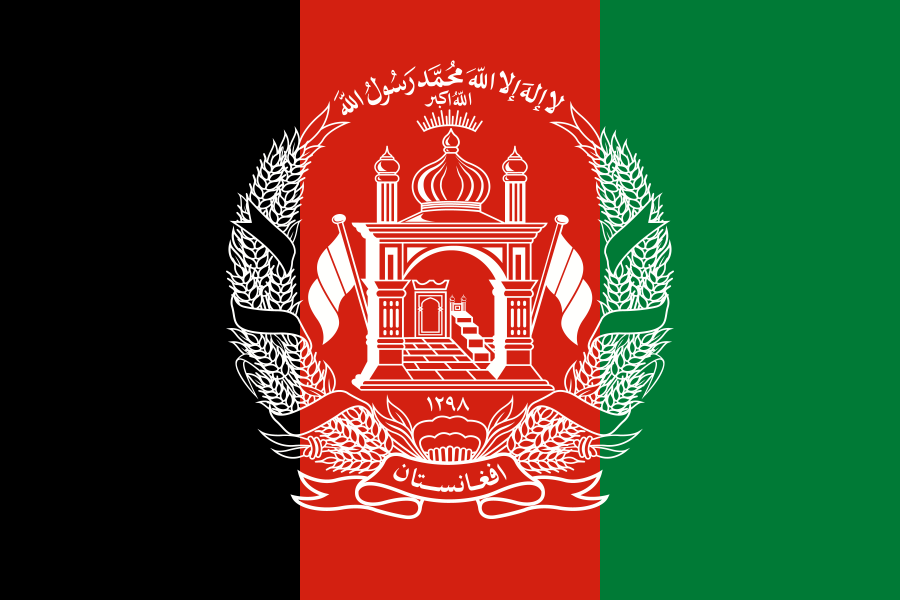
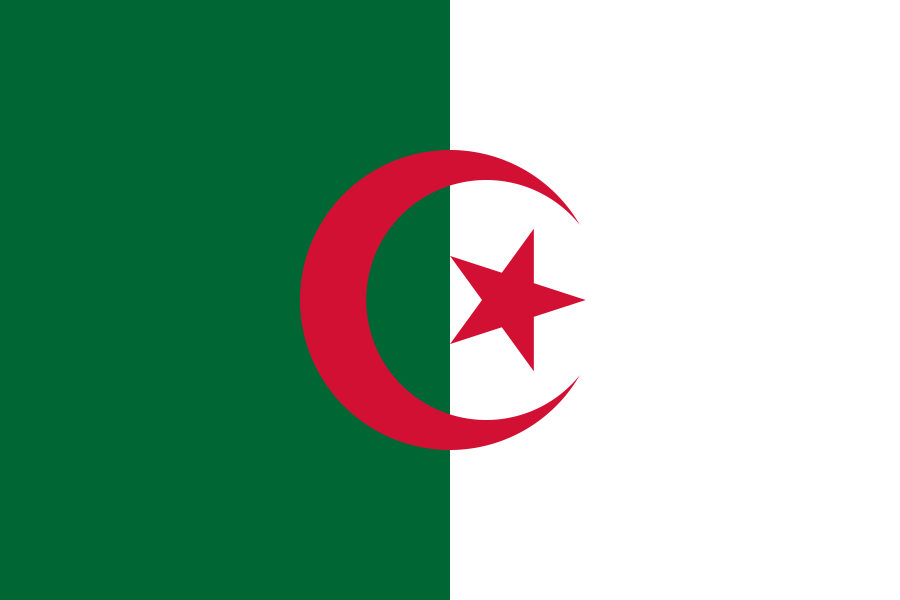
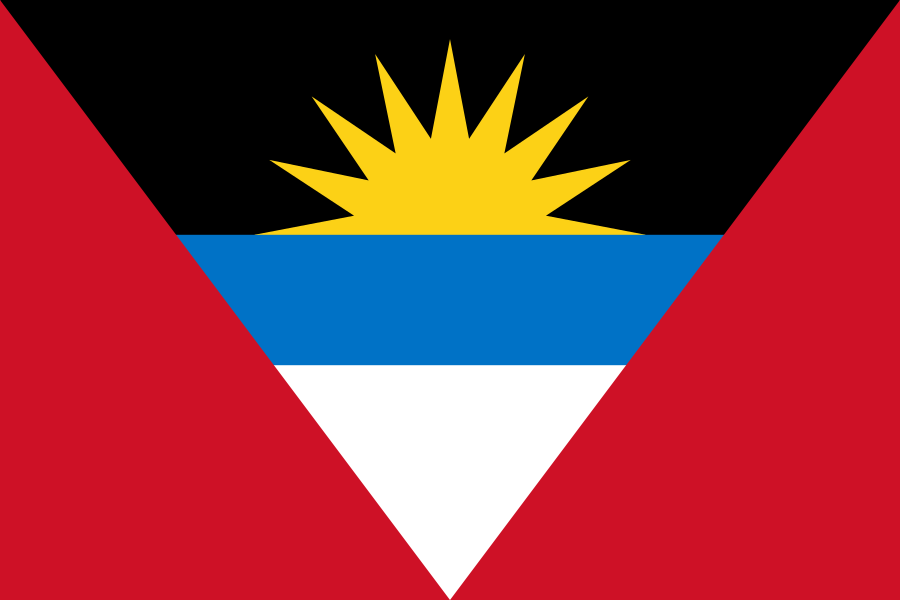
For the origins we track, travellers from Albania, Andorra, Antigua and Barbuda, Argentina and Australia currently enter Greece visa-free for tourism. Entry rules depend on your passport and the purpose of your trip, so check the current requirements for your own nationality with our entry requirements tool.
What is the capital of Greece?
Athens is the capital of Greece, and the country sits in Europe.
What currency is used in Greece?
You pay with Euro (EUR) in Greece. Exchange rates move day to day, so check the current rate before you change money or use your card abroad.
Which languages do people speak in Greece?
The languages we list for Greece are Greek. A couple of greetings in the local language go a long way when you travel, even in cities where another language is widely used.
What is the international dialling code for Greece?
The dialling code for Greece is +30 — keep the plus sign when you save the number.
Which airports serve Greece?
We cover 2 airports for Greece, including Athens International Airport (ATH), Thessaloniki Airport (SKG).
Which cities in Greece do you cover?
Our guide lists 2 cities for Greece: Athens (capital) and Thessaloniki.