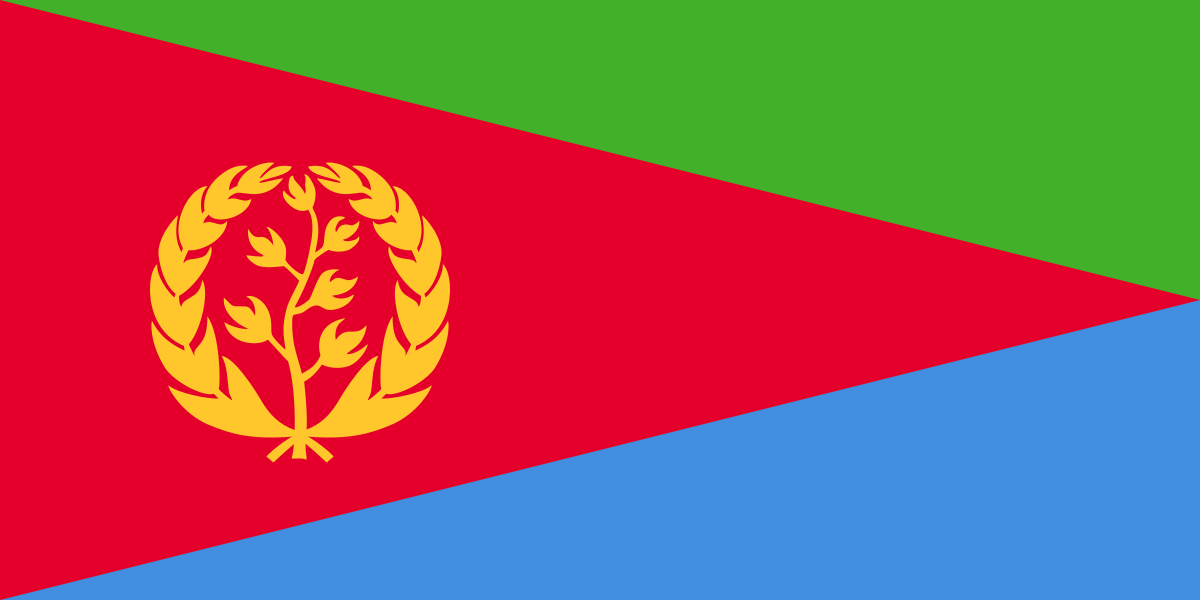
Eritrea
Africa · Asmara · ER
Eritrea is the small, proud country of the Horn of Africa, the nation of the long Red Sea coast that broke away from the neighbouring empire after the decades of the liberation struggle, and that keeps the distinctive heritage of its Italian colonial past unusual in all of the continent. The country holds the modernist capital of the Asmara, the celebrated architectural ensemble of the early twentieth century that the world heritage of the nations has protected, together with the extraordinary port of the Massawa, the monasteries of the highlands and the ancient histories of the trade routes of the Red Sea. The nine ethnic groups of the country, with their languages, their churches and their long traditions of the independence, shape the proud national culture, and the dramatic landscapes, from the cool highlands of the centre to the scorched Danakil depression of the east, give the country its severe, unforgettable beauty.
Overview
Eritrea is a country in Africa. Its capital is Asmara and the international dialling code is +291. Languages commonly used in everyday life here include Tigrinya and Arabic. Local currency is the Nakfa (ERN). We also list 1 city in Eritrea: Asmara.
The Modernist Architecture of the Asmara and the Avenues of the Capital
The capital of the Asmara, the remarkable city of the high plateau of the country at more than two thousand metres, is world-famous for the complete and unbroken ensemble of the futuristic architecture of the nineteen-thirties, the extraordinary legacy of the Italian colony that the city preserves on nearly every street. The cinemas of the city, with their streamlined facades, the filling stations of the modernist posters, the opera house, the banks and the apartment blocks of the era all survive in the perfect state of the wide, relaxed boulevards of the capital, and the world heritage listing of the ensemble celebrates the futuristic vision of the whole avenue plan. The coffee culture of the city, the famous ritual of the macchiato, the shaded cafés and the slow pace of the piazze, gives the capital its unique, elegant, effortlessly cosmopolitan character.
The Old Port of the Massawa and the Islands of the Sea
The port of the Massawa, the searingly hot harbour city of the coast of the country, holds some of the most beautiful Islamic and Ottoman architecture of the Red Sea, the coral stone markets, the palatial beach houses and the great mosques of the sultanate era. The archipelago of the Dahlak, the group of the low islands off the coast of the city, shelters the reefs and the fishing villages of the Red Sea, and the boats of the port give access to the diving and the snorkelling of the region, with the dugongs, the turtles and the untouched coral of the protected waters. The views of the port, with the wrecks of the war still visible in the old harbour, give the traveler the dramatic frontier of the Red Sea side of the country.
The Monasteries of the Highlands and the Peaks of the Mountains
The highlands of the country, the green plateau of the Christians that stretches between the capital and the mountains of the north, is the sacred heartland of the orthodox faith, studded with the rock-hewn churches and the monasteries perched on the sheer cliffs of the dramatic escarpment. The monasteries of the Debre Bizen and the Debre Sina, built in the medieval age in the inaccessible eyries of the peaks, guard the icons, the manuscripts and the traditions of the desert fathers, and the church of the country, with its ceremonies, its drums and its chants, colors the life of the highland people. The escarpment, the great stairway of the mountains that falls from the plateau to the lowlands of the west, ranks among the most dramatic landscapes of the entire Horn of Africa.
The Depressions of the Danakil and the Caravans of the Salt
The Danakil depression, the vast and searing basin of the east of the country that falls below the level of the sea, is among the hottest and most hostile places of the earth, an otherworldly landscape of the salt flats, the volcanoes, the sulfur springs and the mirage-filled horizons. The astonishing salt plains, the blinding white crusts that the ancient sea left when it dried, support the famous caravans of the region, the long trains of the camels that the salt miners still lead across the furnace of the desert, cutting the great slabs with the old implements and loading them for the long marches to the markets. The lifeline of the caravans, and the colorful encampments of the Afar people, the salt-working nomads of the depression, give the traveler the last great caravan spectacle of the African continent.
The Markets and the Coffee of the People of the Highlands
The highland towns of the country, the market centres of the plateau that the radial roads link to the capital, hold the vivid everyday commerce of the nation, with their lively market days when the farmers and traders of the surrounding villages converge on the squares of the town. The culture of the coffee of the country, born of the Ethiopian tradition and developed by the Italian descendants into the ritual of the small cups of the espresso and the macchiato at the marble counters of the cafés, is the beloved social habit of the highland people, and the bands of the jazz of the evening draw the youth of the capital. The markets of the country, with the woven cotton of the villages and the jewellery of the silver, complete the picture of the proud, dignified and deeply cultured highland society.
Compare hotels, cover your trip and stay connected.
- Capital
- Asmara
- Currency
- Nakfa (ERN)
- Languages
- Tigrinya, Arabic
- Calling code
- +291
- Internet TLD
- er
Entry requirements
Check who can enter →See which passports travel visa-free or need a visa to enter Eritrea.
Cities (1)
All cities →Frequently asked questions
What is the capital of Eritrea?
Asmara is the capital of Eritrea, and the country sits in Africa.
What currency is used in Eritrea?
You pay with Nakfa (ERN) in Eritrea. Exchange rates move day to day, so check the current rate before you change money or use your card abroad.
Which languages do people speak in Eritrea?
The languages we list for Eritrea are Tigrinya and Arabic. A couple of greetings in the local language go a long way when you travel, even in cities where another language is widely used.
What is the international dialling code for Eritrea?
The dialling code for Eritrea is +291 — keep the plus sign when you save the number.
Which cities in Eritrea do you cover?
Our guide lists 1 city for Eritrea: Asmara (capital).