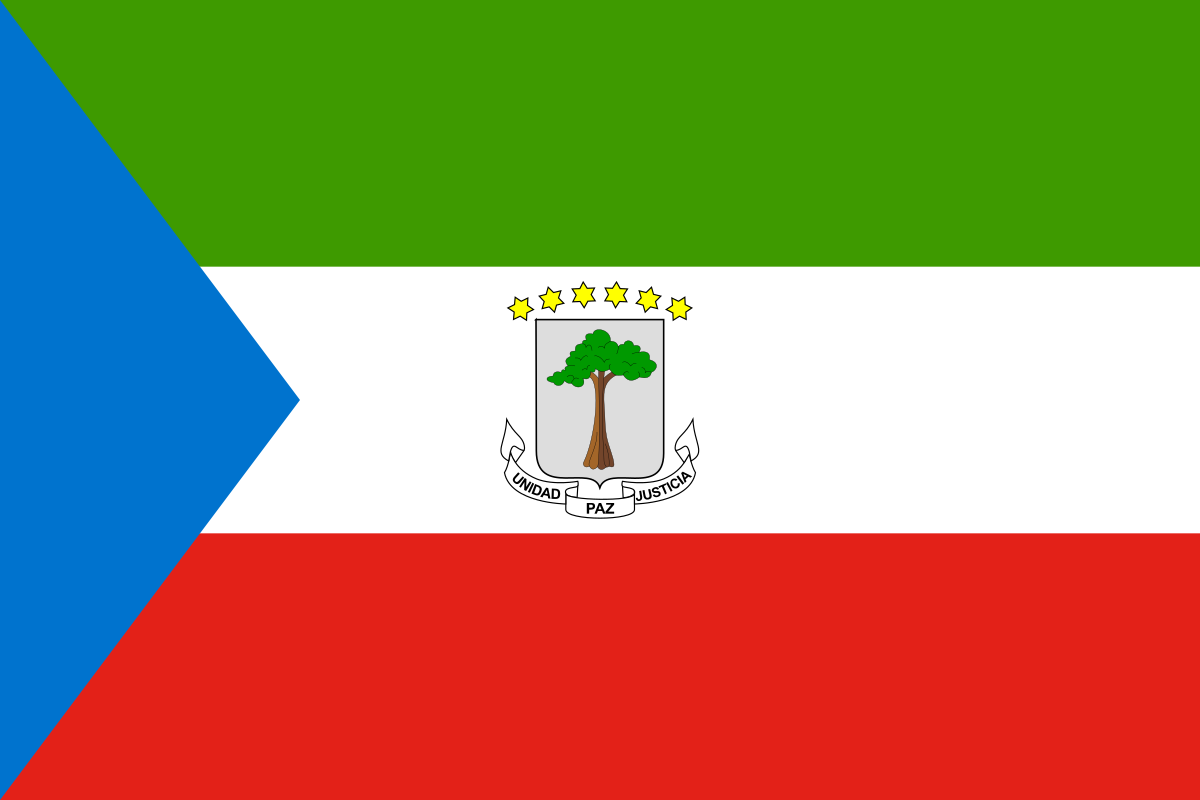
Equatorial Guinea
Africa · Malabo · GQ
Equatorial Guinea is the small, wealthy country of the coast of Central Africa, the Spanish-speaking nation of the Gulf of Guinea that unites the island of the Bioko, with its capital of the Malabo, and the mainland region of the Rio Muni on the continent of Africa. It is one of the smallest countries of the continent, and the petro-dollars of its offshore fields have built the extraordinary modern cities, the towers and the expressways that rise beside the rainforest, the mangroves and the volcanic mountains of the islands. In the shadow of this new wealth lies the lesser-visited natural world of the country, the beaches of the south, the forest reserves of the mainland and the rare monkeys and the birds of the canopy. Small, paradoxical and strikingly unvisited, Equatorial Guinea is the least-known corner of the coast of the whole of West Africa.
Overview
Equatorial Guinea is a country in Africa. Its capital is Malabo and the international dialling code is +240. Languages commonly used in everyday life here include Spanish and French. Local currency is the Central African CFA franc (XAF). We also list 1 city in Equatorial Guinea: Malabo.
The City of the Malabo and the Volcano of the Island
The city of the Malabo, the island capital of the country that climbs the green ridge above the great bay of the north of the Bioko, is one of the most atmospheric and the most paradoxical capitals of the continent, a town of the Spanish colonial streets, the crumbling gingerbread houses and the gleaming new towers of the oil decade. The enormous pool of the caldera of the old volcano of the island, the collapsed crater of the San Carlos that now forms the harbour, and the Spanish-era cathedral of the colonial capital dominate the historic centre. The views over the bay, the market of the city and the mix of the faded charm and the sudden wealth give the Malabo its strange, compelling character.
The Beaches of the South and the Rainforest of the Basile
The island of the Bioko, the volcanic cone of the continental shelf that rises steeply from the Gulf of Guinea, holds the wild southern half that the roads rarely reach, where the rainforest of the Basile reserve climbs the slopes of the great volcano of the Pico. The trails of the reserve, threading the misty forest with the chimpanzees and the drills of the region, and the volcanic beaches of the remote coves of the south, with their nesting turtles and their fishing villages, give the natural face of the island. The lagoons and the craters of the lakes of the centre of the island, with their astonishing birdlife, complete the picture of this wild, steamy volcanic world of the coast.
The Coast of the Rio Muni and the Mangroves of the Rivers
The mainland region of the country, the broad strip of the Rio Muni that the rivers of the coast drain toward the Atlantic, holds the less-visited landscape of the republic, the mangroves, the beaches and the rivers of the equatorial forest. The coasts of the mainland, from the bay of the capital of the interior to the northern mangroves of the region, are fringed by the mudflats and the channels that the birds and the manatees of the river mouths inhabit, and the river trips of the region, threading the forest of the water to the villages, open the green interior of the country. The border rivers of the south, with their rapids and their forest camps, and the beaches of the northern coast, wild and empty, complete the picture of the mainland side of the island state.
The New Capital and the Towers of the Forest
The modern era of the country has built an extraordinary new seat of government in the interior of the mainland, the purpose-built capital of the Oyala that rises from the cleared rainforest with its presidential palaces, its parliament and its rings of the towers and the fountains. The foundation of this new city, planned as the ceremonial and the administrative heart of the oil-rich republic, is one of the grandest building projects of the continent, and its empty, improbable avenues and its gleaming monuments stand in the strangest contrast with the forest that surrounds them. The completion of the venture, and the old capitals of the coast now left to the everyday life of the country, dramatise the extraordinary modern experiment of this small, absolutist state.
The Wildlife of the Monte Alen and the Trails of the Forest
The national park of the Monte Alen, the great protected forest of the mainland of the country that climbs the granite mountains of the interior, is the flagship of the natural world of Equatorial Guinea, a green stronghold of the elephants, the chimpanzees, the gorillas and the marvellous birds of the equatorial forest. The trails of the park, following the rivers and the waterfalls of the massif, reach the enormous trees, the clearings of the salt and the licks of the wildlife of the deep forest, while the camps of the rangers and the nearby villages of the region open the interior to the visitor. The neighbouring reserves of the region, with their manatees and their primates of the river forests, complete the extraordinary, little-known wild of the mainland of the republic.
Compare hotels, cover your trip and stay connected.
- Capital
- Malabo
- Currency
- Central African CFA franc (XAF)
- Languages
- Spanish, French
- Calling code
- +240
- Internet TLD
- gq
Entry requirements
Check who can enter →See which passports travel visa-free or need a visa to enter Equatorial Guinea.
Cities (1)
All cities →Frequently asked questions
What is the capital of Equatorial Guinea?
Malabo is the capital of Equatorial Guinea, and the country sits in Africa.
What currency is used in Equatorial Guinea?
You pay with Central African CFA franc (XAF) in Equatorial Guinea. Exchange rates move day to day, so check the current rate before you change money or use your card abroad.
Which languages do people speak in Equatorial Guinea?
The languages we list for Equatorial Guinea are Spanish and French. A couple of greetings in the local language go a long way when you travel, even in cities where another language is widely used.
What is the international dialling code for Equatorial Guinea?
The dialling code for Equatorial Guinea is +240 — keep the plus sign when you save the number.
Which cities in Equatorial Guinea do you cover?
Our guide lists 1 city for Equatorial Guinea: Malabo (capital).