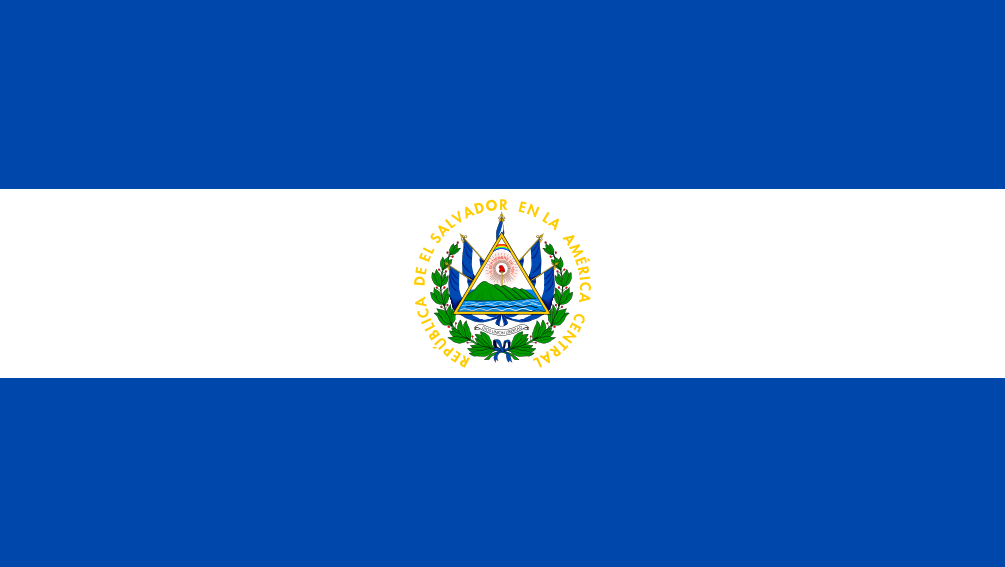
El Salvador
North America · San Salvador · SV
El Salvador is the smallest country of the American mainland, a compact land of the volcanoes, the coffee highlands, the surf beaches and a history that runs from the ancient Maya to the resilient, hard-working present. San Salvador, the capital, sits in the valley between the volcanoes and the lakes, and the colonial towns of the highlands, the colourful stops of the western loop and the ruins of the Joya de Ceren hold the layers of the story. The Pacific coast of the country is the surf capital of Central America, with the dark volcanic beaches and the easy resort towns of the shore, and the country's famous dish, the pupusa, is the everyday gift of the national table. Small enough to see in a week, friendly and surprising, El Salvador rewards those who come with an open mind and a flexible plan.
Overview
El Salvador is a country in North America. Its capital is San Salvador and the international dialling code is +503. Languages commonly used in everyday life here include Spanish. Local currency is the US Dollar (USD). We also list 1 city in El Salvador: San Salvador.
The Beaches and the Surf Coast of the Pacific
The short coast of the Pacific, squeezed between the borders of the country, is one of the great surfing regions of the continent, and the beach towns of the west, the shores of El Tunco and the reefs of the Sunzal, run a laid-back, international life of the boards and the bars. The swell of the ocean breaks on the reefs and the river mouths of the coast all year, and the schools of the surf teach the first rides of every level in the warm turquoise of the water. The dark volcanic sand of the beaches and the coconut palms of the shore hold the shade, the hammocks and the ceviche of the afternoon, and the sunsets of the coast turn the whole ocean red. The coast is the most relaxed and easy face of the country, an hour from the capital.
The Route of the Flowers and the Colour of the Highlands
The highlands of the west, the mountain spine that runs the coffee between the volcanoes of the country, hold one of the most colourful journeys of Central America. The route of the flowers, the loop of the colonial towns that runs between the coffee estates and the flower fields, fills the weekend lanes with the artisans, the market stalls and the festivals of the season, and the towns of the route, Nahuizalco, Salcoatitan and Juayua, keep the cobbled streets and the painted churches of the colonial era. The Saturday food festival of Juayua draws the whole region to its grills and its stalls of the local specialities. The volcano of the Santa Ana, the highest peak of the country, rises above the loop with its crater lake, and the highland coffee is among the best of the region.
The Pyramids of the Maya and the Ruins of the Joya de Ceren
The pre-Hispanic world of the country is on view at the Joya de Ceren, the archaeological site where the eruption of an ancient volcano preserved an entire Maya farming village perfectly under its ash, an American Pompeii without the treasures but with the everyday life of the farmers and the craftsmen intact. The thatched kitchens, the storehouses and the workshops of the classic Maya are the prize, and the site is a world heritage monument to the ordinary life of a civilisation. The larger ceremonial city of the San Andres, a short distance away, spreads its pyramids and its plazas of the classic era. The archaeological world of El Salvador, small and easily reached, adds a deep layer of the history to the volcano country.
The Capital and the Lake of the Volcano
The capital of San Salvador spreads its modern urban life through the valley of the centre, and its museums, its markets and its restaurants give it a real, working energy that the visitor discovers beyond the headlines of the difficult past. The cathedral of the city, the church of the Rosario with its modernist interior and the monuments of the region's turbulent history are the essential visits, and the museums of the city tell the resilient story of the nation. The great crater lake of the Ilopango, on the eastern edge of the city, holds the water sports and the viewpoints of the region, and the volcanoes of the San Salvador rise steeply above the skyline. The capital is the compact base for the whole country, busy, safe in its main areas and full of life.
The Pupusas, the Coffee and the Warmth of the People
The pupusa, the thick griddle cake of the maize stuffed with the cheese, the beans or the pork, is the national dish of the country and the everyday gift of its tables, served with the pickled cabbage slaw and the salsa of the region from the street stalls, the markets and the restaurants of every town. The coffee of the country, grown in the volcanic highlands, is among the most sought after of the region, and the tasting visits of the western estates are part of the journey. The food of the coast, the ceviche, the fried seafood and the plantain, rounds out the national kitchen. The welcome of the country is famously warm and resilient, and the hospitality of the homes and the markets is a genuine, unforced part of the experience of visiting.
Compare hotels, cover your trip and stay connected.
- Capital
- San Salvador
- Currency
- US Dollar (USD)
- Languages
- Spanish
- Calling code
- +503
- Internet TLD
- sv
Entry requirements
Check who can enter →See which passports travel visa-free or need a visa to enter El Salvador.
Cities (1)
All cities →Frequently asked questions
What is the capital of El Salvador?
San Salvador is the capital of El Salvador, and the country sits in North America.
What currency is used in El Salvador?
You pay with US Dollar (USD) in El Salvador. Exchange rates move day to day, so check the current rate before you change money or use your card abroad.
Which languages do people speak in El Salvador?
The languages we list for El Salvador are Spanish. A couple of greetings in the local language go a long way when you travel, even in cities where another language is widely used.
What is the international dialling code for El Salvador?
The dialling code for El Salvador is +503 — keep the plus sign when you save the number.
Which cities in El Salvador do you cover?
Our guide lists 1 city for El Salvador: San Salvador (capital).