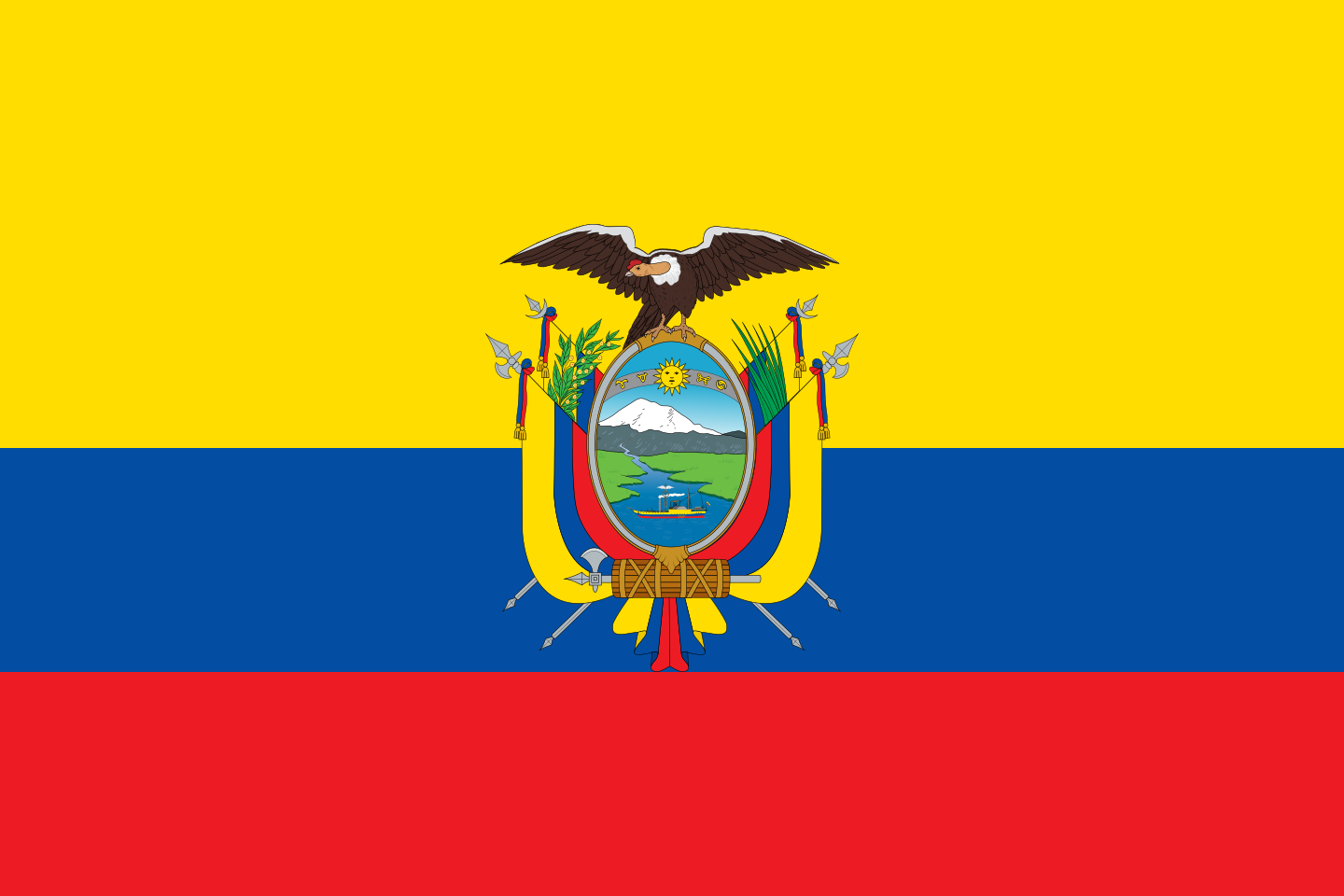
Ecuador
South America · Quito · EC
Ecuador packs an extraordinary range of the American experience into a compact equatorial wedge: the high Andes and their volcanoes, the green Amazon of the east, the Pacific coast with its beaches and its colonial towns, and the remarkable archipelago of the Galapagos, the distant laboratory of the evolution that made a naturalist's name. Quito, the capital, sets the colonial heart of the old world high in the inter-Andean valleys, and the markets of Otavalo and the craft villages of the highlands carry the indigenous traditions of the country. The equator itself, the imaginary line that gives the nation its name, draws the visitors to the monuments and the museums of its geography. Small, affordable and astonishingly varied, Ecuador offers the Andes, the Amazon and the islands of the turtle in a single manageable country. The hospitality of its people and the market life of its towns add a final warmth to every corner of the land.
Overview
Ecuador is a country in South America. Its capital is Quito and the international dialling code is +593. Languages commonly used in everyday life here include Spanish. Local currency is the US Dollar (USD). Our guide covers 2 airports, including José Joaquín de Olmedo International Airport, Mariscal Sucre International Airport. We also list 2 cities in Ecuador: Quito and Guayaquil.
The Old Town of Quito and the Line of the Equator
The old town of Quito, one of the best-preserved colonial centres of the continent, crowds the monastery churches, the plazas and the painted balconies of the Spanish era into the narrow streets between the volcanoes, and its cathedral and its convents are among the richest of the region. The city spreads its length along the valley floor beneath the great peaks of the range, and the view from the hill of the Panecillo over the colonial rooftops is the classic panorama of the capital. At the edge of the city the monuments of the equator mark the line of the imagination, and the museums of the site demonstrate the physics of the rotating earth in a playful, memorable way. The city is the perfect base for the high-altitude life and the colonial history of the whole region.
The Centre of the World and the Craft of Otavalo
The valleys of the central highlands hold the indigenous heart of the country, and the Saturday market of Otavalo, the most famous of the Andean fairs, fills the town with the weavers, the musicians and the traders of the whole region. The textiles of the town, the ponchos, the blankets and the bags of the brightly dyed wool, are the classic souvenirs of the highlands, and the streets of the town hold the craft shops and the restaurants of the regional table. The surrounding villages, the woodcarvers of San Antonio and the leatherworkers of Cotacachi, spread the traditional crafts across the valleys, and the crater lake of Cuicocha and the volcanoes of the region complete the circuit. The market days are the best single introduction to the living culture of the Andes.
The Avenue of the Volcanoes and the Ascent of the Cotopaxi
The highway of the highlands, the famous avenue of the volcanoes, runs the string of the great snow-capped peaks between the two mountain ranges of the Andes, the most photogenic and the most accessible of the high mountains of the country. The Cotopaxi, the perfect cone that is among the highest active volcanoes of the world, dominates the whole corridor, and the national park of its name spreads the paramo grasslands, the wild horses and the high lakes of its flanks. The climbing of the peak is a serious, cold, unforgettable expedition of the high altitude, while the walks of the lower park, to the refuges and the viewpoints of the volcano, open the world of the Andean highlands to the non-climbers. The drive of the avenue, past the Antisana, the Cayambe and the Chimborazo, is the classic road trip of the Andes.
The Amazon of the Cuyabeno and the Rivers of the East
The eastern lowlands of the country, the Ecuadorian Amazon, are the green, dark, river-laced world that the great rivers drain toward the Atlantic, and the reserves of the Cuyabeno and the Yasuni protect some of the wettest and least touched rainforest of the northern region. The lodges of the jungle, reached by the boats of the rivers, run the canoe excursions and the night walks of the forest, and the guides of the indigenous communities reveal the medicines, the vines and the animals of the layers of the canopy. The wildlife of the region, the pink river dolphins, the monkeys, the giant otters and the macaws of the banks, fills the days of the observation, and the nights of the forest hold the sounds, the insects and the stars of the Amazon. It is a world apart, reached with the ease of the modern lodges, and utterly unforgettable.
The Galapagos and the World of the Evolution
The Galapagos archipelago, far off the coast of the continent, is the natural laboratory that turned the history of biology on its head, and its islands hold the animals that show no fear of the people who come to see them. The giant tortoises of the islands, the marine iguanas, the blue-footed boobies and the flightless cormorants of the shores give the archipelago its world-famous fauna, and the guided boats and the land-based tours carry the visitors between the islands of the park. The snorkellers and the divers of the archipelago float with the sea lions, the sharks and the schools of the tropical fish in the cold, clear water of the currents. The careful rules of the park keep the islands pristine, and the experience is a rare glimpse of the natural world before the arrival of the boats.
Compare hotels, cover your trip and stay connected.
- Capital
- Quito
- Currency
- US Dollar (USD)
- Languages
- Spanish
- Calling code
- +593
- Internet TLD
- ec
Entry requirements
Check who can enter →See which passports travel visa-free or need a visa to enter Ecuador.
Airports (2)
All airports →Cities (2)
All cities →Frequently asked questions
What is the capital of Ecuador?
Quito is the capital of Ecuador, and the country sits in South America.
What currency is used in Ecuador?
You pay with US Dollar (USD) in Ecuador. Exchange rates move day to day, so check the current rate before you change money or use your card abroad.
Which languages do people speak in Ecuador?
The languages we list for Ecuador are Spanish. A couple of greetings in the local language go a long way when you travel, even in cities where another language is widely used.
What is the international dialling code for Ecuador?
The dialling code for Ecuador is +593 — keep the plus sign when you save the number.
Which airports serve Ecuador?
We cover 2 airports for Ecuador, including José Joaquín de Olmedo International Airport (GYE), Mariscal Sucre International Airport (UIO).
Which cities in Ecuador do you cover?
Our guide lists 2 cities for Ecuador: Quito (capital) and Guayaquil.