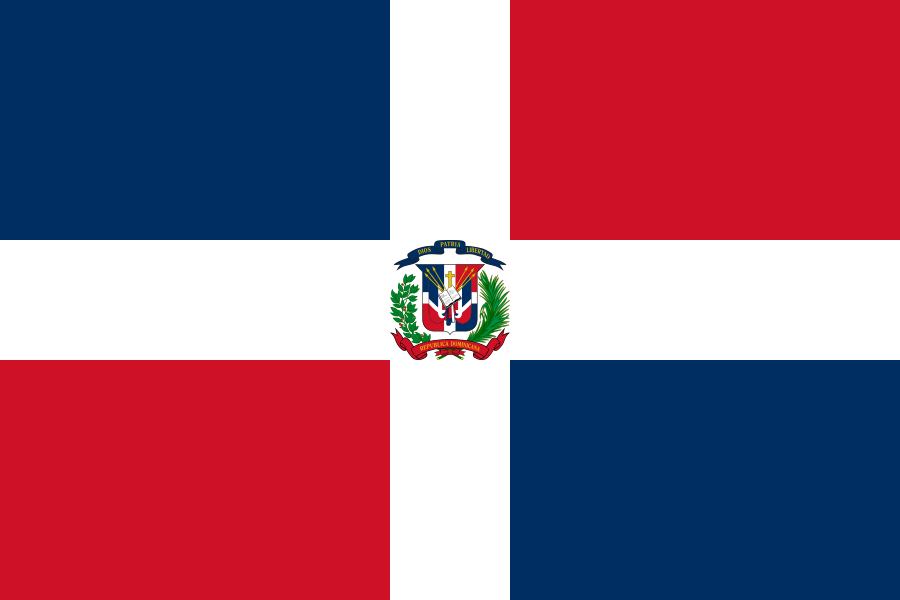
Dominican Republic
North America · Santo Domingo · DO
The Dominican Republic shares the great island of Hispaniola with Haiti, a country of Caribbean beaches, green mountains and the oldest colonial city in the Americas. Santo Domingo's Colonial Zone layers the first cathedral, the cobbled squares and the remains of the first hospitals and the fortifications of the new world, while the east coast of Punta Cana and Bávaro holds the long stretches of white sand and the resort life. The surf of the north coast at Cabarete, the whale watching of Samaná and the cobalt falls of Salto del Limón spread the adventure, and the Cibao valleys grow the coffee, the cacao and the tobacco that the country is famous for. The people are warm, the merengue and the bachata are everywhere and the mofongo feeds the appetite. Easy to reach and easy to love, the country mixes history, beach and a genuinely lively culture.
Overview
Dominican Republic is a country in North America. Its capital is Santo Domingo and the international dialling code is +1809. Languages commonly used in everyday life here include Spanish. Local currency is the Dominican Peso (DOP). We also list 1 city in Dominican Republic: Santo Domingo.
The Colonial Zone and the First Cathedral of the Americas
The Colonial Zone of Santo Domingo, the quarter founded by the first European settlement in the Americas, is a walled history of the sixteenth century within the modern city. The streets run between the painted colonial houses, the plazas and the museums, and the vast cathedral of the first archbishopric stands on its square beside the grand palace of Columbus. The fortresses of the river, the first walls and the first paved street of the new world, kept the Spanish foothold on the island, and the cobbles of the Calle de las Damas still hold the oldest colonial architecture of the hemisphere. The zone is compact, walkable and, in the evening, alive with the galleries, the cafes and the live music of the local bands. It is the historical heart of the entire American story.
Punta Cana, Bavaro and the Long White Sand
The eastern tip of the country, around Punta Cana and Bávaro, holds the most famous beachfront in the Caribbean, mile after mile of fine, pale sand and the coconut palms bent over the gentle water of the Atlantic coast. The resorts line the beach, and the all-inclusive experiences, the pools, the buffets and the evening shows, run on a rhythm of total relaxation. The excursions out of the resort belt reach the natural pools of the bay and the little islands of the coast, where the sandbars and the starfish beds sit in the clear, waist-deep water. The coast is the classic holiday machine of the island, and its role is to slow the traveller down with the minimum of friction. For sheer, effortless beach it is hard to find better in the region.
The Surf of Cabarete and the Whales of Samana
On the north coast, the little town of Cabarete sits at the centre of the island's water sports, its bay famous for the steady trade winds that bring the kitesurfers and the windsurfers to the lagoon and the waves to the reef. The whole town runs on the beach, the boards, the lessons and the huge cafeteria terraces of the international crowd, and the sunsets over the bay are the social hour. To the east, the peninsula of Samaná holds one of the great wildlife encounters of the Caribbean in the season when the humpback whales arrive in the bay to breed, and the whale-watching boats drift among the mothers and the calves of the winter months. The coast road between them runs through the coconut groves and the quiet fishing villages of the Cibao shore.
The Cobalt Falls and the Cacao of the Interior
Inland, the country climbs from the coast into the green mountain core of the Cibao, where the forest trails of the interior lead to the waterfalls of the hinterland. The falls of Salto del Limón, reached by horse and on foot across the fields of the valley, drop a cold, deep sheet of water into the pool that the swimmers share with the spray, and the coffee and the cacao farms of the slopes open their processes to the visitors. The cacao of the island is among the best in the world, and the chocolate makers of the small towns press the beans into the bars of the local market. The mountain air, the bird song and the green of the interior valleys give the traveller a Dominican Republic far from the beach, and an understanding of the country behind the resorts.
Mofongo, Mangu and the Open Table of the Country
Dominican food is a hearty, generous mix of the African, the Spanish and the local table, and the gateway dish is mofongo, the fried green plantain pounded with garlic and pork rinds into a dense, savoury mound that accompanies everything. The breakfast of the country is mangu, the mashed green plantain served with the fried eggs, the salami and the white cheese, and the la bandera, the flag lunch of rice, beans and the stewed meat, is the daily standard of the island. The fruit juices of the tropics, the sancocho stew of the mountains and the coconut-based sweets finish the meal, and the music of the merengue keeps time with the cooking. Eating in the Dominican Republic is loud, welcoming and never far from the rhythm of a party.
Compare hotels, cover your trip and stay connected.
- Capital
- Santo Domingo
- Currency
- Dominican Peso (DOP)
- Languages
- Spanish
- Calling code
- +1809
- Internet TLD
- do
Entry requirements
Check who can enter →See which passports travel visa-free or need a visa to enter Dominican Republic.
Which nationalities can enter Dominican Republic?
Current visa status for tourism for the origins we cover, with links to the detailed requirements.










Cities (1)
All cities →Frequently asked questions
Do I need a visa to visit Dominican Republic?
For the origins we track, travellers from Australia, Canada, France, Germany and Italy currently enter Dominican Republic visa-free for tourism, and 4 more origins are visa-free too. Entry rules depend on your passport and the purpose of your trip, so check the current requirements for your own nationality with our entry requirements tool.
What is the capital of Dominican Republic?
Santo Domingo is the capital of Dominican Republic, and the country sits in North America.
What currency is used in Dominican Republic?
You pay with Dominican Peso (DOP) in Dominican Republic. Exchange rates move day to day, so check the current rate before you change money or use your card abroad.
Which languages do people speak in Dominican Republic?
The languages we list for Dominican Republic are Spanish. A couple of greetings in the local language go a long way when you travel, even in cities where another language is widely used.
What is the international dialling code for Dominican Republic?
The dialling code for Dominican Republic is +1809 — keep the plus sign when you save the number.
Which cities in Dominican Republic do you cover?
Our guide lists 1 city for Dominican Republic: Santo Domingo (capital).