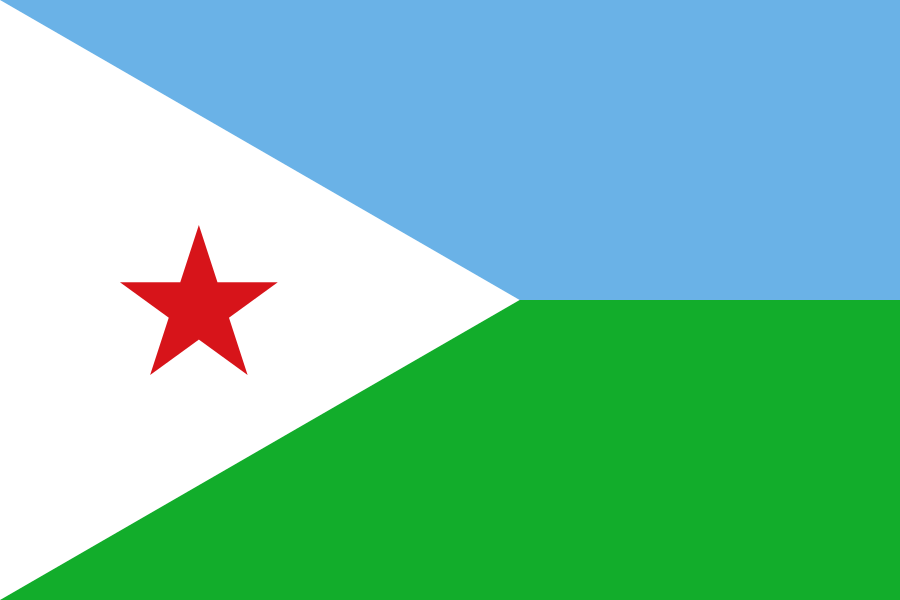
Djibouti
Africa · Djibouti · DJ
Djibouti is the small, fierce crossroads country of the horn of Africa, a nation of the volcanic desert and the salt lakes that sits where the Red Sea meets the Gulf of Aden, between Ethiopia, Eritrea and Somalia. It is one of the hottest and the most dramatically barren countries on earth, yet its landscapes are among the most extraordinary of the continent: the white crust of the salt lake of the Assal, far below the level of the sea, the lava fields of the Danakil Depression, and the coral reefs and the whale sharks of the gulf. The capital city of the Djibouti, a jumble of the French colonial streets, the port cranes and the market, is the commercial and the naval heart of the region, hosting the foreign bases that anchor the modern economy, while the nomads of the interior move their camel herds through the cracked, baking terrain. Small, searing and absolutely unlike anywhere else, Djibouti is the volcanic gate of the horn of Africa.
Overview
Djibouti is a country in Africa. Its capital is Djibouti and the international dialling code is +253. Languages commonly used in everyday life here include French and Arabic. Local currency is the Djiboutian Franc (DJF). We also list 1 city in Djibouti: Djibouti.
The White Crust of the Assal and the Salt of the Plain
The lake of the Assal, the great salt pan of the country that lies in the depression of the Afar, far below sea level, is one of the most extraordinary natural features of the entire African continent, a blinding white dish of the salt crust that glitters beneath the ring of the black volcanic hills. The salt caravan of the Afar, the long lines of the camels that still carry the giant slabs of the salt quarried from the lake to the markets of the highlands, has trekked these same paths for centuries, unbroken by the modern age. The cliffs and the hot springs of the western shore, the enormous crater lakes of the region and the shimmering heat of the baking plain give this lunar, mineral world its strange, unforgettable beauty.
The Basins of the Ghoubet and the Whale Sharks of the Bay
The gulf of the Ghoubet al-Kharab, the great bay of the country that bites deep between the volcanic headlands of the coast, holds one of the wonders of the marine world of the horn of Africa, a deep trench of the water where the whale sharks, the enormous spotted gentle giants of the seas, gather to feed through the months of the northern winter. The waters of the bay, the famous site of the swimming with the whales, are also the hunting ground of the mantas, the dolphins and the turtles that cruise the drop-offs of the coral, and the expeditions of the bay give the rare, humbling encounter with the biggest fish of the ocean. The cliffs and the mangroves of the northern arm, with their flamingos and their herons, complete the untamed aquarium of this extraordinary desert coastline.
The City on the Gulf and the Ports of the Horn
The capital of the country, the seaport of the Djibouti City that spreads across the headland overlooking the gulf of the Tadjoura, is the extraordinary crossroads of the horn of Africa, a hard colonial town of the boulevards, the markets and the immense container cranes of the newest harbours. The port of the city, the modern terminal of the commerce that serves the landlocked highlands of the neighbour, and the naval bases of the foreign powers that crowd the entrance of the gulf, run the astonishing shipping business of the nation. The old quarter of the town, with its coffee houses, its minarets and its waterfront street of the dhows, carries the everyday life of the capital beside the enormous industry of the quays.
The Forest of the Day and the Heights of the Goda
The mountains of the Goda, the striking forested massif of the north of the country that rises suddenly from the baking plain, hold the unexpected green world of the day, the relic forest of the juniper and the cycads that clings to the misty heights above the gulf. The leafy clearing of the Day, with its picnic springs and its troops of the hamadryas baboons, is the garden of the nation, a cool, bird-filled pocket in the desert of the Afar, reached along the stunning cliff road of the massif. The waterfalls and the viewpoints of the escarpment, with the sea glittering far below the drop, give the astonishing contrast of the green highlands and the white wasteland that fills the horizon of the north.
The Islands of the Moucha and the Reefs of the Tadjoura
The islands and the reefs of the gulf of the Tadjoura, strung along the horn side of the country between the volcanic shores, shelter the best of the underwater life of Djibouti beyond the famous bay of the whales. The island of the Moucha, the low coral island of the palms and the shallow gardens of the reef that serves the weekend boats of the capital, and the neighbouring islet of the Maskali, hold the nesting birds and the turtles of the lagoon, surrounded by the lagoons of the turquoise. The diving and the snorkelling of the area, with the coral gardens, the lionfish and the rays cruising the channels of the islands, complete the astonishing aquatic world of one of the least visited and most spectacular coasts of the Red Sea.
Compare hotels, cover your trip and stay connected.
- Capital
- Djibouti
- Currency
- Djiboutian Franc (DJF)
- Languages
- French, Arabic
- Calling code
- +253
- Internet TLD
- dj
Entry requirements
Check who can enter →See which passports travel visa-free or need a visa to enter Djibouti.
Which nationalities can enter Djibouti?
Current visa status for tourism for the origins we cover, with links to the detailed requirements.









Cities (1)
All cities →Frequently asked questions
Do I need a visa to visit Djibouti?
For the origins we track, Djibouti requires a visa for tourism (Australia: e-visa, Canada: e-visa, France: e-visa, Germany: e-visa and India: e-visa). Entry rules depend on your passport, so confirm the current requirements for your own nationality with our entry requirements tool.
What is the capital of Djibouti?
Djibouti is the capital of Djibouti, and the country sits in Africa.
What currency is used in Djibouti?
You pay with Djiboutian Franc (DJF) in Djibouti. Exchange rates move day to day, so check the current rate before you change money or use your card abroad.
Which languages do people speak in Djibouti?
The languages we list for Djibouti are French and Arabic. A couple of greetings in the local language go a long way when you travel, even in cities where another language is widely used.
What is the international dialling code for Djibouti?
The dialling code for Djibouti is +253 — keep the plus sign when you save the number.
Which cities in Djibouti do you cover?
Our guide lists 1 city for Djibouti: Djibouti (capital).