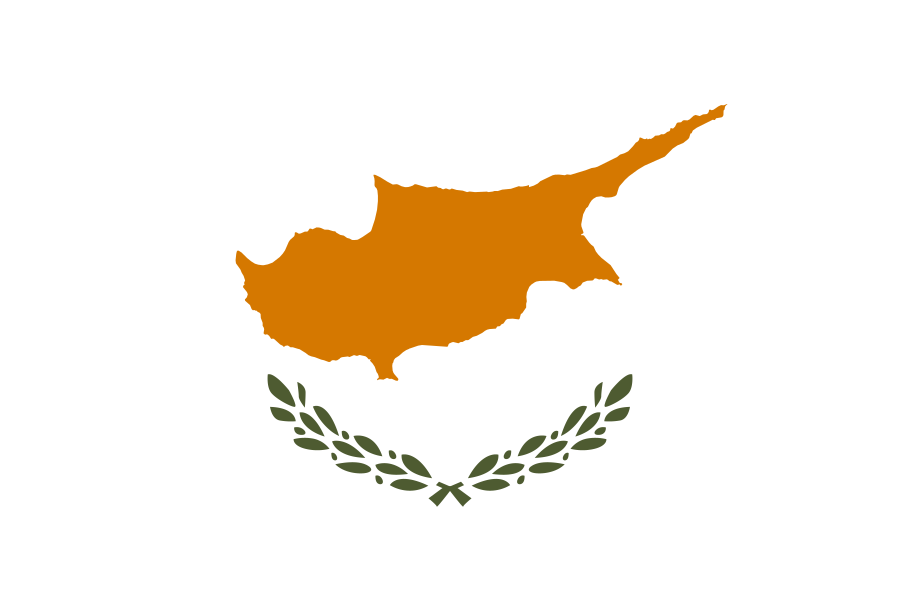
Cyprus
Asia · Nicosia · CY
Cyprus lies at the eastern end of the Mediterranean, a large island of mountains, beaches and an unusually layered history where Greek, Roman, Byzantine, Venetian, Ottoman and British threads all meet. The Aphrodite legends of the southwest, the mosaics of Paphos and the painted churches of the Troodos mountains anchor its oldest claims to a foreign interest. The divided island has two distinct halves, and its capital Nicosia remains a rare place where an ancient walled city is cut in two. The beaches of the south and the seaside towns of the southeast hold the modern resort life, while the mountains of the interior and the pine-sided valleys provide quiet, cool relief. The climate runs warm and dry through a long summer, and the fields of the interior grow vines, olives and carob. With good roads and a compact scale, Cyprus rewards a mix of coast, history and mountain walking.
Overview
Cyprus is a country in Asia. Its capital is Nicosia and the international dialling code is +357. Languages commonly used in everyday life here include Greek and Turkish. Local currency is the Euro (EUR). We also list 1 city in Cyprus: Nicosia.
Getting around Cyprus
Intercity buses link the main towns (Nicosia, Larnaka, Limassol, Pafos) a few times a day, and local services connect city centres with nearby beaches. In practice, most visitors rent a car, which is the most convenient way to reach the mountain villages of Troodos and the beaches of the south coast.
Cyprus drives on the left, as in the UK and Ireland. Roundabouts are common and junctions are signed in Greek and English. Note that the island has a de facto divided administration: crossing between the two sides is possible at designated checkpoints with your passport, and the northern part uses a different currency (the Turkish lira).
When to visit Cyprus
April to June and September to November are ideal: sunny weather, warm sea and comfortable temperatures for sightseeing. July and August are very hot, especially in Nicosia and inland, though the coastal breezes help.
Winters are mild and green in the south, and the Troodos mountains occasionally get snow — a short ski season exists on Mount Olympus. Orthodox Easter usually falls later than the Western date and is accompanied by big family celebrations and special bakery items (flaounes) that are worth trying if you are there.
Eating and drinking
Cypriot meals are generous and best shared: mezze is a slow parade of small dishes, often including grilled halloumi, lountza (smoked pork), olives, dips and grilled meats. Meze can last two hours, so come hungry and relaxed. Local specialities include souvla, a slow-roasted meat dish, and soutzoukos, a grape-must-and-almond sweet.
Commandaria, one of the world's oldest named wines, comes from the foothills of Troodos. Cypriots drink strong coffee (ellinikos/cypriot style) in the afternoon. A tip of 5–10% is appreciated.
Money and local customs
The Republic of Cyprus uses the euro. Cards are accepted in towns and hotels, but smaller tavernas, bakeries and the mountain villages often want cash.
Cypriot hospitality is warm and unhurried; meal times run late, with dinner often after 9pm on holiday hot spots. English is widely spoken, so ordering is easy. When arranging motoring or renting a vehicle, remember Cyprus drives on the left. If you plan to cross to the north, carry your passport and be aware your entry requirements and insurance may differ there.
Compare hotels, cover your trip and stay connected.
- Capital
- Nicosia
- Currency
- Euro (EUR)
- Languages
- Greek, Turkish
- Calling code
- +357
- Internet TLD
- cy
Entry requirements
Check who can enter →See which passports travel visa-free or need a visa to enter Cyprus.
Which nationalities can enter Cyprus?
Current visa status for tourism for the origins we cover, with links to the detailed requirements.



Cities (1)
All cities →Frequently asked questions
Do I need a visa to visit Cyprus?
For the origins we track, travellers from Albania, Andorra, Antigua and Barbuda, Argentina and Australia currently enter Cyprus visa-free for tourism. Entry rules depend on your passport and the purpose of your trip, so check the current requirements for your own nationality with our entry requirements tool.
What is the capital of Cyprus?
Nicosia is the capital of Cyprus, and the country sits in Asia.
What currency is used in Cyprus?
You pay with Euro (EUR) in Cyprus. Exchange rates move day to day, so check the current rate before you change money or use your card abroad.
Which languages do people speak in Cyprus?
The languages we list for Cyprus are Greek and Turkish. A couple of greetings in the local language go a long way when you travel, even in cities where another language is widely used.
What is the international dialling code for Cyprus?
The dialling code for Cyprus is +357 — keep the plus sign when you save the number.
Which cities in Cyprus do you cover?
Our guide lists 1 city for Cyprus: Nicosia (capital).