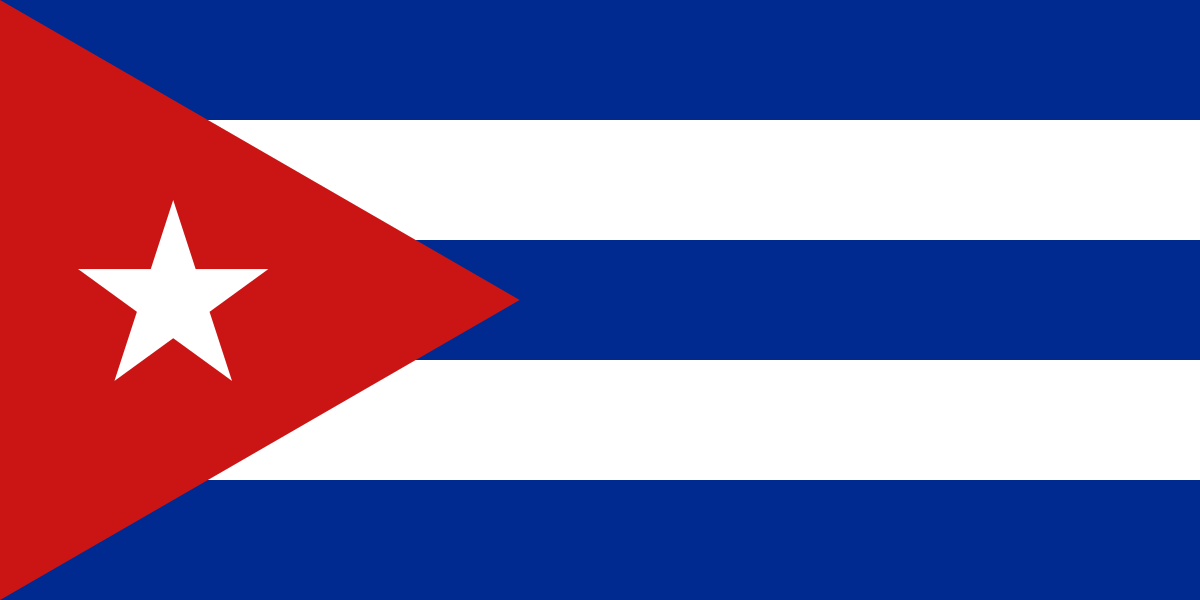
Cuba
North America · Havana · CU
Cuba is the great island of the Caribbean that time seems to have dabbed with a different brush, a colourful, musical, cheerfully battered country of old American cars, colonial cities and long beaches. Havana, the capital, layers the crumbling art deco of Centro Havana, the fortresses of the entrance to the bay and the walled echo of old Havana onto one of the largest old-city quarters in the Americas, and the music and the evening parade of the classic trade fill its squares. The colonial heritage towns of Trinidad, Cienfuegos and Santiago hold the painted arcades and the cobbled centres, while the tobacco valley of Viñales rolls in its rounded hills. The northern beaches of Varadero and the humid keys of the coast anchor the resort life. Loud, proud, generous and a little unruly, Cuba rewards those who come for the music, the history and the stubborn will that runs through them.
Overview
Cuba is a country in North America. Its capital is Havana and the international dialling code is +53. Languages commonly used in everyday life here include Spanish. Local currency is the Cuban Peso (CUP). Our guide covers 1 airport, including José Martí International Airport. We also list 1 city in Cuba: Havana.
The Malecón and the Music of the Old Havana
The five kilometres of the Havana seafront, the Malecón, are the city's great social stage: the fishermen, the couples, the domino players and the waves of the sea that break over the parapet in a storm. Turning inland, the old city spreads its walled quarters of the sixteenth and the seventeenth centuries, the great plazas ringed by painted palaces, the narrow lanes of the colonial houses and the bands that play the son and the trova in the doorways of the evening. The fortresses of the bay entrance, the Morro and the Cabaña, watch over the harbour from their heights, floodlit at night across the water. To walk the old city is to step through the history of the Caribbean at its most concentrated and its most musical.
Trinidad and the Colonial Cobbles of the Morning
Trinidad, the best-preserved colonial town of the island, climbs its cobbled streets of the eighteenth century from the Plaza Mayor, the great square ringed by the yellow (painted) palaces and the museum of the colonial era. The cobbles of the whole town are fixed in the original pattern, and the adjoining area, the Valle de los Ingenios, spreads the old sugar mills and the watchtowers of the valley where the wealth of the town was once grown. In the morning the delivery trucks and the school traffic thread through the streets, and the music of the casa de la trova sets up on the plaza after dark. The beaches of Ancón, an hour along the coast road, hold the soft white sand of the south. Trinidad is small, lovely and one of the great stepping stones of the Caribbean.
The Valley of Viñales and the Tobacco Farms
The valley of Viñales, in the far west of the island, is the countryside postcard of Cuba, its enormous rounded hills, the mogotes, rising out of the flat tobacco fields like the shoulders of buried giants. The farms of the valley still grow and cure the tobacco in the traditional way, and the farmers roll the leaves of the day for the visitors on the front porches of the houses. The caves of the valley, the giant sinkhole of the Cueva del Indio, take the boat rides into the dark, and the small town keeps its patios, its rocking chairs and its unhurried rhythm. The climbs over the mogotes and the horse rides through the fields hold the best views, and the sunsets over the green humps of the hills are the ones the travel books promise.
The Classic Cars and the Parade of the Old Streets
The old cars of Cuba are the island's moving museum, the American classics of the 1950s kept alive by spare parts, patience and the genius of the local mechanics, and their own painted reds, blues and chrome still fill the streets of every town. Some carry the rolling taxis of the city, their back seats taken by the visitors who want the photo; others haul the family, the livestock and the cargo of a whole economy. The engines growl and cough, and the drivers treat their motors with the pride of a priest, and the bodywork shines with the polish of a lifetime of care. In the evenings the classic fleet lines up on the Malecón and the central squares as an open-air gallery of a dream that other countries scrapped decades ago.
Varadero and the White Sand of the Northern Keys
The peninsula of Varadero points into the sea at the north of the island with one of the finest stretches of beach in the Caribbean at its neck, more than twenty kilometres of fine white sand and the shallow, warm water of the coral shelf. The resort town behind it holds the hotels, the marinas and the evening entertainment, and the day trips out to the keys of the coast, the cayos, run the catamarans to the sandbars and the reefs where the snorkellers float in the clear, turquoise shallows. The old estates of the peninsula and the nature reserves of the eastern keys balance the hotels with the mangroves and the local birds. For those who want the beach, the sun and the sea without the politics of the old city, Varadero is the easiest dream in Cuba.
Compare hotels, cover your trip and stay connected.
- Capital
- Havana
- Currency
- Cuban Peso (CUP)
- Languages
- Spanish
- Calling code
- +53
- Internet TLD
- cu
Entry requirements
Check who can enter →See which passports travel visa-free or need a visa to enter Cuba.
Airports (1)
All airports →Cities (1)
All cities →Frequently asked questions
What is the capital of Cuba?
Havana is the capital of Cuba, and the country sits in North America.
What currency is used in Cuba?
You pay with Cuban Peso (CUP) in Cuba. Exchange rates move day to day, so check the current rate before you change money or use your card abroad.
Which languages do people speak in Cuba?
The languages we list for Cuba are Spanish. A couple of greetings in the local language go a long way when you travel, even in cities where another language is widely used.
What is the international dialling code for Cuba?
The dialling code for Cuba is +53 — keep the plus sign when you save the number.
Which airports serve Cuba?
José Martí International Airport (HAV) in Havana is the airport we cover for Cuba.
Which cities in Cuba do you cover?
Our guide lists 1 city for Cuba: Havana (capital).