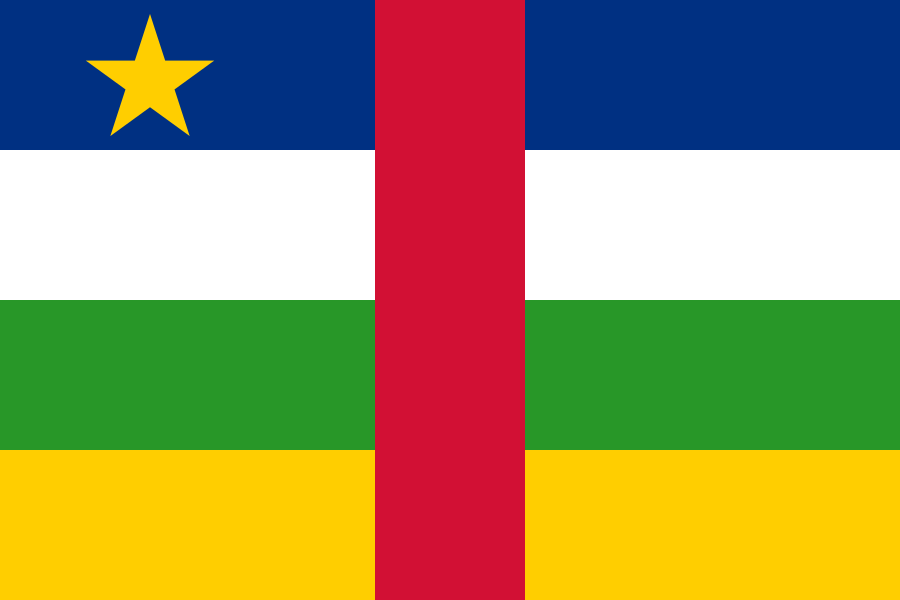
Central African Republic
Africa · Bangui · CF
The Central African Republic is the wild, landlocked country of the exact centre of the African continent, a vast territory of the rainforests, the rivers and the savannas that spreads across the watershed between the basins of the Congo and the Nile. The country, one of the least visited of the world, holds the remote wonder of the forests of the Dzanga with their elephants and their lowland gorillas, the waterfalls of the Boali, the pyramids of the plateau culture and the great parks of the wildlife of the north. The people of the country, the many groups of the Baya, the Banda, the Zande and the forest communities, live between the rhythms of the river trade, the forest hunting and the growing metropole of the capital of the Bangui. The virgin power of its nature and the deep friendliness of its people make the republic one of the great unknown frontiers of the continent.
Overview
Central African Republic is a country in Africa. Its capital is Bangui and the international dialling code is +236. Languages commonly used in everyday life here include French. Local currency is the Central African CFA franc (XAF). We also list 1 city in Central African Republic: Bangui.
The Falls of the Boali and the Rivers of the Plateaus
The falls of the Boali, the thundering cascade of the river of the Mbali that drops over the edge of the plateau just north of the capital, is the most visited natural landmark of the country, plunging the great widths of the water into the dark pool of the gorge below. The falls, which power the hydroelectric station of the city of the Bangui, are best seen in the rainy season when the full volume of the river roars over the lip of the cliff, and the lookout paths at the foot give the cooling site of the weekends of the capital. The rivers and the rapids of the entire plateau, from the courses of the Oubangui that form the southern boundary of the nation to the streams of the interior, share the white-water character of the weathered rocks of the region.
The Dzanga Sangha and the Elephants of the Rainforest
The reserve of the Dzanga Sangha, the protected sanctuary of the magnificent forests and the clearings of the south-west of the country, is one of the last great wildernesses of the equatorial Africa and the home of the extraordinary population of the forest elephants. The famous clearings of the reserve, the saline forest clearings of the Dzanga where the elephants, the lowland gorillas, the bongo and the giant forest hogs gather in the light of the forest, offer the visitor the unforgettable witnessing of the large mammals of the rainforest at close range. The concentrations of the elephants of the reserve, among the most remarkable on the earth, draw the scientists and the filmmakers of the world, and the treks, the trail cameras and the guidance of the local trackers give the responsible traveler the rare privilege of the deep wild of the continent.
The Pygmies of the Ba-Aka and the Forest Life of the Sangha
The forest peoples of the region, the famous Ba-Aka hunter groups of the southern forests of the country, are among the oldest inhabitants of the equatorial forest of the continent, the communities of the deep wilderness who have lived for centuries as the masters of the forest world. The culture of the Ba-Aka, the polyphonic singing of their rituals, the honey gathering, the hunting of the nets and the deep knowledge of the medicinal plants of the forest, is the living heritage of humanity, and the explorations of the reserve with the Ba-Aka guides give the visitor the astonishing experience of their world. The camps of the forest people, the temporary bark shelters of their hunting expeditions, and the welcoming ceremonies of the villages of the south-east complete the extraordinary encounter with the last hunting-gathering cultures of the African forest.
The Plains of the North and the Wildlife of the Manovo
The north of the country, the great dry plains and the gallery forests that follow the watershed of the region, holds the parks and the hunting reserves that once numbered among the greatest wildlife concentrations of the continent, at the meeting of the savanna and the Sahelian world. The park of the Manovo, the world heritage of the national estate of the north, spreads the acacia woodland, the floodplains and the rocky outcrops over its enormous area, with the elephants, the giraffes, the buffaloes and the antelopes of the dry savanna. The populations of the park, like the wildlife of the whole north, have suffered the years of the crisis and the poaching, and the conservation of the region, with the park rangers and the aerial missions, stands as the fragile hope of the wild savanna of the nation.
The Sculptures of the Zande and the Arts of the Interior Peoples
The peoples of the interior of the country, the great groups of the region with their kingdoms, their initiations and their rich material cultures, are the makers of the extraordinary arts of the republic, the carved sculpture and the masks of the south and the east of the country. The Zande, the great people of the east, are famous for the refined arts of their throwing knives and the seven-stringed harps of their court music, while the peoples of the west and the centre of the region, with their masks of the facial planks and the animal crests of the initiation, hold the deep secret traditions of the villages. The museums and the collections of the capital preserve the treasures of these arts, and the living dances and the initiations of the villages continue the sculptural traditions of the interior.
Compare hotels, cover your trip and stay connected.
- Capital
- Bangui
- Currency
- Central African CFA franc (XAF)
- Languages
- French
- Calling code
- +236
- Internet TLD
- cf
Entry requirements
Check who can enter →See which passports travel visa-free or need a visa to enter Central African Republic.
Cities (1)
All cities →Frequently asked questions
What is the capital of Central African Republic?
Bangui is the capital of Central African Republic, and the country sits in Africa.
What currency is used in Central African Republic?
You pay with Central African CFA franc (XAF) in Central African Republic. Exchange rates move day to day, so check the current rate before you change money or use your card abroad.
Which languages do people speak in Central African Republic?
The languages we list for Central African Republic are French. A couple of greetings in the local language go a long way when you travel, even in cities where another language is widely used.
What is the international dialling code for Central African Republic?
The dialling code for Central African Republic is +236 — keep the plus sign when you save the number.
Which cities in Central African Republic do you cover?
Our guide lists 1 city for Central African Republic: Bangui (capital).