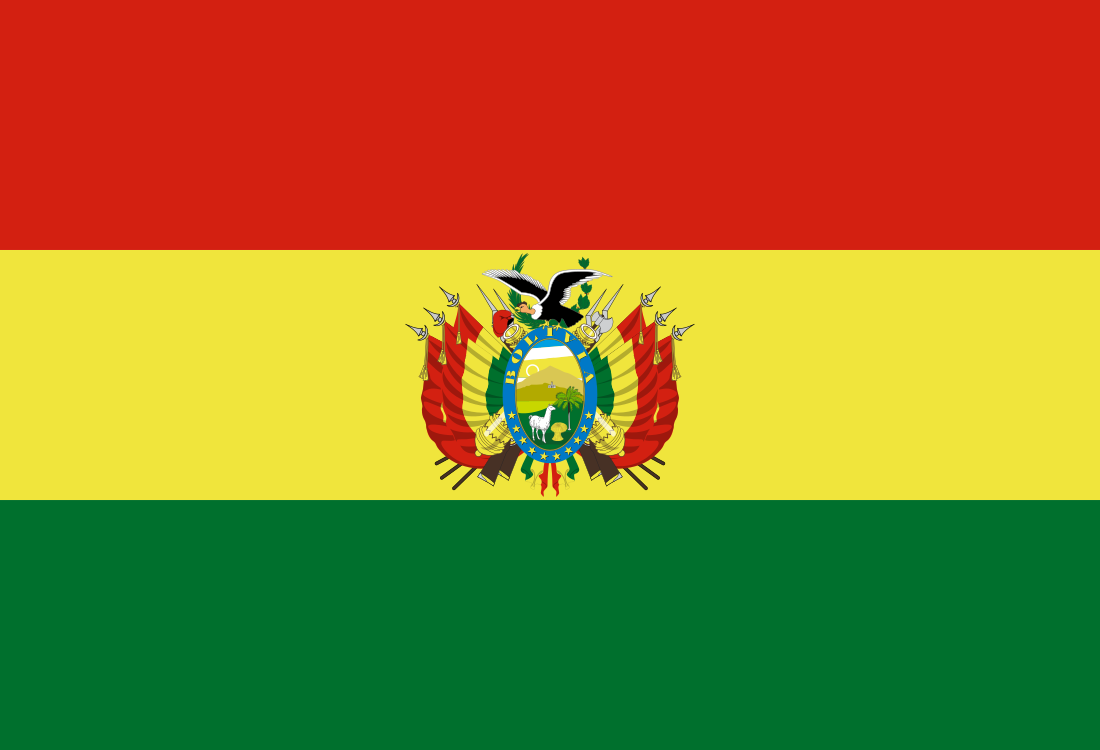
Bolivia
South America · Sucre · BO
Bolivia is the Andean heart of South America, a high, dramatic country of salt flats, volcanic peaks and indigenous cities that straddle the great plateau. La Paz clings to the walls of its canyon above the plain, the highest de facto capital in the world, its streets climbing past the witch-doctor markets and its cable cars gliding over the city and the valley. The Salar de Uyuni, the vast white salt flat of the southwest, reflects the whole sky in the wet season and holds the islands of cactus and the ruined train sheds, while the roads to the red lagoons and the geysers of the high Andes pass the flamingos and the steaming vents. The Amazon in the north, the colonial towns of the east and the ruins of Tiwanaku complete the picture. High, colourful and full of wonder, Bolivia is one of the greatest wild journeys on earth.
Overview
Bolivia is a country in South America. Its capital is Sucre and the international dialling code is +591. Languages commonly used in everyday life here include Spanish. Local currency is the Bolivian Boliviano (BOB). Our guide covers 2 airports, including El Alto International Airport, Viru Viru International Airport. We also list 3 cities in Bolivia: Sucre, La Paz and Santa Cruz.
The Salar de Uyuni and the Mirror of the Salt
The Salar de Uyuni is the largest salt flat in the world, a blinding white plain of salt that stretches across the high plateau for more than ten thousand square kilometres. In the dry season the surface is a hard, cracked white that reaches the horizon in every direction, crossed by the salt mounds and the cactus islands that rise from the ancient lake bed. In the wet season a thin sheet of water turns the whole flat into a perfect mirror, and the sky, the clouds and the reflected peaks blend into a single seamless light. The journeys across it, by sturdy four-wheel drive, stop at the island of the giant cacti, the salt hotels and the dawn that turns the whole plain pink. It is a landscape that operates on a scale the mind has to stretch to hold.
La Paz, the Canyon Capital of the Cable Cars
La Paz is a capital built into the walls of a deep Andean canyon, its red-brick districts climbing the slopes and its highest barrios standing more than four thousand metres above the sea. The centre mixes the colonial churches and the busy markets of the Murillo with the modern boulevards, and the witch markets still sell the dried llamas and the remedies of the old beliefs alongside the tourist stalls. The miracle of the recent city is the cable car network, the long lines of the gondolas that glide over the canyon, linking the high plateau suburb of El Alto to the centre in minutes and giving the visitors the best views of the city and the snow peaks beyond. There is no arrival quite like watching the lights of La Paz spill down the canyon walls from a moving cable car at dusk.
The Red Lagoons and the Geysers of the High Andes
The southwest corner of Bolivia, between the salt flat and the Chilean border, holds one of the most otherworldly landscapes on the planet, a chain of lagoons stained red and green and white by the minerals of the high desert. The Laguna Colorada spreads its reddish-pink waters studded with the white islands, and the flamingos of the high Andes wade through them in the hundreds, while the nearby Laguna Verde lies a strange, mineral green at the foot of the volcano. The drives run past the rock formations of the Siloli desert, the thermal pools and the geysers of Sol de Mañana, where the vents roar with steam at almost five thousand metres. The nights are freezing, the dawns are brilliant and the whole region feels like the surface of another planet reached by road.
Sucre and the White City of the Colonial Courts
The constitutional capital of Sucre is the white city of the country, a bright, tidy colonial town of painted facades, arcaded plazas and the fine museums of the silver and the revolutionary era. The centre is small and walkable, with the university, the courts and the old cathedrals lining the main square, and the markets of the hill barrios colouring the edges with the fruit and the cloth of the valleys. The famous dinosaur tracks at the edge of the town, preserved in the great wall of an old quarry, draw the families, and the goodwill around the local food, the fried pork and the stews, is the talk of the travellers. Sucre is calm and beautiful, the gentlest of all the cities of the highlands.
Tiwanaku and the Ruins of the Pre-Inca World
The ruins of Tiwanaku, an hour by road from La Paz on the high plain, are the remains of one of the great Andean civilisations, a city that thrived centuries before the Inca and left the monumental stones of an empire that stretched across the region. The famous Gateway of the Sun, carved with the standing deity and the line of the messengers, still stands in the open air, and the ritual terraces, the sunken temple and the monoliths of the site show a sophisticated urban and ceremonial order. The on-site museum draws the pieces together, and the local community keeps the heritage alive with the rituals of the equinoxes that still draw the crowds. The site rewards the visitor with a longer and deeper view of Andean history than the Inca alone can offer.
Compare hotels, cover your trip and stay connected.
- Capital
- Sucre
- Currency
- Bolivian Boliviano (BOB)
- Languages
- Spanish
- Calling code
- +591
- Internet TLD
- bo
Entry requirements
Check who can enter →See which passports travel visa-free or need a visa to enter Bolivia.
Airports (2)
All airports →Cities (3)
All cities →Frequently asked questions
What is the capital of Bolivia?
Sucre is the capital of Bolivia, and the country sits in South America.
What currency is used in Bolivia?
You pay with Bolivian Boliviano (BOB) in Bolivia. Exchange rates move day to day, so check the current rate before you change money or use your card abroad.
Which languages do people speak in Bolivia?
The languages we list for Bolivia are Spanish. A couple of greetings in the local language go a long way when you travel, even in cities where another language is widely used.
What is the international dialling code for Bolivia?
The dialling code for Bolivia is +591 — keep the plus sign when you save the number.
Which airports serve Bolivia?
We cover 2 airports for Bolivia, including El Alto International Airport (LPB), Viru Viru International Airport (VVI).
Which cities in Bolivia do you cover?
Our guide lists 3 cities for Bolivia: Sucre (capital), La Paz and Santa Cruz.