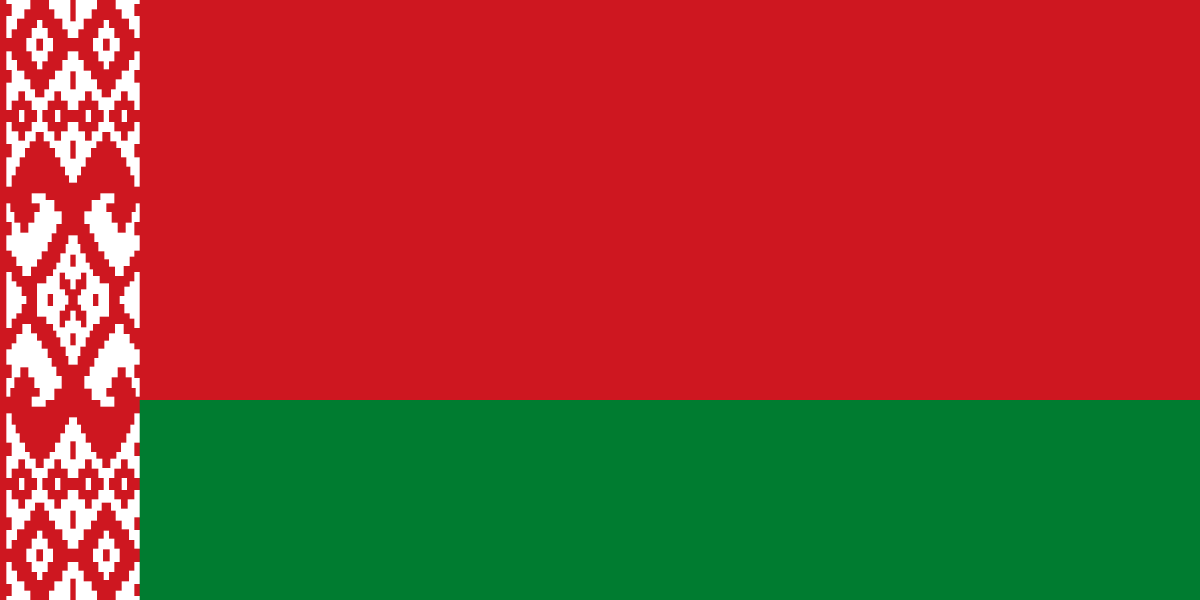
Belarus
Europe · Minsk · BY
Belarus is the flat, forested country of the eastern European plain, a land of the enormous primeval woods, the wide rivers and the cities rebuilt from the ruins of the last war into a striking, orderly modern whole. Minsk, the capital, spreads its broad avenues and its monumental squares across the centre of the country, and its museums, its galleries and its parks give the city a serious, cultured life of its own. The castles of the Mir and the Nesvizh, the marvellous fortified palaces that the nobility of the grand duchy raised, are the great landmarks of the history, while the reserve of the Bialowieza, the last ancient forest of the European plain, protects the herds of the wild bison. Off the ordinary tourist trail and defiantly modern, Belarus rewards the visitor who looks past the headlines with trains, churches and woods of surprising depth.
Overview
Belarus is a country in Europe. Its capital is Minsk and the international dialling code is +375. Languages commonly used in everyday life here include Belarusian and Russian. Local currency is the Belarusian Ruble (BYN). We also list 1 city in Belarus: Minsk.
The Minsk of the Avenues and the Centre of the Square
The capital of the country, rebuilt from its ruins after the war into a grand, orderly city of the broad avenues and the monumental squares, spreads its centre around the great square of the Independence, the shopping streets and the public parks of the city. The architecture of the central avenues, the confident columns and the granite faces of the Stalinist era, gives the city a distinctive, serious modern face, while the museums, the galleries and the opera of the capital carry the cultural life of the nation. The parks of the city, along the river of the Svislach and at the edge of the centre, hold the boats, the cafes and the everyday life of the people, and the churches of the old quarter, the colourful islands of the old faith in the new city, add the older layers. It is a walkable, safe, genuinely interesting capital.
The Castles of the Mir and the Palace of the Nesvizh
The great historic landmarks of the country are the fortified castles of the grand duchy, and the two finest of them, the castle of the Mir and the palace of the Nesvizh, stand within a short drive of each other in the west of the country. The castle of the Mir, the red-brick Gothic fortress with its towers and its courtyards, has been restored to a fairy-tale completeness, while the palace of the Nesvizh, the seat of the Radziwill family with its gardens, its lake and its collections, is one of the grandest residences of the eastern plain, both of them world heritage sites. The churches of the region, the baroque and the orthodox monuments of the surrounding towns, complete the circuit of the historic west. The castles are the pride of the country and the essential heritage journey.
The Primeval Forest of the Bialowieza and the Bison
The border between the country and the neighbour Poland runs through the last primeval forest of the European plain, the reserve of the Bialowieza, whose ancient oaks, lindens and spruces have never been cleared by the hand of man and whose animals, including the herds of the European bison, live as they did before the axe. The reserve of the Belavezhskaya, the largest of the surviving old-growth forests of the continent, spreads its mossy, layered woods and its marshy clearings across the border, and the tours of the park, on foot, by bike or in the vehicles of the administration, look for the bison, the elk, the wolves and the enormous variety of the birds and the insects of the primeval world. The forest is a living museum of the Europe that has vanished.
The Lakes of the Braslav and the Highlands of the North
The north of the country holds the lakeland of the Braslav, the area of the glacial lakes, the forested islands and the sand beaches that the ice age left across the Baltic ridge, and the region is the classic summer countryside of the country. The lakes, the chains and the loops of the waters, run the boating, the fishing and the swimming of the warm months, and the trails along the shores lead past the villages, the wooden churches and the observation towers of the region. The town of the Braslav, the old settlement above its lake, holds the local museum and the market life of the district. Away from the cities, the north is the green, quiet, deeply restful world of the ordinary countryside, little visited and full of the simple pleasures.
The Trains, the Churches and the Roads of the Ordinary Country
The everyday travel of the country runs on the extensive railways and the long straight roads of the plain, and the stations, the market towns and the villages along the routes give the visitor the real Belarus beyond the capital. The wooden churches of the countryside, the baroque and the neoclassical masterpieces of the small towns, stand at the heart of every settlement, and the market squares of the district towns, with their cafes and their bread shops, hold the daily life of the provinces. The food of the country, the potato pancakes, the soups of the farm and the local picnic, is hearty and generous, and the people, famously patient and reserved at first, open up to the curious traveller. The ordinary roads reward the journey with the friendliest of the experiences.
Compare hotels, cover your trip and stay connected.
- Capital
- Minsk
- Currency
- Belarusian Ruble (BYN)
- Languages
- Belarusian, Russian
- Calling code
- +375
- Internet TLD
- by
Entry requirements
Check who can enter →See which passports travel visa-free or need a visa to enter Belarus.
Cities (1)
All cities →Frequently asked questions
What is the capital of Belarus?
Minsk is the capital of Belarus, and the country sits in Europe.
What currency is used in Belarus?
You pay with Belarusian Ruble (BYN) in Belarus. Exchange rates move day to day, so check the current rate before you change money or use your card abroad.
Which languages do people speak in Belarus?
The languages we list for Belarus are Belarusian and Russian. A couple of greetings in the local language go a long way when you travel, even in cities where another language is widely used.
What is the international dialling code for Belarus?
The dialling code for Belarus is +375 — keep the plus sign when you save the number.
Which cities in Belarus do you cover?
Our guide lists 1 city for Belarus: Minsk (capital).