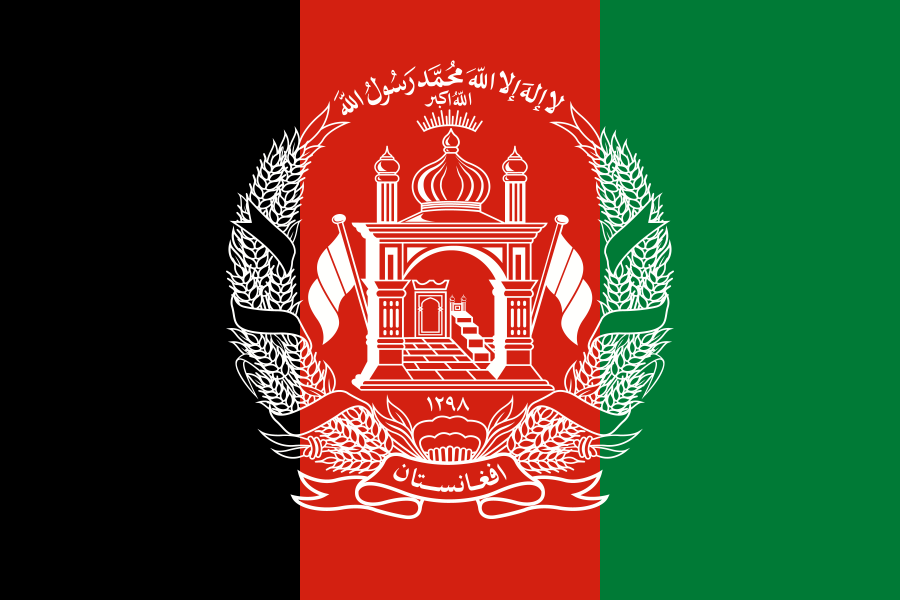
Afghanistan
Asia · Kabul · AF
Afghanistan is the rugged, landlocked country of the high mountains of the Hindu Kush, the ancient crossroads of the Silk Road whose dramatic valleys, fortresses and legendary cities have shaped the conquerors, the poets and the mystics for more than two thousand years. The country, which sits at the meeting of Central Asia, the Indian world and the Persian world, holds the extraordinary archaeological heritage of the giant Buddhas of the Bamyan, the blue domes of the Mazar, the minarets and the covered bazaars of the Herat and the great mountain passes of the interior. The people of the country, the many ethnic groups of the Pashtuns, the Tajiks, the Hazaras and the Uzbeks, are famous for their hospitality, their poetry and their fierce independence. Beautiful and harsh, ancient and deeply resilient, Afghanistan rewards the traveller of the true Silk Road.
Overview
Afghanistan is a country in Asia. Its capital is Kabul and the international dialling code is +93. Languages commonly used in everyday life here include Pashto and Dari. Local currency is the Afghan Afghani (AFN). We also list 1 city in Afghanistan: Kabul.
The Valleys of the Bamyan and the Buddhas of the Cliff
The valley of the Bamyan, the great basin of the Hindu Kush that the ancient trade route crossed on its way between the passes of the north and the plains of the south, holds the most famous archaeological site of the country. The two giant Buddhas of the cliff, the enormous standing figures that the monks and the artists of the Buddhist age carved into the tall sandstone face of the valley, ruled the cultural horizon of the region from the sixth century until their tragic destruction, and the empty niches of the statues, with the caves and the monasteries that honeycomb the rock, still command the valley with their haunting power. The fortress of the Shah of the Zuhak, the ruined citadel that guards the entrance of the valley, and the frozen lakes of the Band-e-Amir near the town, complete the extraordinary setting of the high plateau.
The Old City of the Kabul and the Gardens of the Capital
The capital of the Kabul, the crowded high-altitude city of the valley of the Logar that the mountains ring, is the political and the cultural heart of the country, a city of the old quarters, the grand mosques, the gardens and the citadel of the Bala Hissar on its ridge. The mausoleum of the great Mughal emperor, the Babur, whose body rests in the famous gardens of the capital that he designed, preserves the memory of the founder of the great dynasty, and the museum of the capital holds the surviving treasures of the archaeology of the country. The bazaars of the city, the food markets of the Chicken Street quarter of the old trade days and the teahouses of the centre, give the capital its intense, noisy, resilient life. The mountains and the passes that surround the valley set the dramatic boundary of the capital of the country.
The Passes of the Salang and the Mountains of the Hindu Kush
The mountains of the Hindu Kush, the enormous barrier of the peaks, the glaciers and the wind-scoured passes that divides the country, have stopped the armies and shaped the history of the region since the earliest civilisations. The passes of the range, the high crossings that the Silk Road caravans and the conquerors of the ages struggled over between the valleys, carry the roads of the modern country, led by the great tunnel of the Salang that crosses the watershed of the north. The valleys of the Panjshir and the Bamiyan, the mineral-rich gorges of the interior, hold the magnificent mountain scenery of the country, with the terraced fields, the stone villages and the rivers of the high plateau, and the peaks of the range, rising above the passes, give the traveller the true roof of the mountains of the region.
The Blue Mosque of the Mazar and the Cities of the North
The city of the Mazar-i-Sharif, the commercial capital of the north of the country, is dominated by the famous shrine of the Hazrat Ali, the magnificent blue-tiled mosque that the faithful believe holds the tomb of the fourth caliph, and that is one of the most beautiful sacred buildings of the region. The pilgrimage of the country gathers in the city for the great festival of the spring, the Nauroz, when the mighty flag of the shrine is raised over the faithful, and the plans and the bazaars of the city carry the trade of the fertile north. The neighbouring cities of the region, the Balkh with its ruined city of the ancient trade and the Kunduz with its markets of the north, anchor the agriculture and the commerce of the provinces, and the desert and the river valleys of the north set the landscape of the region.
The Bazaars of the Herat and the Artisans of the West
The city of the Herat, the great crossroads of the west of the country, holds one of the finest ensembles of the historical architecture of the region, with the blue domes and the minarets of the Timurid age, the citadel of the Alexander on its mound and the monumental complex of the Musalla with the ruins of its grand mosque. The famous covered bazaars of the city, the long vaulted lanes of the commercial quarter that the Iranian world and the markets of the region still fill, hold the crafts and the trade of the west of the country, from the carpets and the metalware of the artisans to the silk and the leather of the workshops. The culture of the city, once a celebrated centre of the Persian poetry and the miniature painting, gives the Herat its lasting reputation as the pearl of the west of the country.
Compare hotels, cover your trip and stay connected.
- Capital
- Kabul
- Currency
- Afghan Afghani (AFN)
- Languages
- Pashto, Dari
- Calling code
- +93
- Internet TLD
- af
Entry requirements
Check who can enter →See which passports travel visa-free or need a visa to enter Afghanistan.
Cities (1)
All cities →Frequently asked questions
What is the capital of Afghanistan?
Kabul is the capital of Afghanistan, and the country sits in Asia.
What currency is used in Afghanistan?
You pay with Afghan Afghani (AFN) in Afghanistan. Exchange rates move day to day, so check the current rate before you change money or use your card abroad.
Which languages do people speak in Afghanistan?
The languages we list for Afghanistan are Pashto and Dari. A couple of greetings in the local language go a long way when you travel, even in cities where another language is widely used.
What is the international dialling code for Afghanistan?
The dialling code for Afghanistan is +93 — keep the plus sign when you save the number.
Which cities in Afghanistan do you cover?
Our guide lists 1 city for Afghanistan: Kabul (capital).