SkopjeCapital
North Macedonia · Country profile
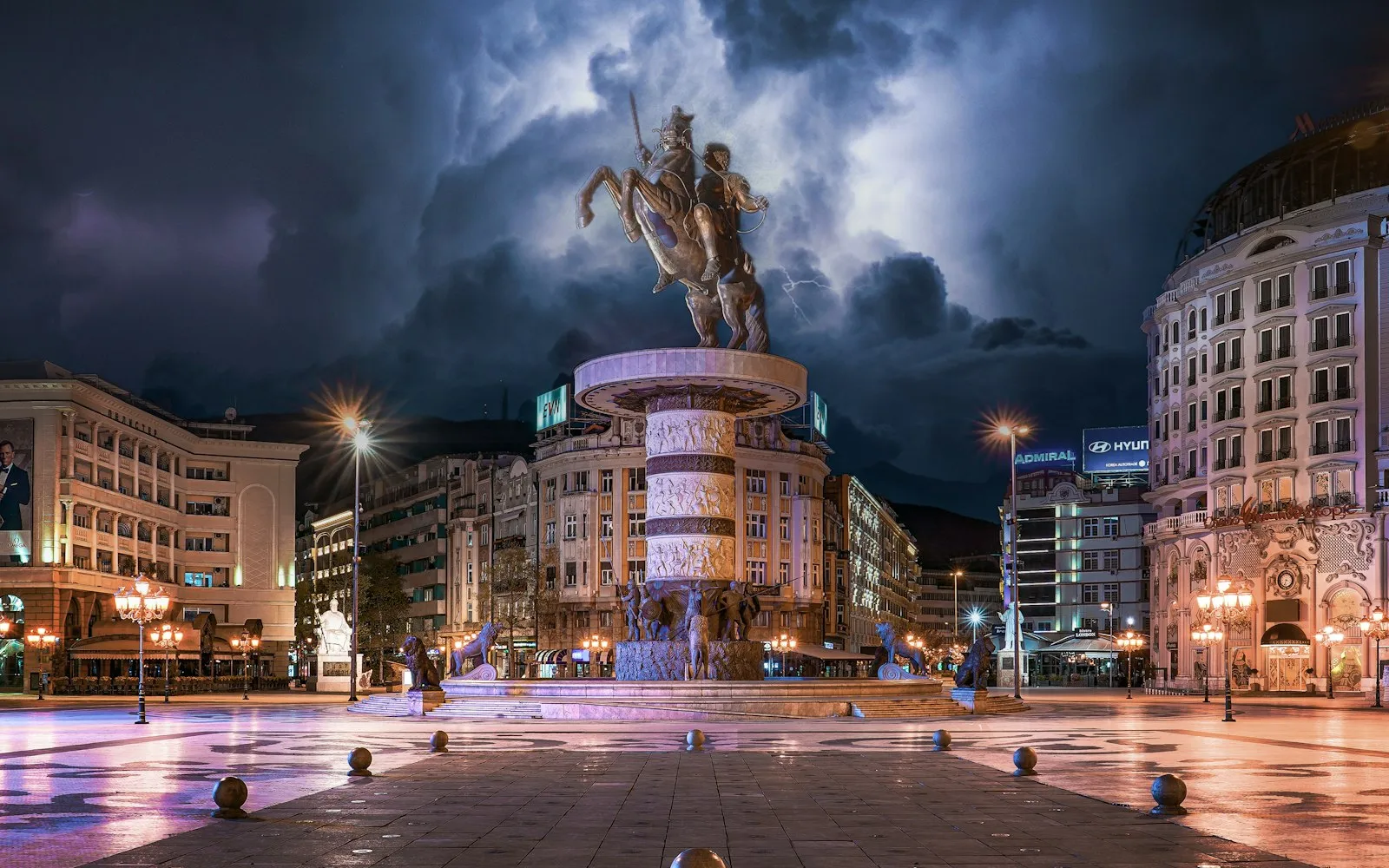
Skopje is the grand, contradictory capital of North Macedonia, the historic Balkan city that spreads along the banks of the great river of the Vardar, in the wide valley between the green mountains of the Sar and the Osogovo, at the ancient crossroads of the routes of the peninsula. The capital of the region through the many empires of its history, from the ancient city of the Skupi and the medieval empire of the Tsar Samuil to the Ottoman, the Yugoslav and the independent eras, it was rebuilt after the great earthquake of the 1960s and again re-modelled in the modern decades, when the capital transformed itself with the extraordinary campaigns of the new statuary, the towers and the bridges of the classical revival. The old bazaar of the Ottoman town, the fortress and the bridges of the river, the vast museum district and the statues and the monuments of the new centre anchor the essential visits, while the mountains, the wine valleys and the ancient sites of the country fill the days beyond the capital. Bold, theatrical and endlessly photogenic, Skopje is the surprising, monumental heart of the small Balkan republic.
About Skopje
Skopje is the capital of North Macedonia. The city's documented population is around 526,000 people. For visitors from abroad, the local currency is the Macedonian Denar (MKD) and Macedonian and Albanian are spoken; the dialling code is +389.
The Bazaar of the Ottoman and the Cars of the Caravanserais
Skopje is a dramatic, river-divided capital where the essential circuit moves between the old bazaar of the Ottoman quarter, the fortress and the bridges, and the extraordinary new centre with its statues, its colonnades and its towers, with the mountains of the horizon framing the whole valley. The great bazaar with its mosques, its stone and its caravanserais, the fortress on its rock and the famous bridge of the stones anchor the historic visits, while the new capital with its enormous national theatre, its monumental fountains and its celebrating statues of the ancient heroes runs the theatrical centre, and the memorial house of the mother of the nation and the museums of the city carry the deeper story. The mountain villages and the canyons of the region, the ancient ruins of the country and the wine valleys beyond the city fill the day trips beyond the capital.
The Fortress of the Rock and the Bridge of the Stones
The climate of the city is the continental of the Balkan valley, with the hot, dry summers, the cold, foggy winters and the mild, green springs and the golden autumns, each season giving the river valley its own atmosphere. The denar is the currency, with the Macedonian the language of the city, the Albanian widely spoken in the quarters and the English common among the young. The bazaar, the fortress and the new centre make the core visits, and the mountains, the ruins and the valleys of the country lie within an easy drive of the capital. Layered clothing for the seasons and comfortable walking shoes complete the simple preparation for the monumental capital.
The Statues of the New Centre and the River of the Vardar
The old bazaar of the capital, the enormous Ottoman-era bazaar of the stone, the caravanserais, the hamams and the mosques that spreads in the old quarter across the river, with its rows of the shops, its Turkish delight stalls and its courtyarded mosques, is one of the largest and the best preserved bazaar districts of the Balkans, while the fortress of the capital, the great rampart and its towers that crown the rock commanding the valley of the Vardar, anchors the medieval layer of the city. The new centre of the capital, the extraordinary ensemble of the classical-revival towers, the statues, the bridges and the fountains of the recent decades, with the monumental figures of the ancient heroes of the nation and the celebrated bridge and the enormous national theatre, gives the inexhaustibly photogenic heart of the town. The memorial houses of the modern era, the ancient city of the Skupi and the mystic village canyons and monasteries of the country, and the old stone bridge with its hills, complete the essential, theatrical, endlessly rewarding circuit of the Balkan capital.
Report an error or suggest an update
- Country
- North Macedonia
- Population
- 526,000
- Capital
- Skopje
- Region
- Europe
- Currency
- Macedonian Denar (MKD)
- Languages
- Macedonian, Albanian
- Calling code
- +389
- Country code
- MK
Frequently asked questions
Is Skopje the capital of North Macedonia?
Yes — Skopje is the capital of North Macedonia.
What currency do I need in Skopje?
The local currency is the Macedonian Denar (MKD). Languages spoken in North Macedonia include Macedonian and Albanian.
What is the dialling code for North Macedonia?
The international dialling code for North Macedonia is +389.
Flying out of Skopje? Check the entry requirements for your destination in our entry requirements tool before you fly.