SingaporeCapital
Singapore · Country profile
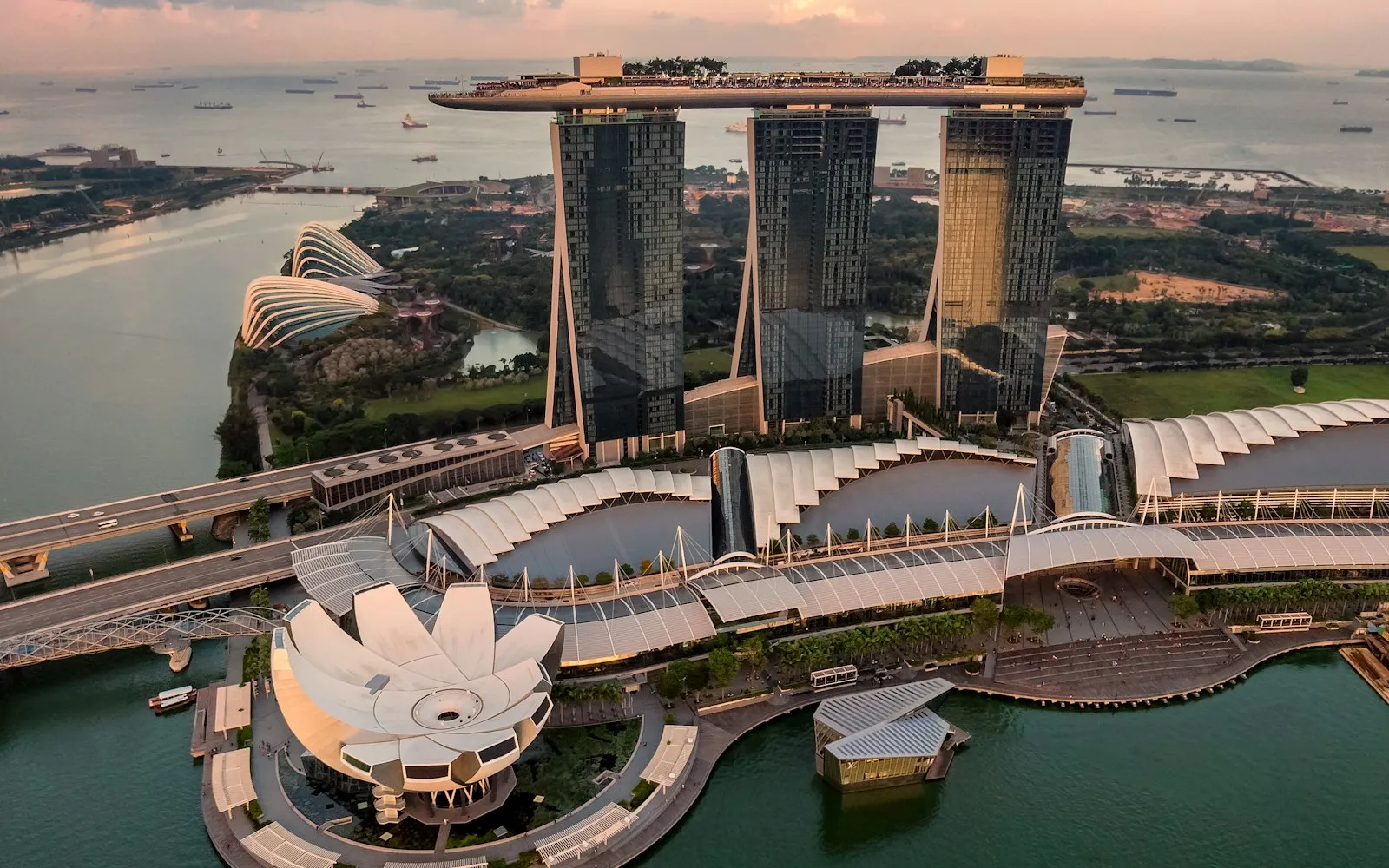
Singapore packs an extraordinary amount into a small island nation — futuristic gardens like Gardens by the Bay, hawker centres full of world-famous street food, and a skyline that gleams after sunset. It’s spotless, extremely safe, and gloriously multicultural, mixing Chinese, Malay, Indian and colonial heritage around neighbourhoods like Chinatown, Little India and Kampong Glam. Despite its modern polish, pockets of jungle, beach and wildlife remain nearby, from the Botanic Gardens to Sentosa. With superb public transport, a first-class airport and endless eating options, Singapore is a seamless, gentle introduction to Southeast Asia.
About Singapore
Singapore is the capital of Singapore. The city's documented population is around 6,110,000 people. For visitors from abroad, the local currency is the Singapore Dollar (SGD) and English, Malay, Chinese and Tamil are spoken; the dialling code is +65. It is served by 1 airport in our guide: Singapore Changi Airport.
Compact, Immaculate and Engineered for Easy Travel
Singapore is compact, immaculate and engineered for easy travel. The airport itself is a destination, and the whole city is reachable by a superb rail network that connects every main district. The heat and humidity are constant and close to the equator, so air-conditioned malls, the MRT and covered walkways shape how you move. It is a food city first — hawker centres are the soul of the cuisine and cheap enough to eat differently every meal. The mix of cultures means every district has its own flavour and its own holiday calendar.
Tropical Downpours, Strict Rules and Booking Ahead
Carry a light rain layer and expect tropical downpours most afternoons; indoor attractions are planned around this. An EZ-Link or equivalent card smooths all rail and bus travel, avoidable via contactless cards now. Book Sentosa and the major attractions ahead in school-holiday peaks. Singapore is strict — fines for littering, gum restrictions and a ban on smoking in many public areas, so read local rules before arriving. Tap water is safe to drink, and shopping is a major draw, with the GST rebate scheme you can reclaim at the airport.
Hawker Queues, the MRT and Where the City Hums on Sundays
The MRT is clean, cheap and covers everything; buses fill the gaps and both run late. English works everywhere, alongside Mandarin, Malay and Tamil. Hawker centres are the place to eat cheaply and well — expect queues at the legendary stalls and bring cash for smaller ones. Tipping is not expected and is often discouraged. The city is famously safe, even at night. Sunday is the day Little India and parts of Chinatown hum with weekend crowds and markets. The natural bits — the Botanic Gardens, the Southern Ridges and the mangroves — are easy day escapes from the malls.
Report an error or suggest an update
- Country
- Singapore
- Population
- 6,110,000
- Coordinates
- 1.3644, 103.9915
- Capital
- Singapore
- Region
- Asia
- Currency
- Singapore Dollar (SGD)
- Languages
- English, Malay, Chinese, Tamil
- Calling code
- +65
- Country code
- SG
Entry requirements for Singapore
Visa status for travellers from common origins visiting Singapore for tourism.
Getting to Singapore
Airports we list for Singapore:
Frequently asked questions
Is Singapore the capital of Singapore?
Yes — Singapore is the capital of Singapore.
What currency do I need in Singapore?
The local currency is the Singapore Dollar (SGD). Languages spoken in Singapore include English, Malay and Chinese.
What is the dialling code for Singapore?
The international dialling code for Singapore is +65.
Which airport should I fly into for Singapore?
Singapore Changi Airport (SIN) is the airport we list for Singapore.
Do I need a visa to visit Singapore?
It depends on your passport. For the origins we track, the current tourism visa status is Morocco (visa required). Check the entry requirements tool for your own nationality.
Flying out of Singapore? Check the entry requirements for your destination in our entry requirements tool before you fly.